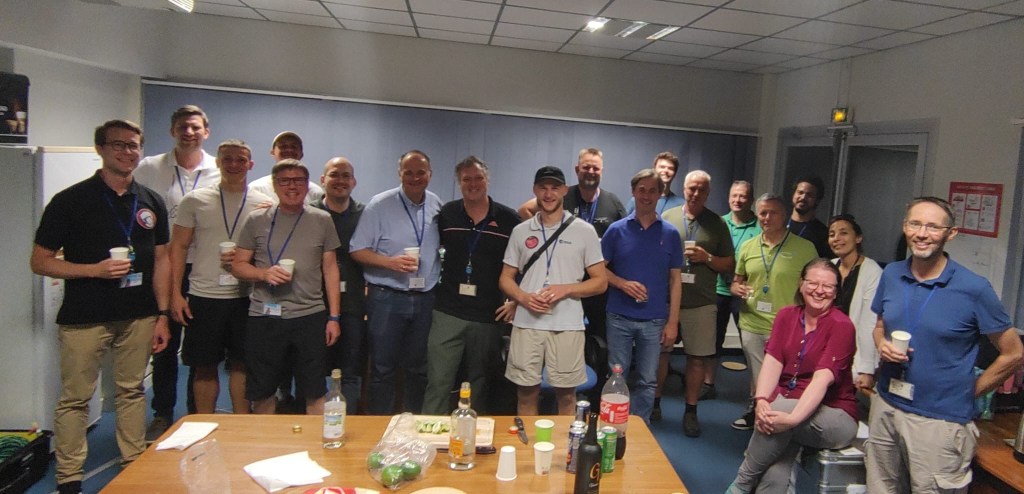
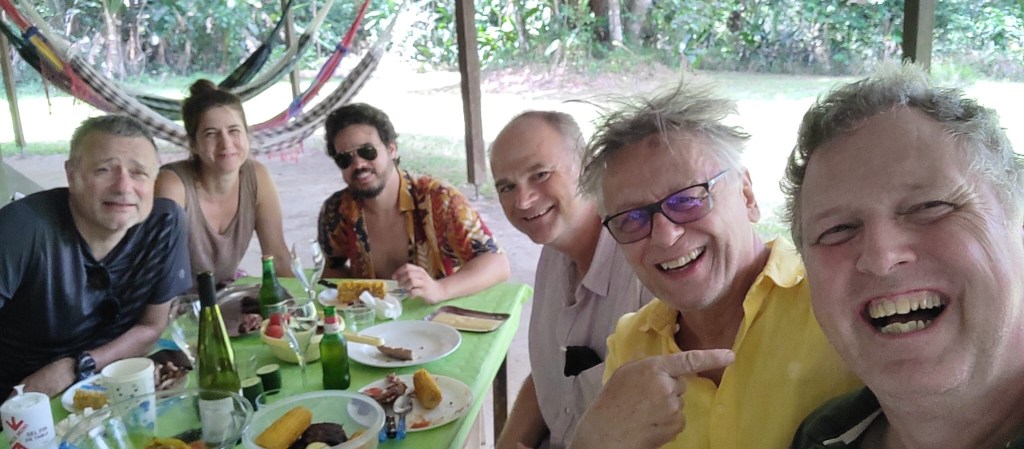
28 August – D-3

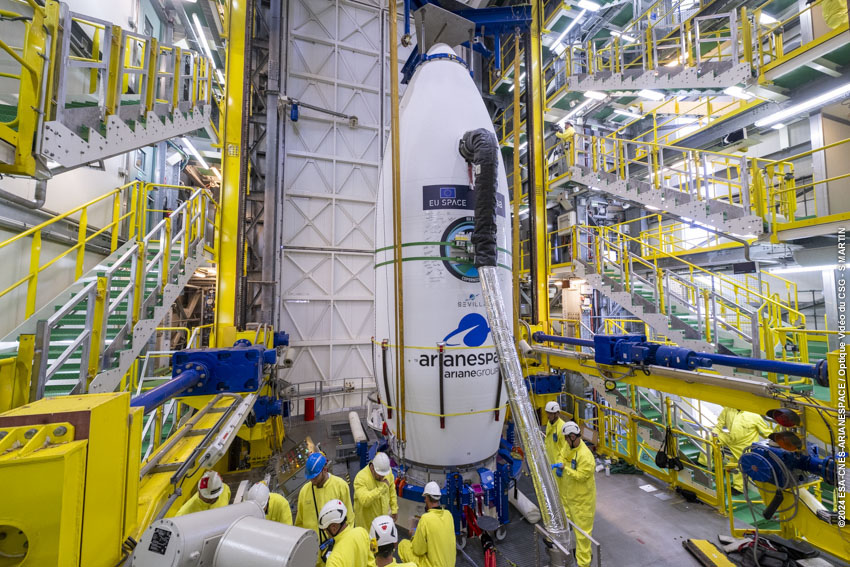
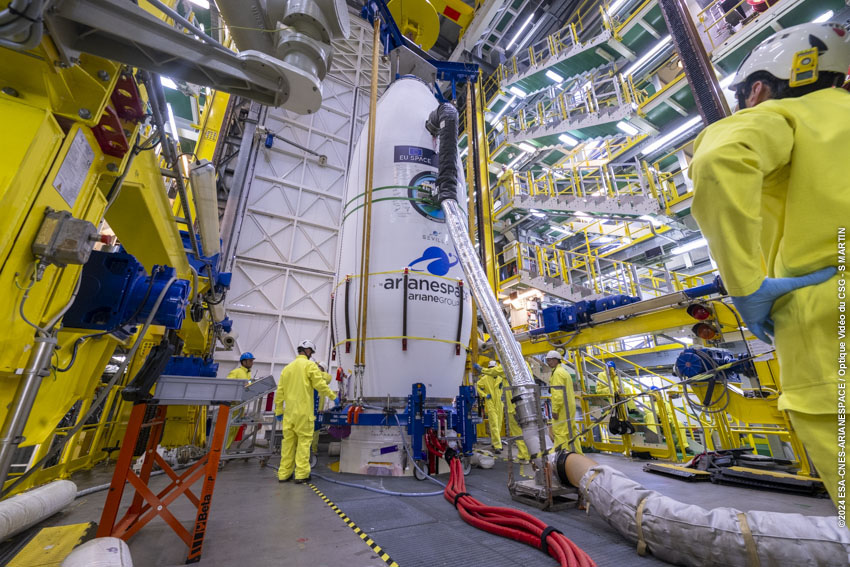
On Wednesday, most activities were on launcher side with support from our team, especially cleanliness experts, to install the final upper composite ventilation duct between the fairing and the launch pad mast.

Once cleanliness, temperature, humidity, flow rate had been checked as expected, it could be connected instead of the temporary set-up and activated. The continuous monitoring of cleanliness and ambiance parameters that is in place in the upper composite since we are encapsulated show all parameters within specification.

A slot for battery charge was allocated to the satellite team only quite late in the afternoon, which resulted in a partial charge, not reaching the targeted voltage for launch. However, enough other slots are defined in the schedule to allow us to complete the charge before D0. The current status remains completely fine to perform the Dress Rehearsal countdown on D-2.
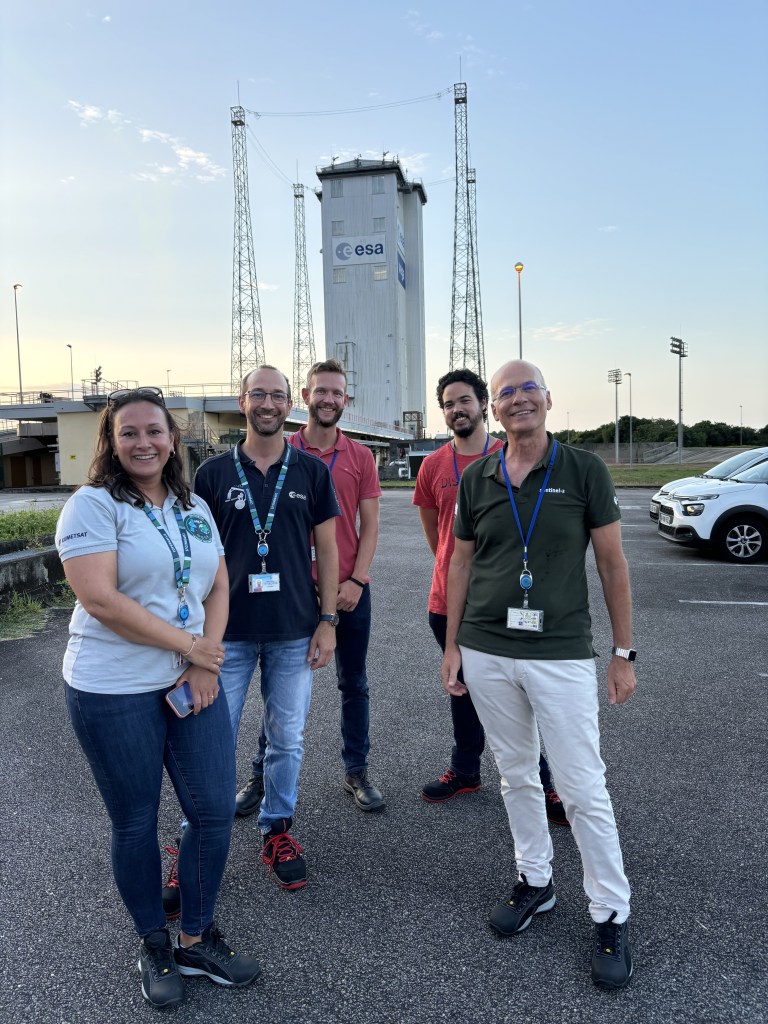
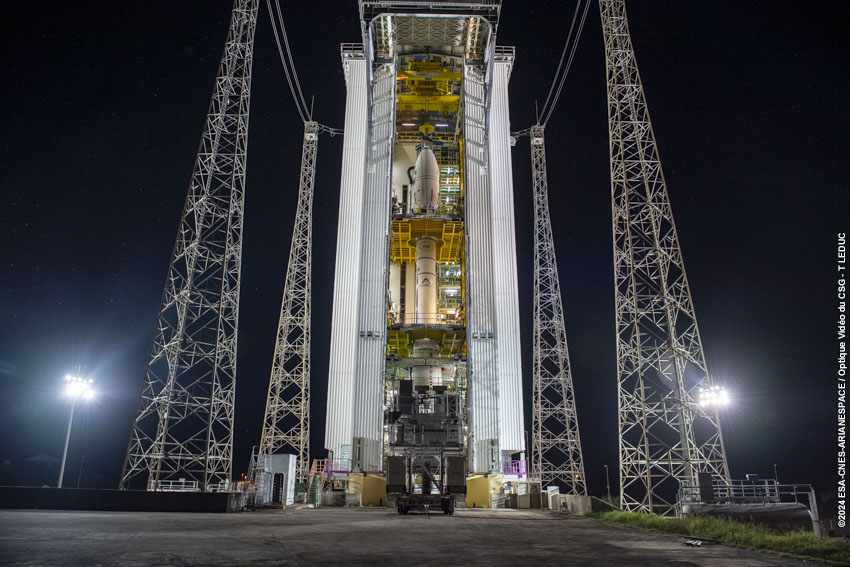
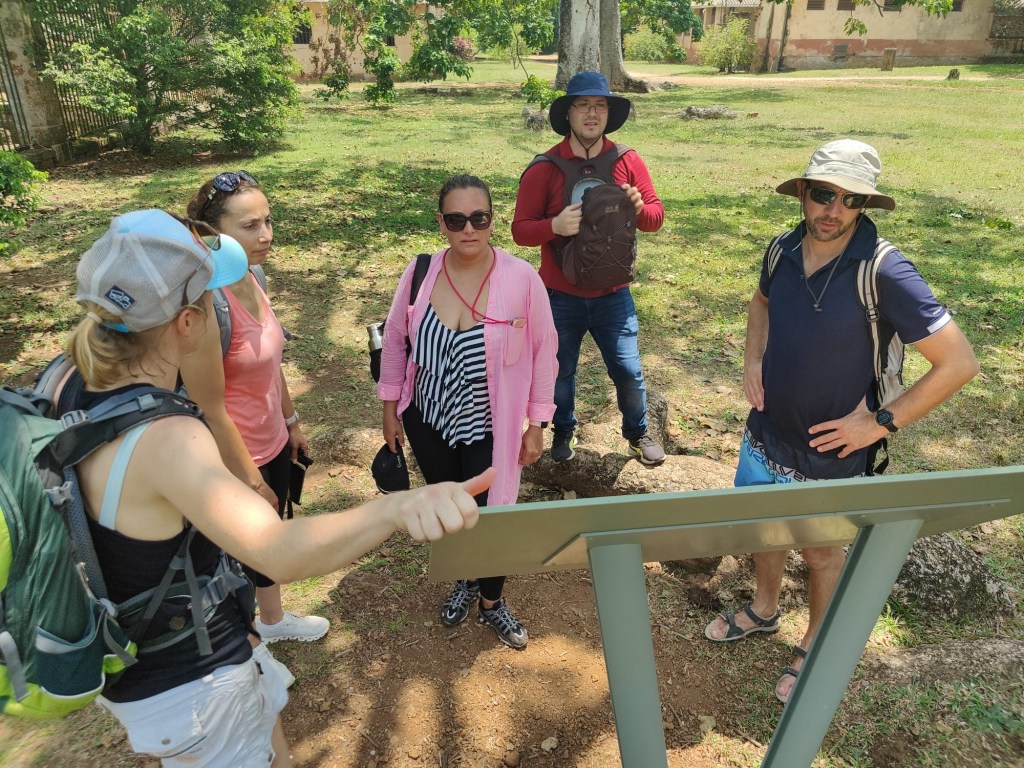
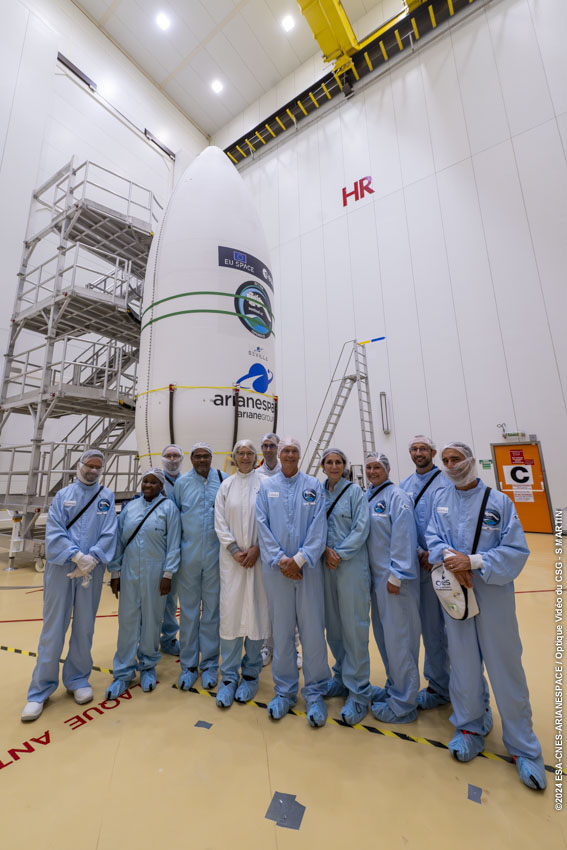
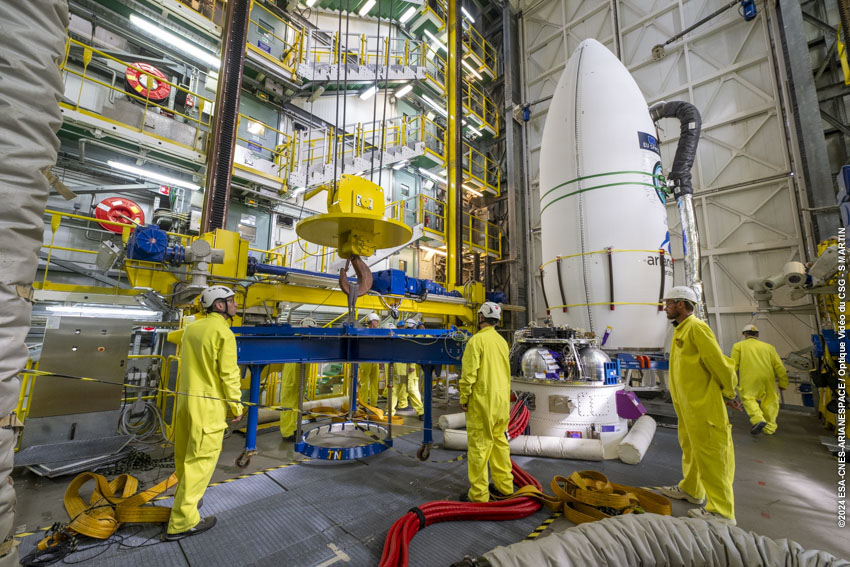
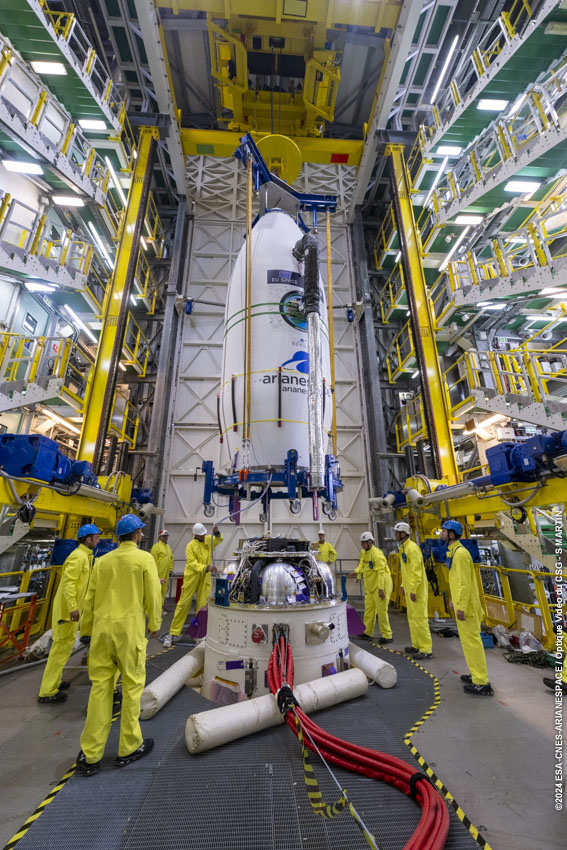
On that day, a small group of very happy ESA team members could access the launch pad for a very last “tour” before the launch.
27 August – D-4

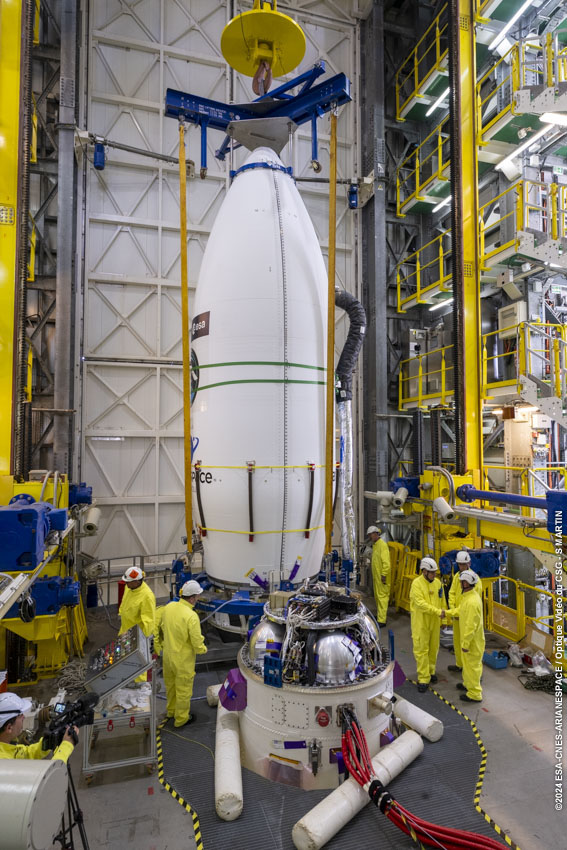
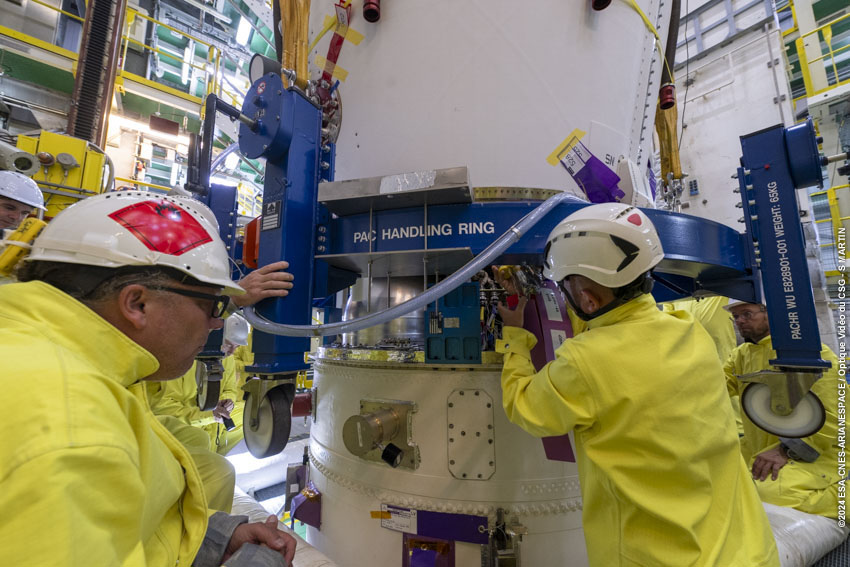
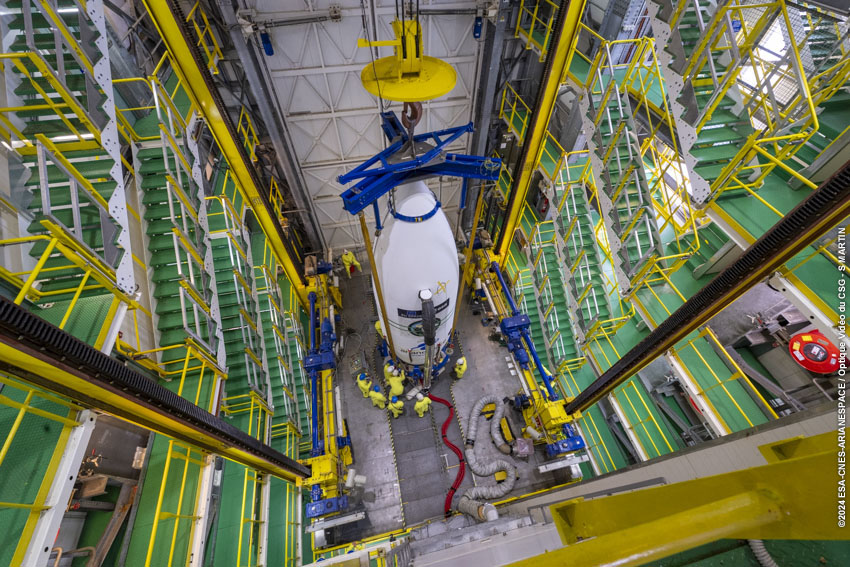
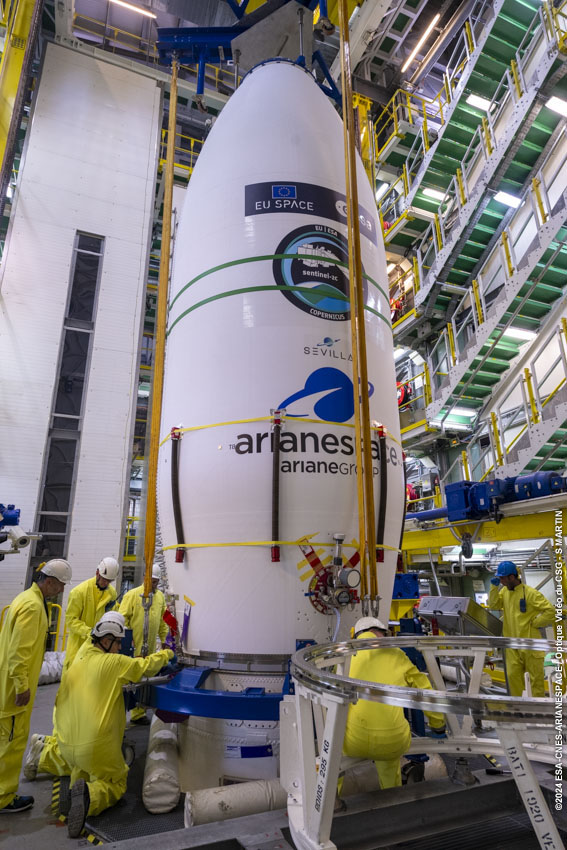
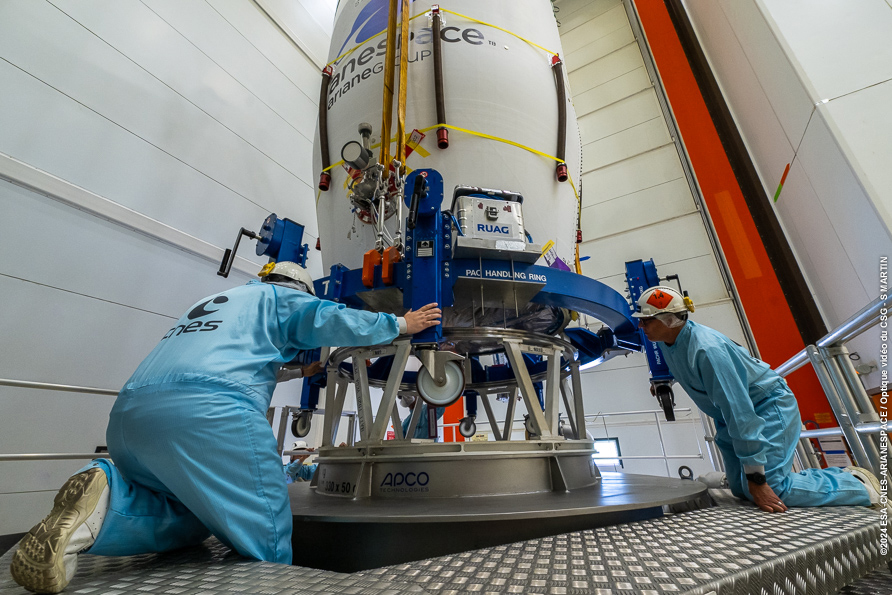
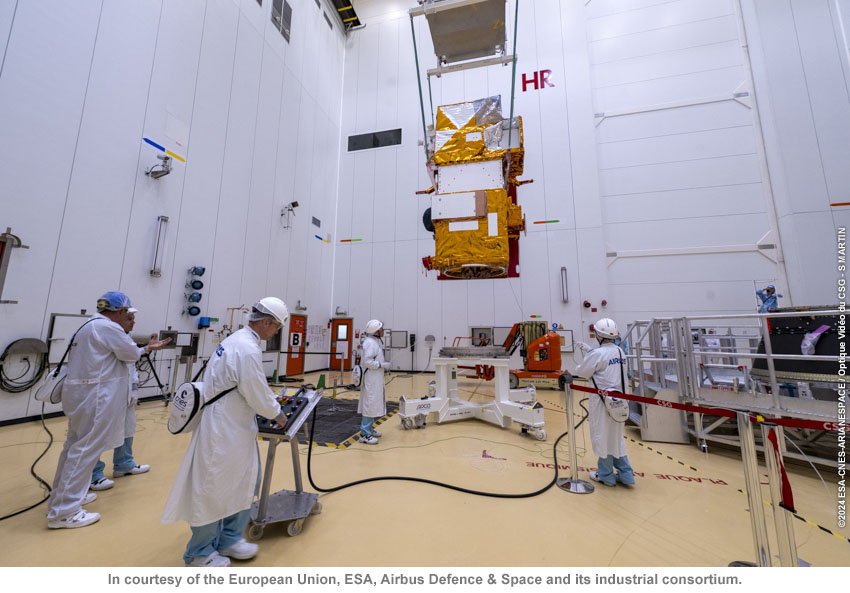
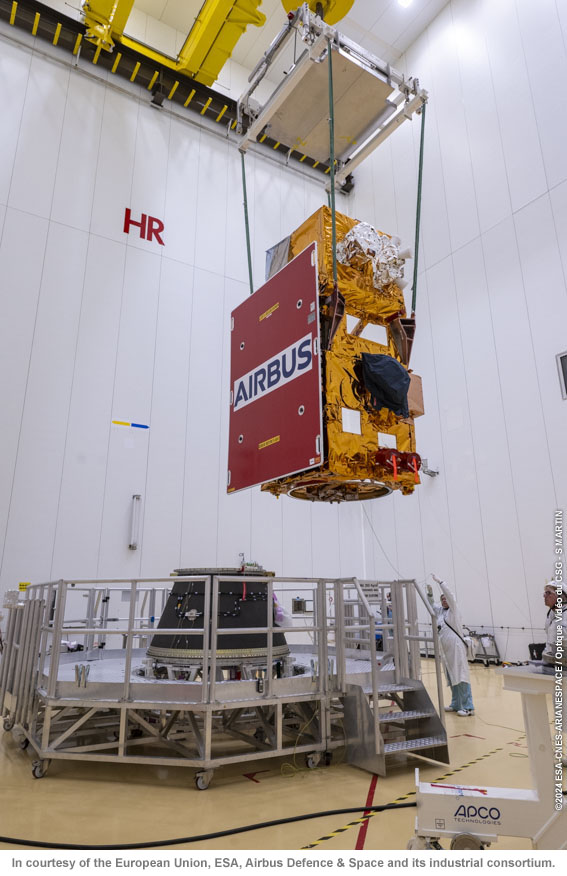
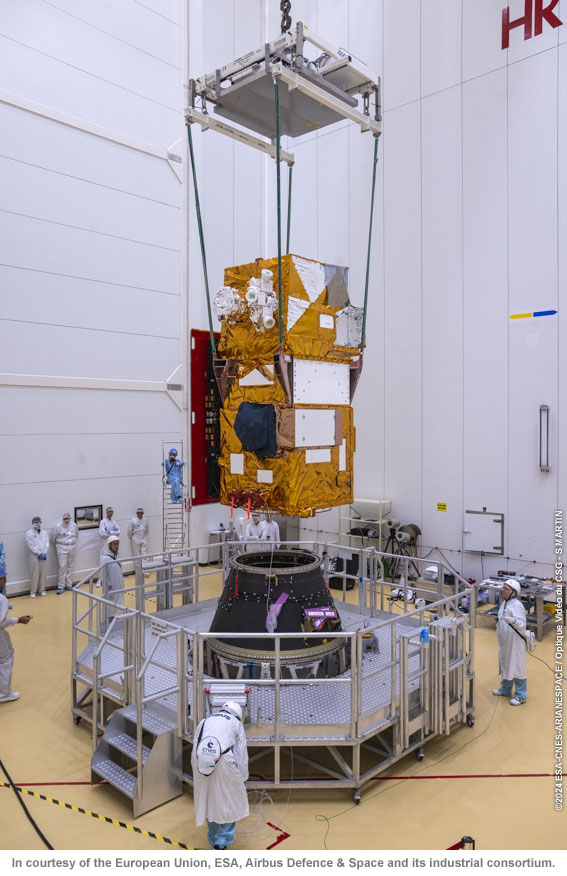
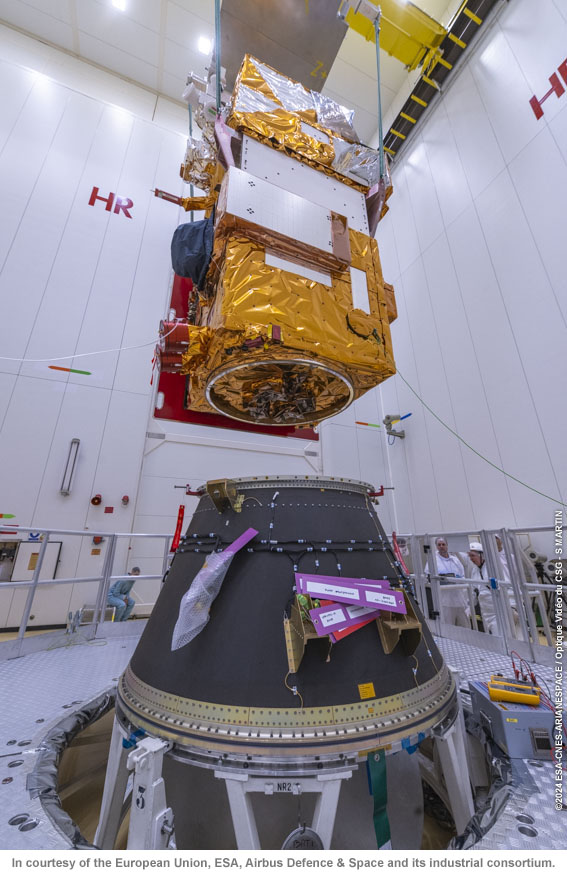
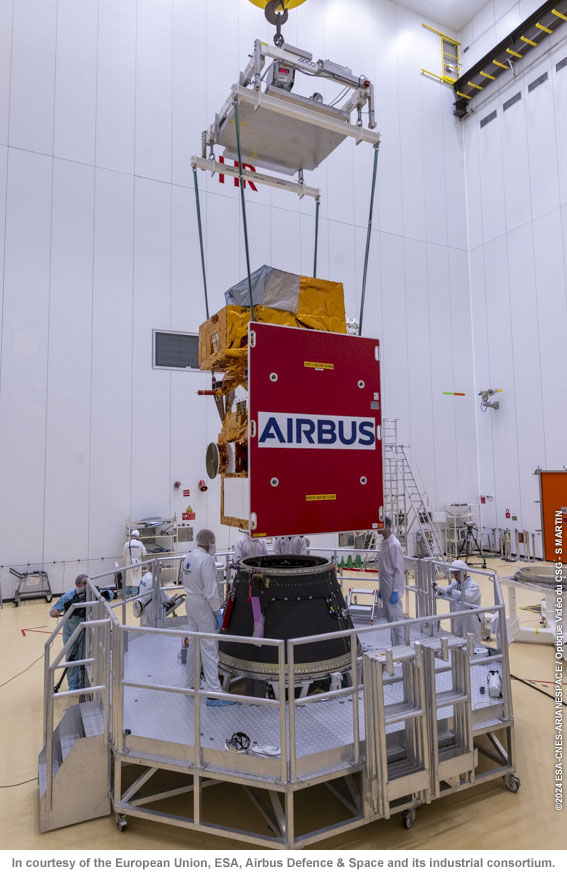
On Tuesday, at the launch pad, the upper composite was integrated on the launcher in two steps. First, it was installed on spacers.
This gap left by the spacers between the upper composite and the AVUM (4th stage of the launcher) allows to perform the harness connection between the two elements. A switch ON of the satellite and quick check confirmed the good electrical connection of the umbilical lines. After similar electrical checks got successfully performed on the launcher electrical interfaces, the second step of integration could take place, after removal of the spacer, to finalize the mechanical mating.

The PAC ventilation system was then set-up in a temporary configuration allowing to create a cooler and controlled environment compatible with the satellite testing.

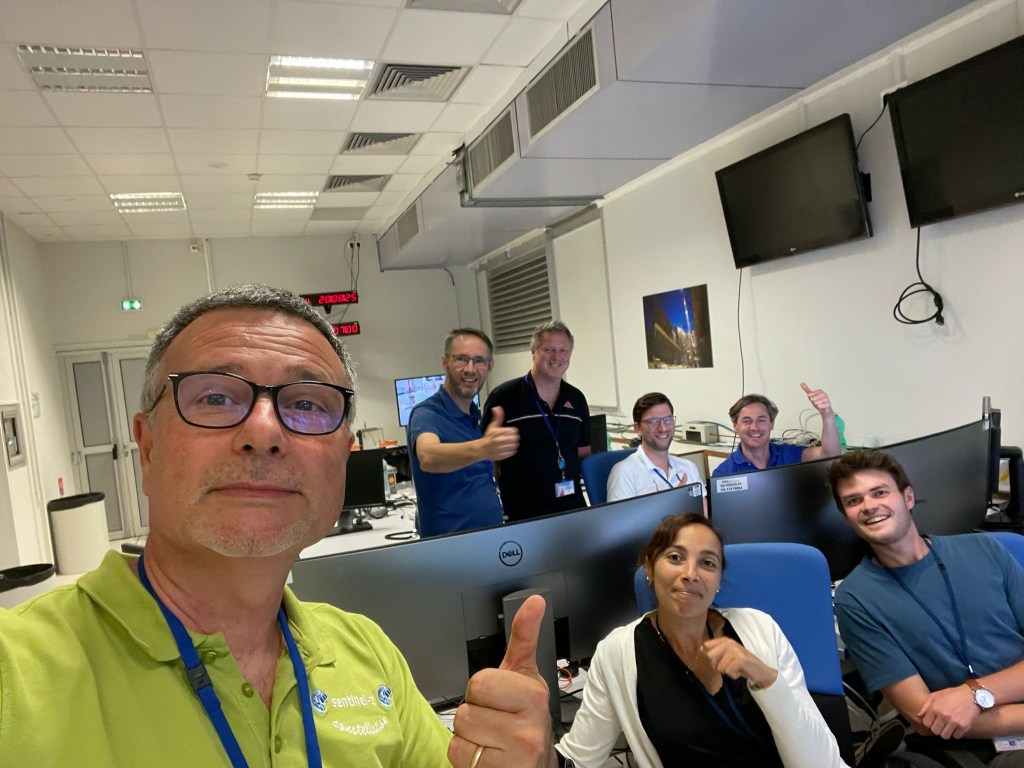
As part of the planned activities, a functional check of the satellite was executed, confirming its good health, and the proper operation of all links: umbilical to the EGSE in the COTE room and network from COTE room to the check-out system in the LBC from where all the automated test scripts were remotely run. Even though each and every intermediate piece had been verified beforehand, only this end-to-end validation can give the demonstration that the final launch pad configuration is working, and it did!

One step closer…

26 August – D-5

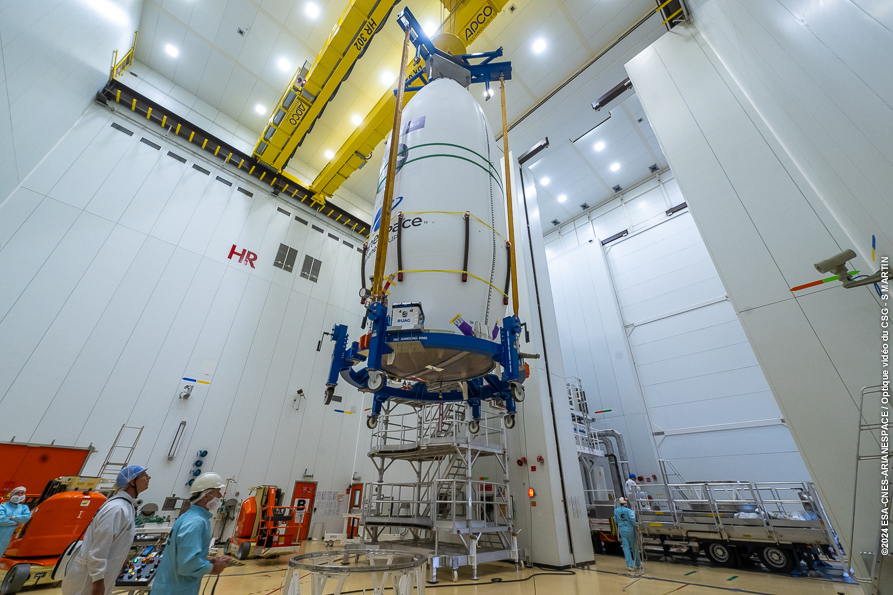
On Monday, the PAC was transferred onto the PFRCS in S3B airlock.

Then the ventilation system was installed and we waited for the night before initiating the transport to the launch pad, to avoid a too hot environment.

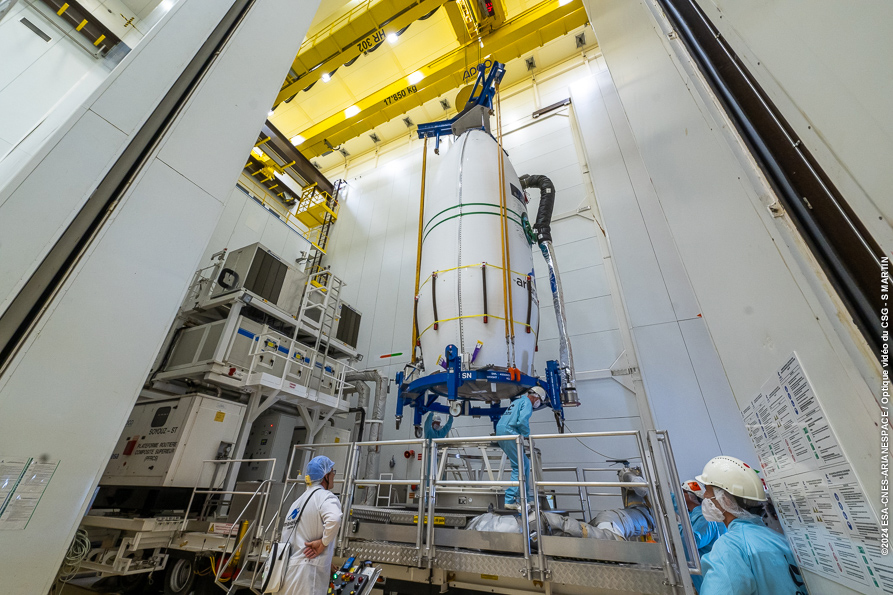
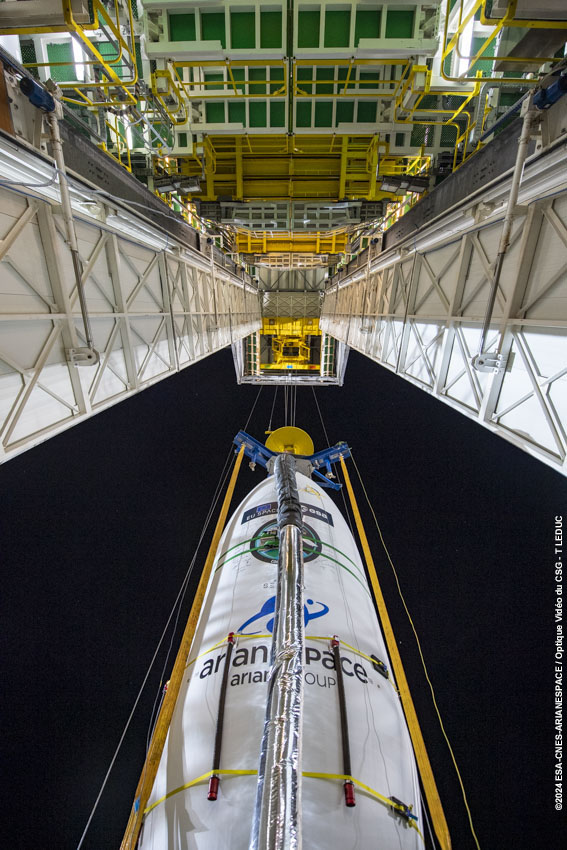
The PAC was then hoisted inside the Mobile Gantry up the to the mobile platform, quite an impressive handling!

At the end of the activities, the PAC was secured on its stand on the platform and the Mobile Gantry was closed. Everything was ready to proceed with the integration of the PAC on the launcher at D-4.

23 August – D-6

The activities of D-6 are dedicated to the upper composite finalization and the preparation of the PFRCS (Upper Composite Transport Platform) that will bring it – and Sentinel-2C inside – up to the launch pad on Monday.

All activities were completed as planned.

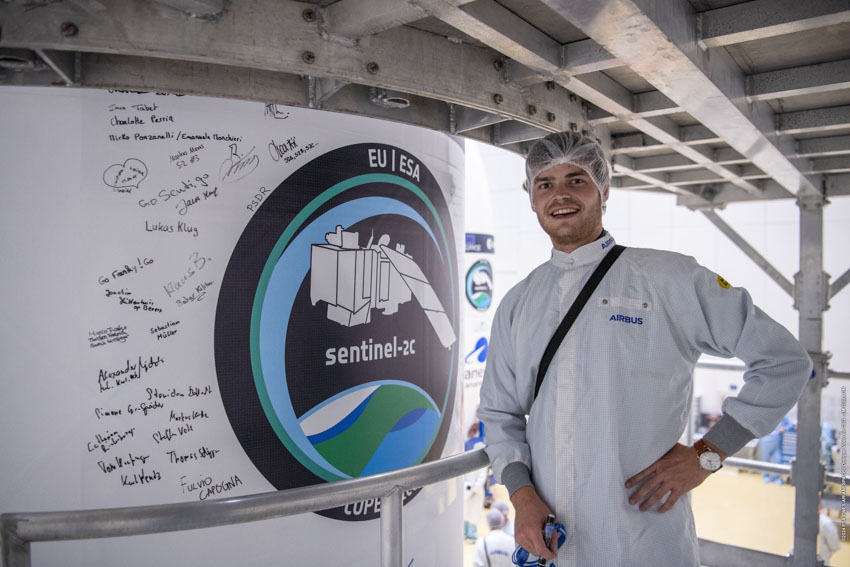
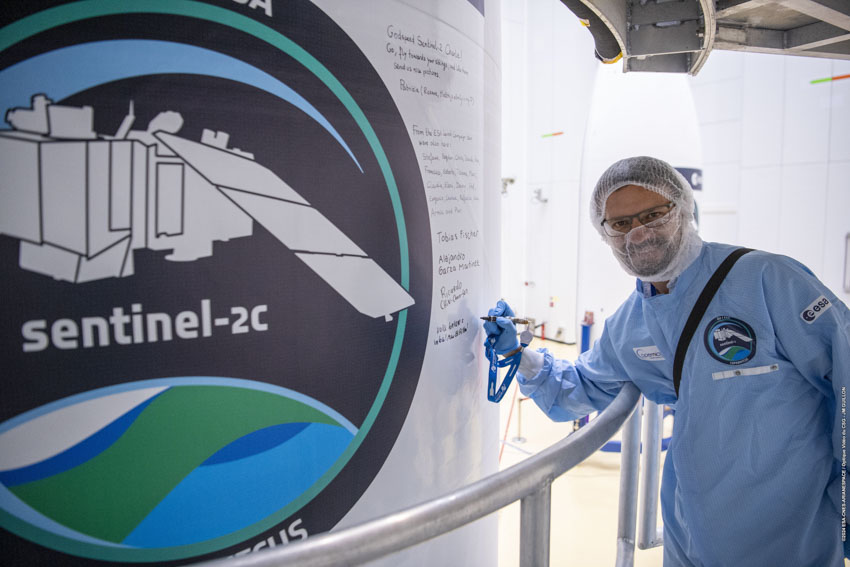
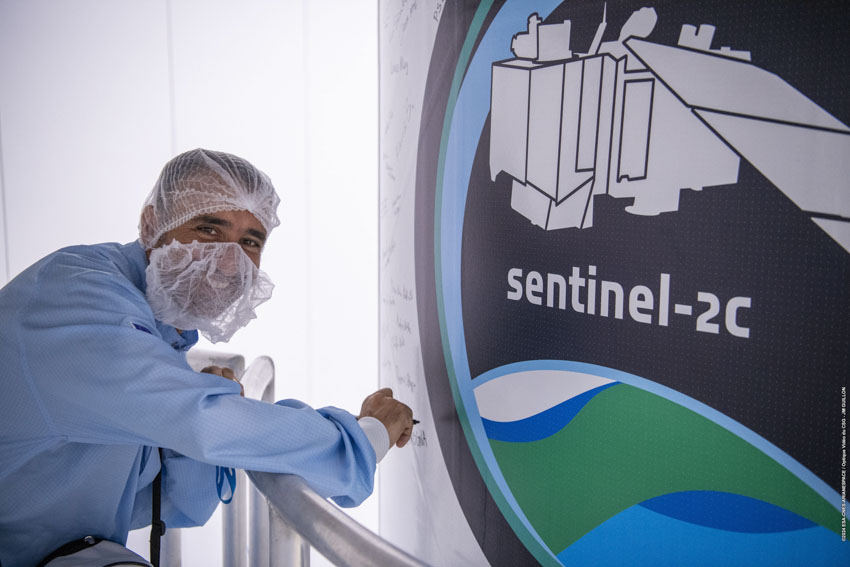
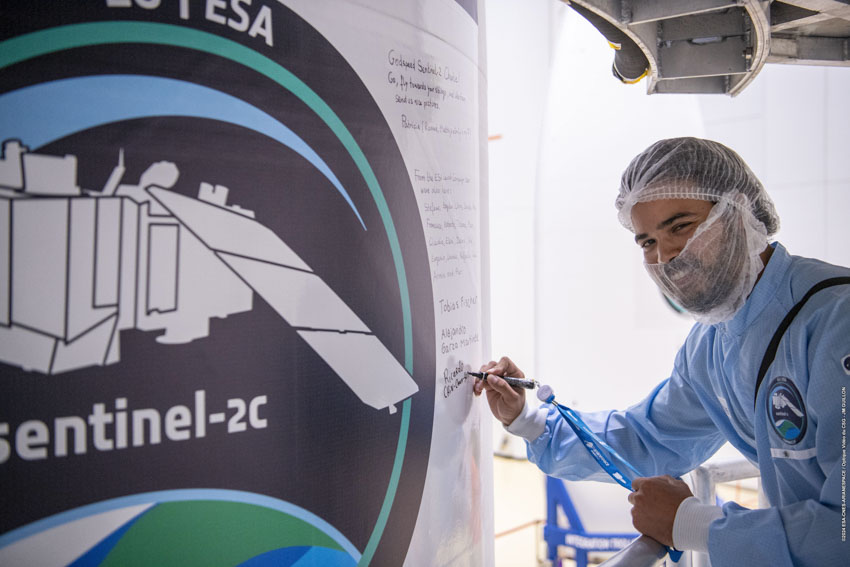
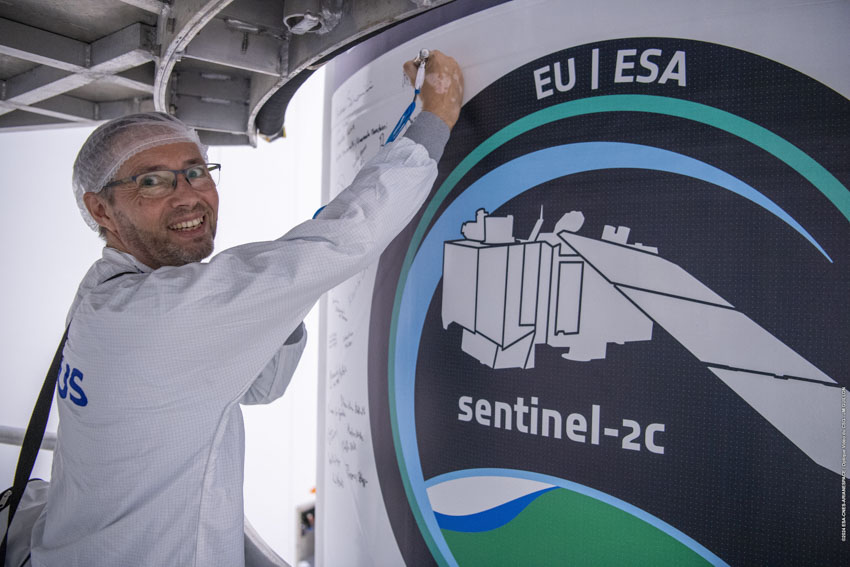
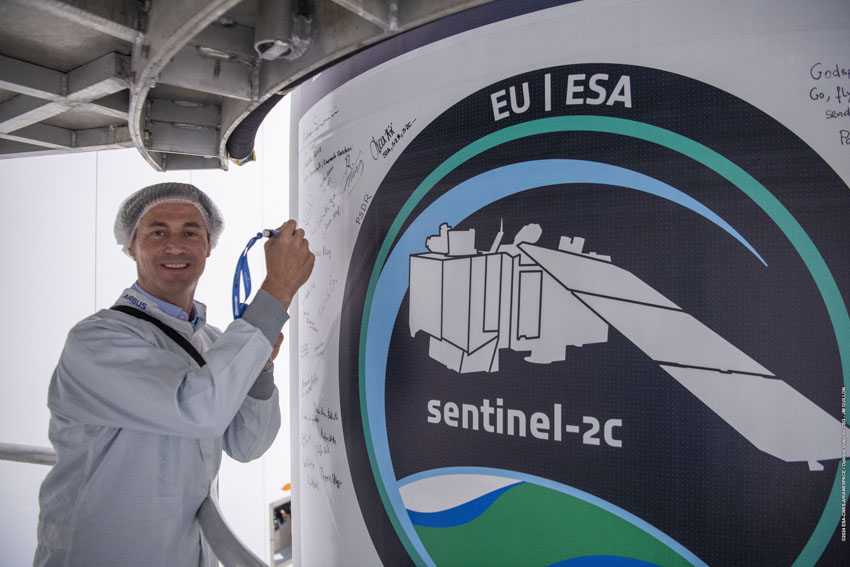
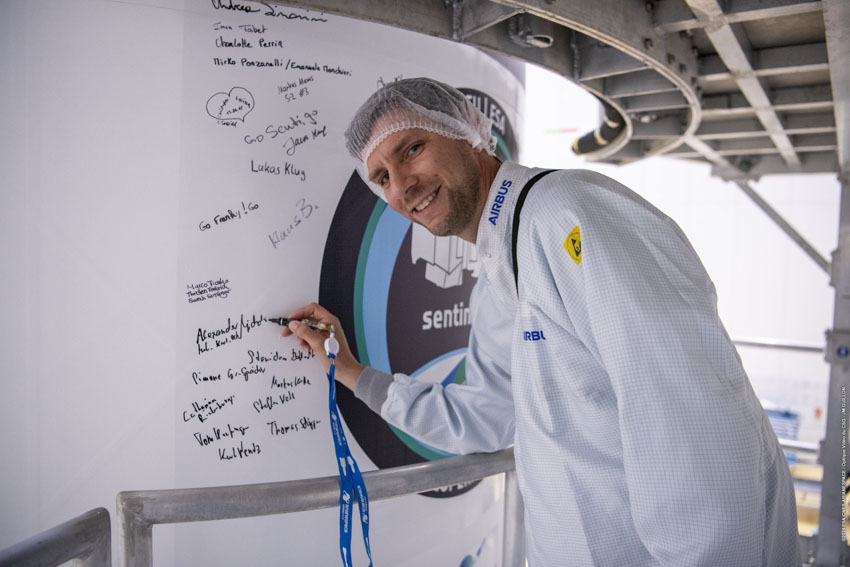
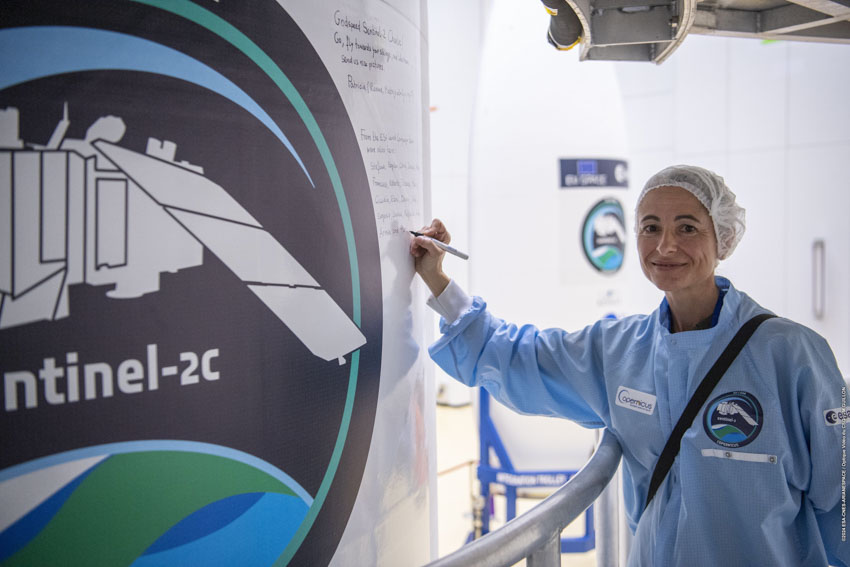
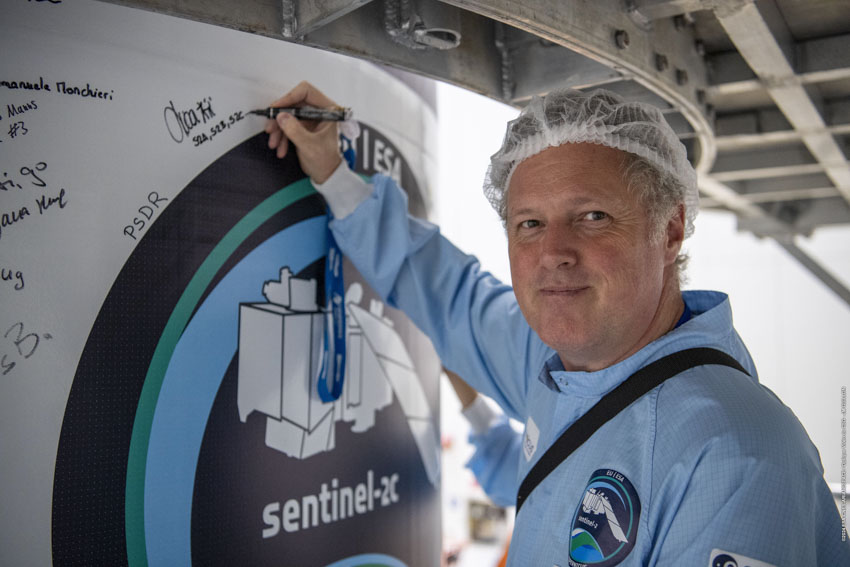
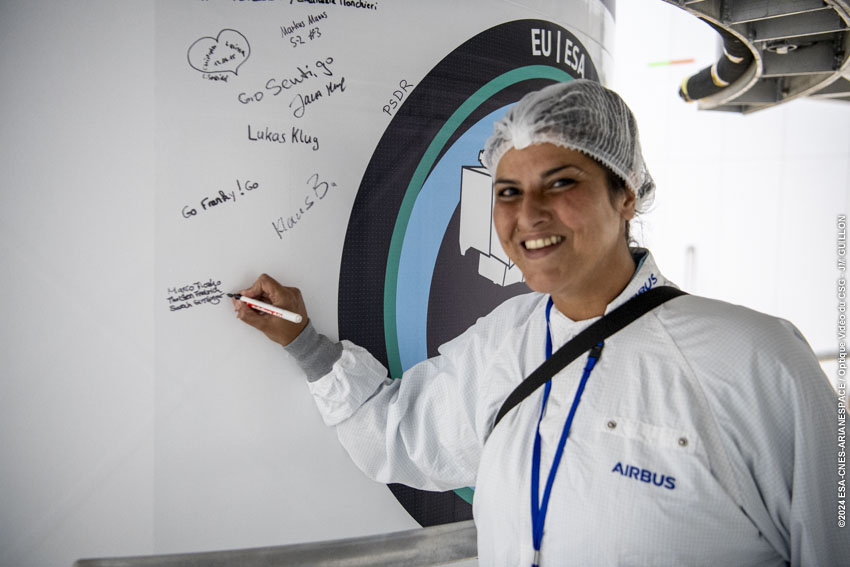
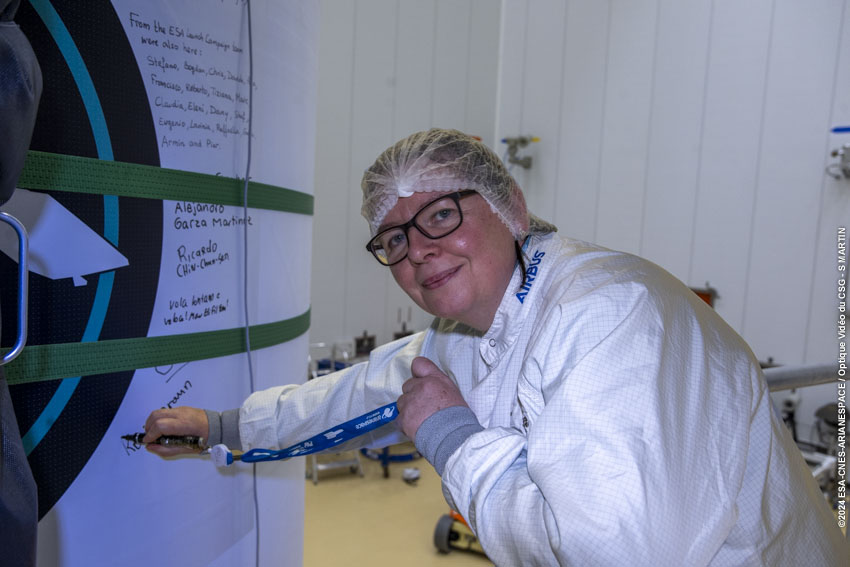
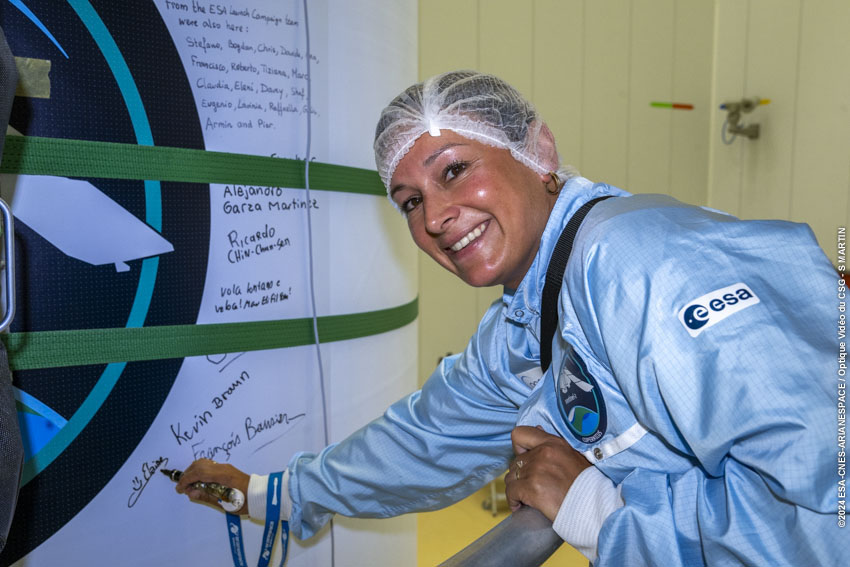
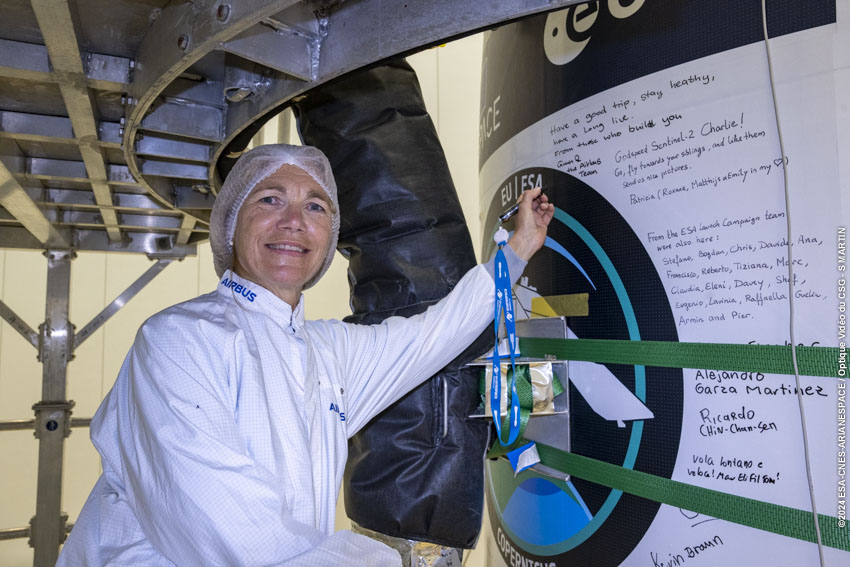
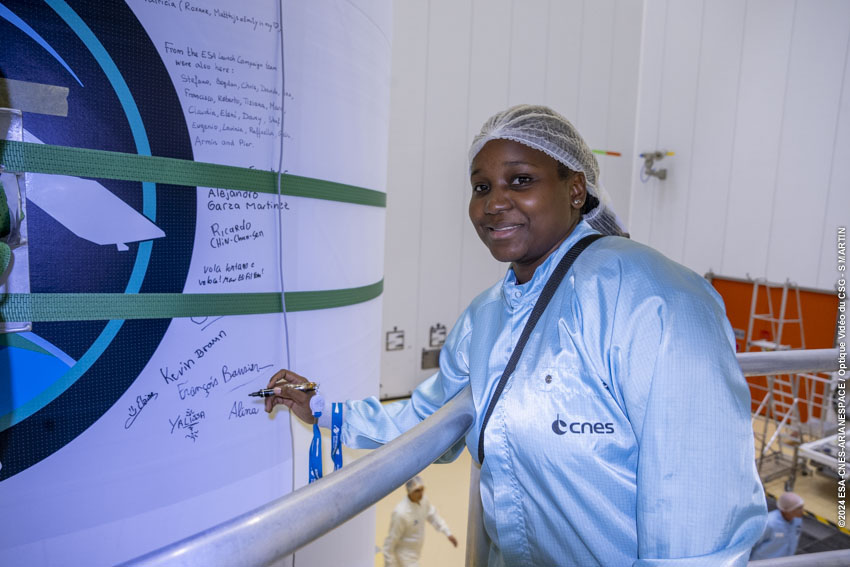
Final touch on the fairing at the end of the day: the signature of the mission logo by the launch campaign team. Everyone present was really proud to participate to this traditional ceremony, without forgetting to sign for the team members that had already left.

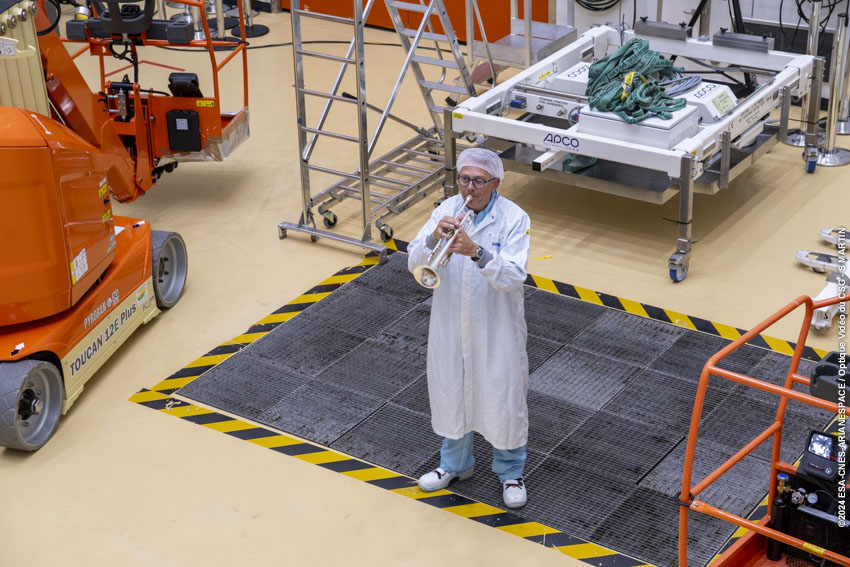
And with the last pictures…

22 August – D-7

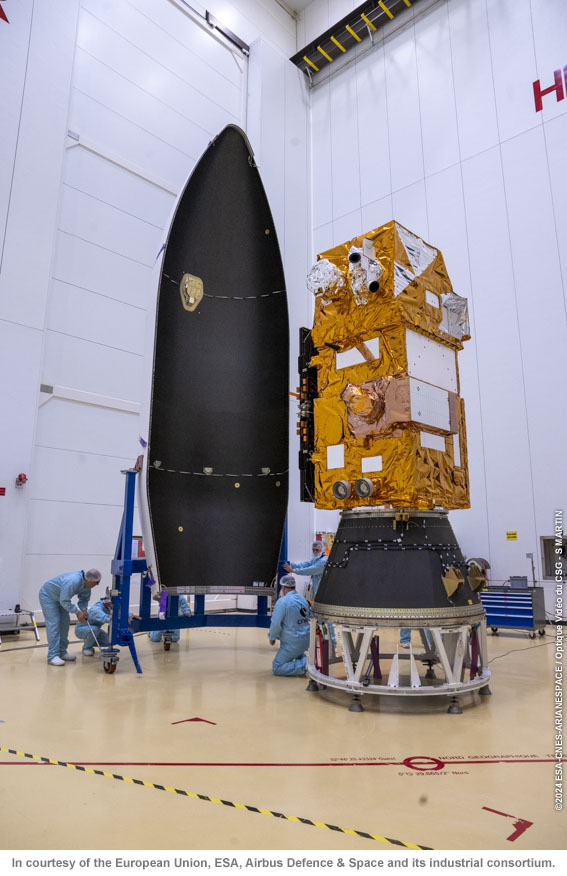
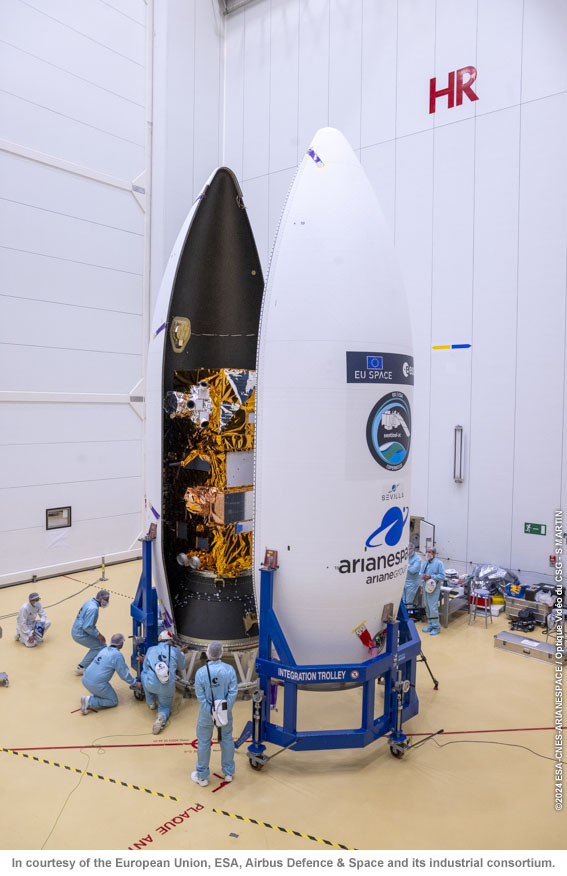
D-7 is the day of the encapsulation, a milestone that carries a lot of emotion and excitement. Emotion because it’s the last time we see the satellite. Excitement because the launch is becoming at each step more real.

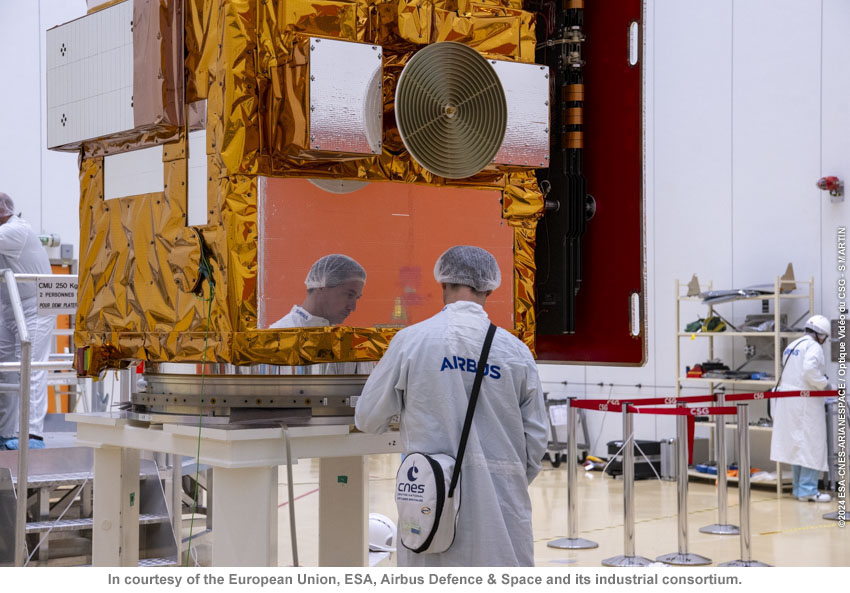
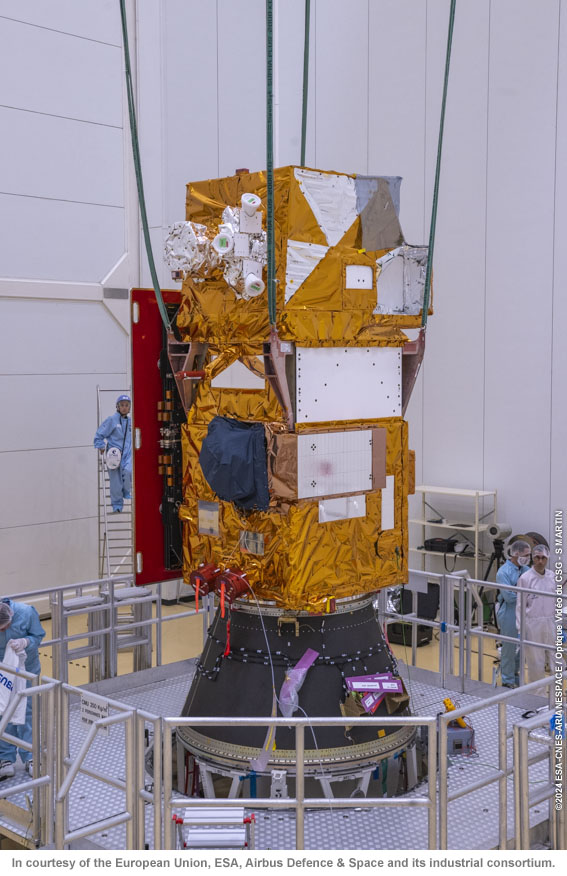
For a couple of hours before the fairing closure, during the final inspection before flight, the lucky ones who were here could enjoy a fabulous sight: Sentinel-2C was more beautiful than ever, all dressed-up in its flight configuration, looking like a precious jewel…

… that will now be kept safely packed inside the launcher upper composite until D0.

21 August – D-8

We are now in the combined operations with the launcher that last 10 working days, named D-8 to D0 (launch day) and including an extra D-1.1 in the sequence. Each day has a predefined scope of interdependent activities to be carried out on the satellite, on the launcher, and both parties together.

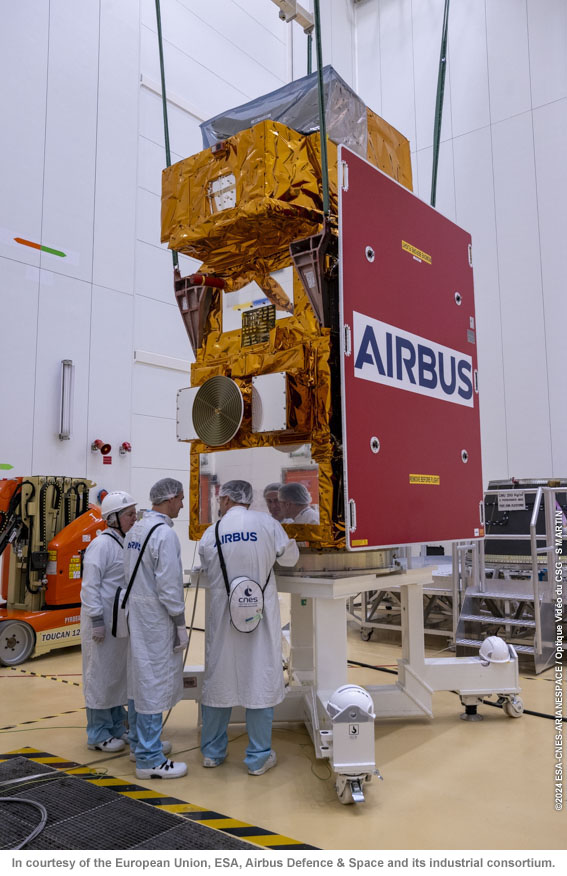
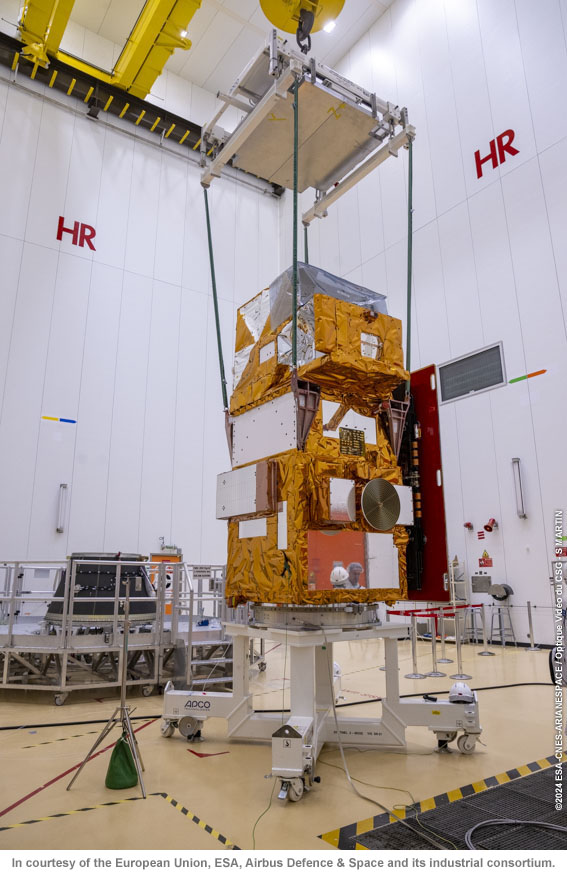
Today was D-8 (day minus 8) and the following activities were targeted: the satellite mating on the launcher adapter, the flight connection of the umbilical harness and final internal inspection. After that the satellite had to be switched ON and checked through the adapter umbilical lines. Electrical test were also planned on the adapter lines used by the launcher. The fairing final preparation and inspection needed to be completed at the end of the day in order to be ready for D-7.

It was a longer day than expected but the activities (most of which were already rehearsed during the adapter fit-check at the beginning of the campaign) went well, the teams involved collaborated efficiently and all the objectives of the day were met.

20 August – Ready for the combined operations

For the satellite in S3B, the last two days were dedicated to setting the flight configuration after fueling in view of the upcoming combined operations with the launcher. Red tag items were removed, Green tag items installed, thermal insulation finalized for all the accessible areas before the flight mating on the payload adapter, leaving the minimum number of items to be completed before encapsulation ( final closure of the fairing around the satellite). A thorough quality inspection followed, that was successfully concluded.

On the launcher side, the fueling of the 4th stage has been completed today at the launch pad. In S3B, in a separate cleanroom from the satellite, the fairing and payload adapter have been inspected for cleanliness and prepared for the activities to come.

Two major meetings took place today: the Satellite Flight Readiness Review and the BT-POC.

The first one has the objectives to judge the overall readiness of the satellite to be integrated on the launcher, to confirm that the ground segment is also ready to safely operate the satellite and to ensure that the communication links between ESOC -our satellite control center in Darmstadt- and the satellite in CSG are operational. The review was successful and authorized the satellite to enter the combined operations phase with the launcher.

This input was necessary to support the second meeting, BT-POC, which is a technical check-point between launcher and satellite authorities before the start of the combined operations : readiness was confirmed on both sides and the activities will start tomorrow early morning with the flight mating of the satellite on the payload adapter.

16 August – Fueling

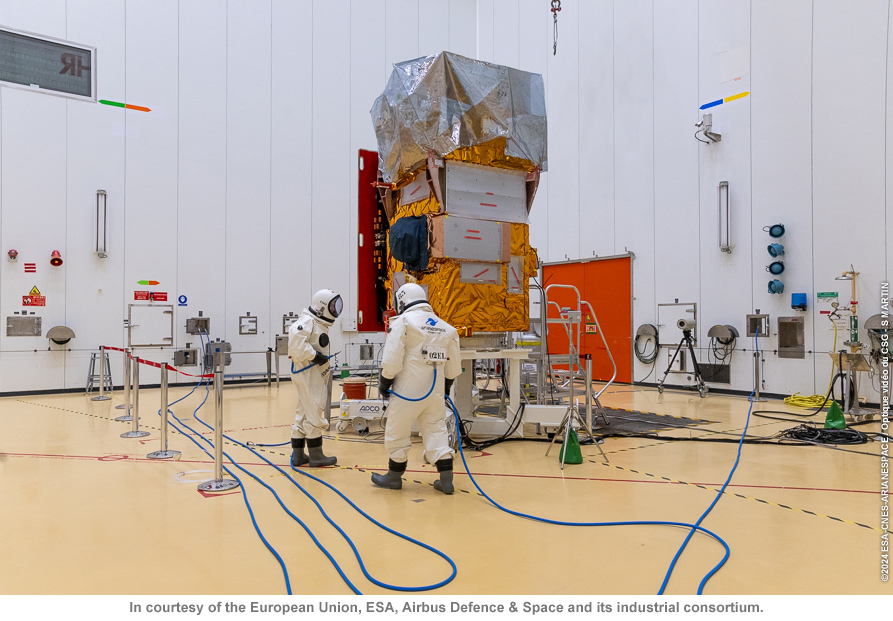
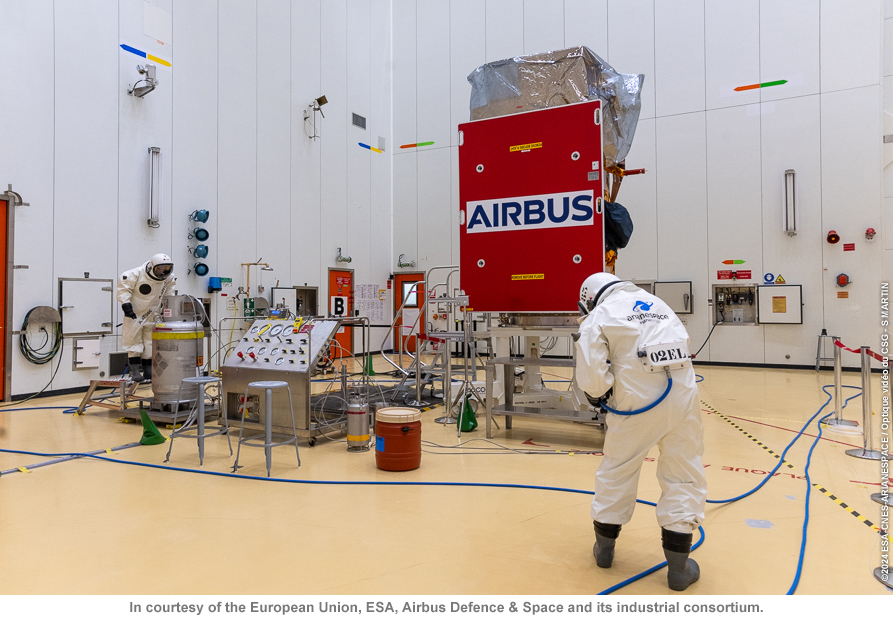
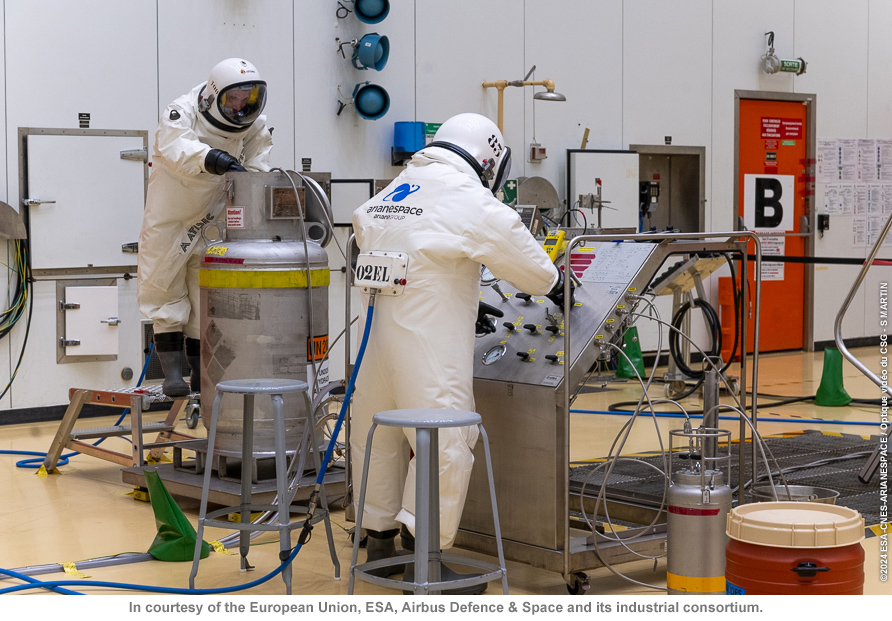
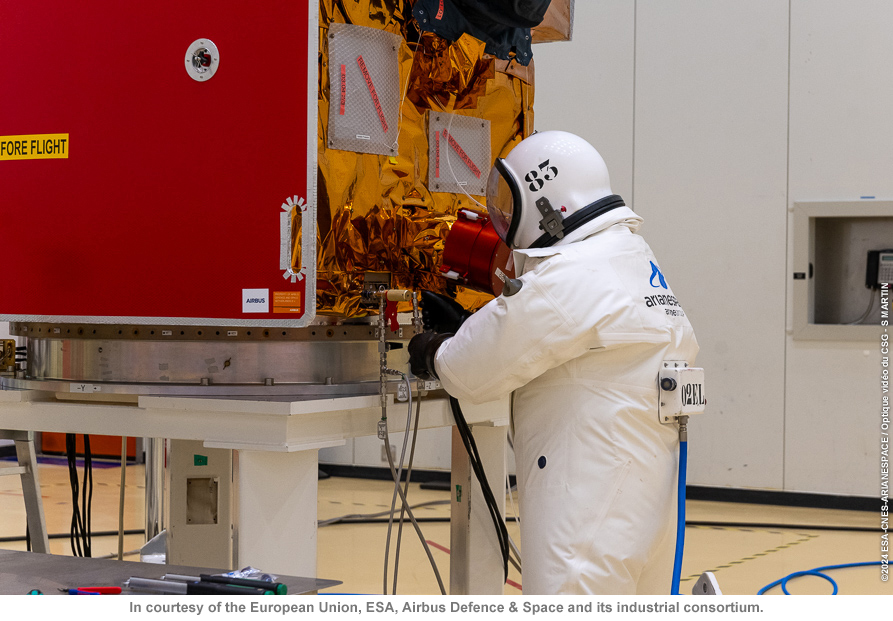
On Friday, the propulsion team from AGG Lampoldshausen got organized in 2 shifts to perform the fueling of the satellite in S3B building. The tank has been loaded with 133 kg of Hydrazine, then pressurized with Helium up to 21 bars. Both activities were completed safely during the day.

The first switch ON of the satellite after the fueling took place right after the S3B facility had been evacuated, as it is an hazardous activity. Remotely from the LBC in S1A building, ADS team ran their automated scripts nominally. The commands to close the latch valves (third safety barrier) were also successfully executed. The satellite was switched OFF and left in a safe configuration over the weekend.

A critical step has been achieved!

to share with our colleagues, families and friends the highlights of this adventure…