All posts by patricialopez6436aac266

14 August – ready for fueling

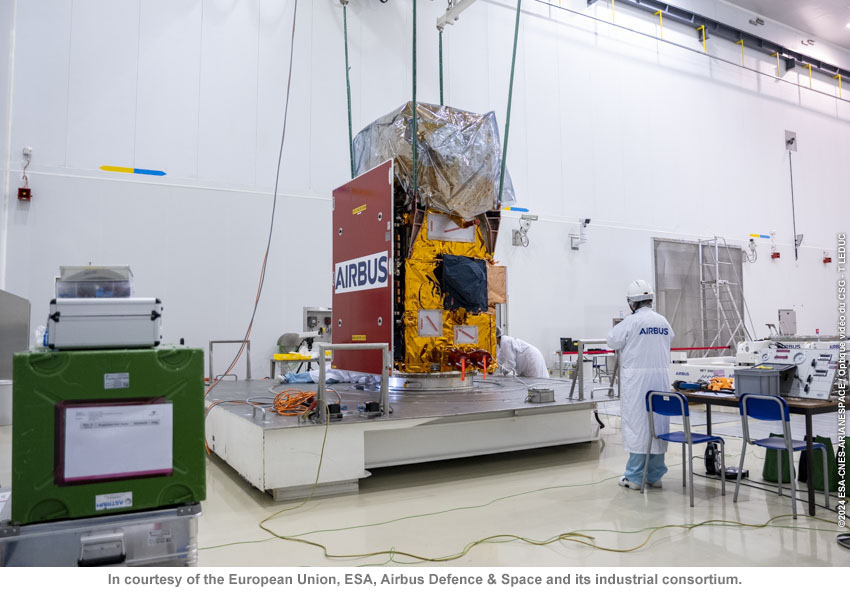
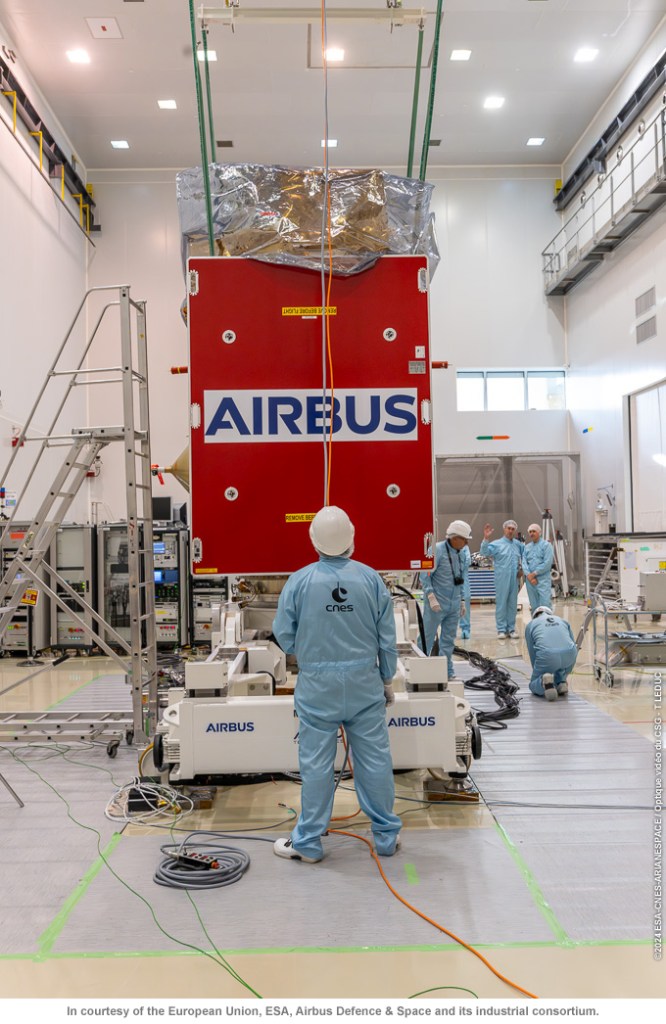
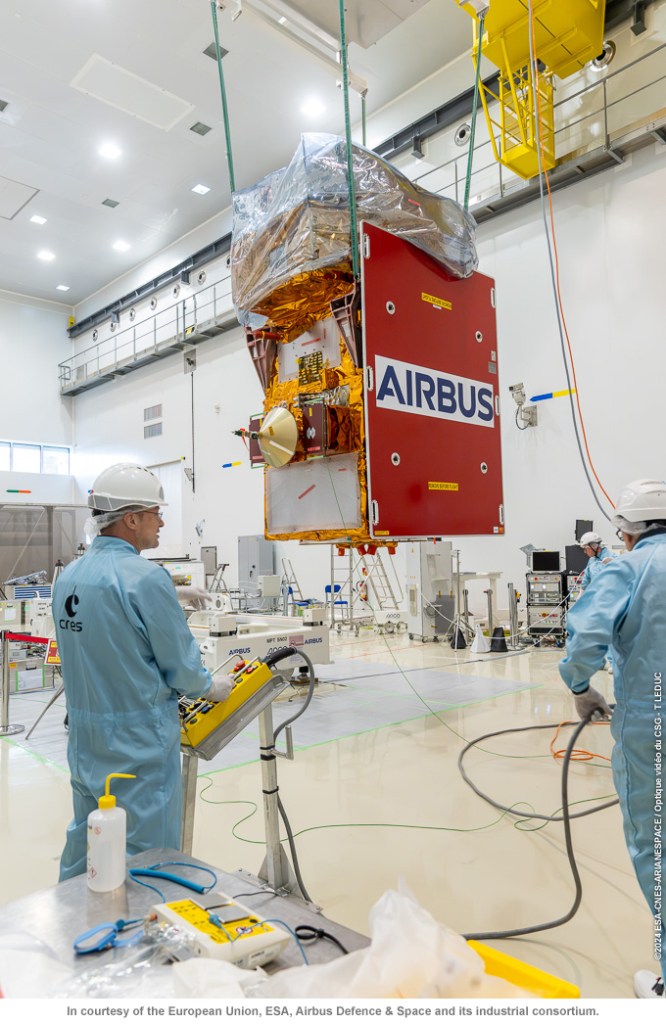
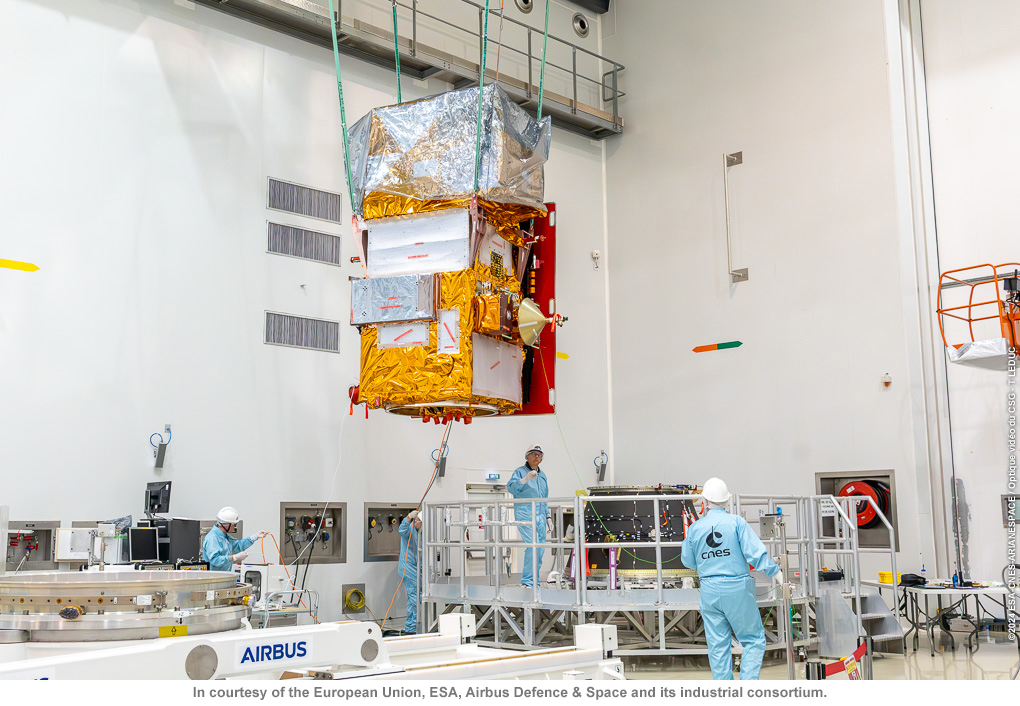
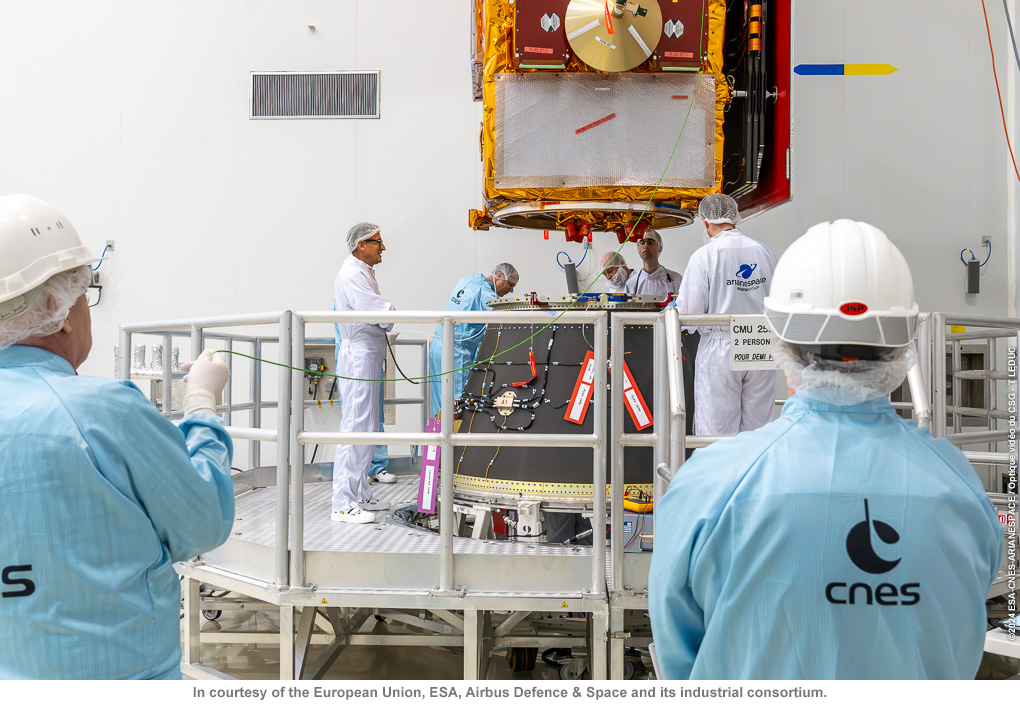
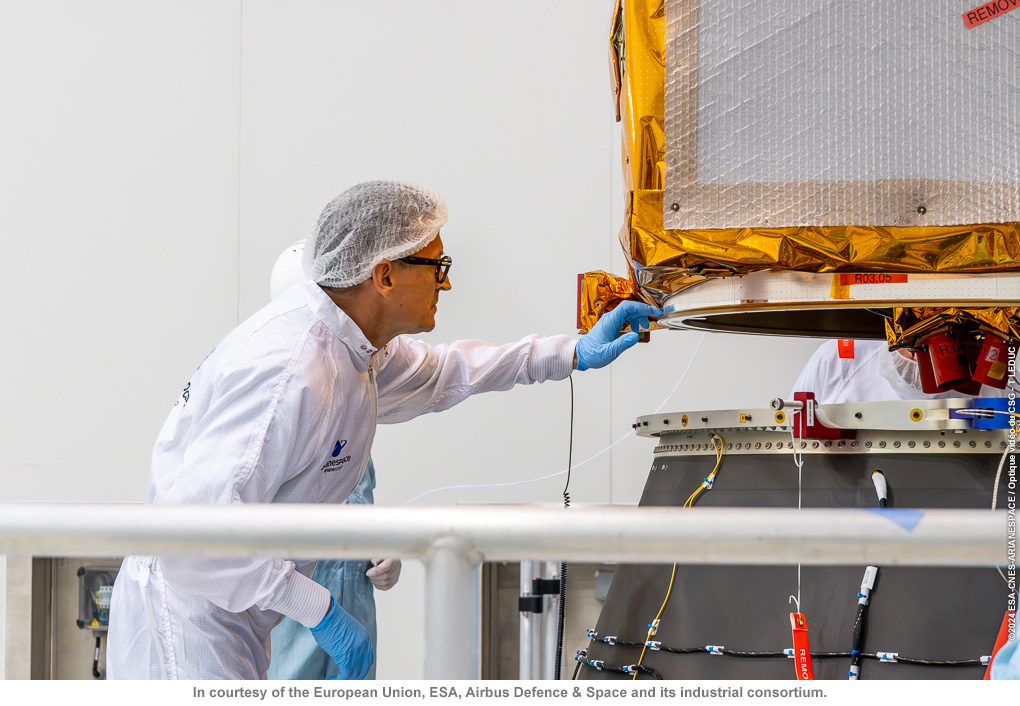
On Monday, the activities started early morning around 7:00 to transfer the satellite from S1A (preparation facility) to the S3B (fueling and encapsulation facility). The first step was the hoisting of the satellite from its tilting dolly onto the CCU3 pallet.
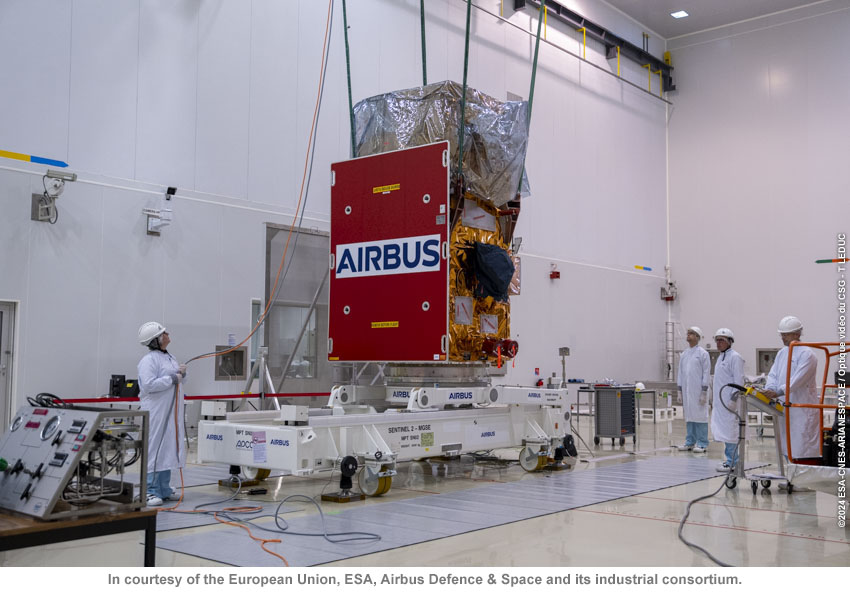
The CCU3 is a transport container made available as part of the launch base facilities to transfer satellites between the different preparation buildings. It is designed to protect the satellite against shock and vibrations and provide a suitable environment in terms of cleanliness, temperature, relative humidity and over-pressure.

The pallet is the base of this container that can be detached and moved around smoothly thanks to an air cushion system. It was brought this way in the cleanroom close to the satellite.
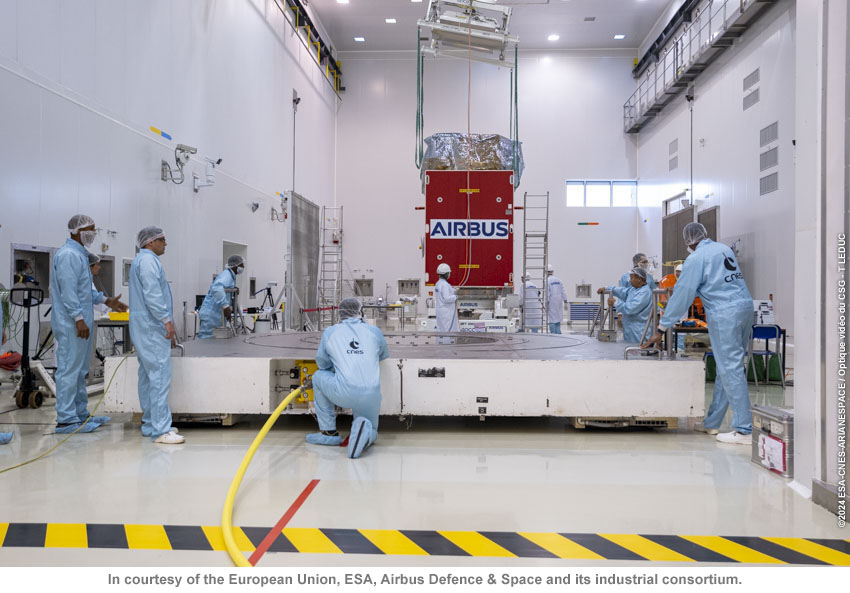
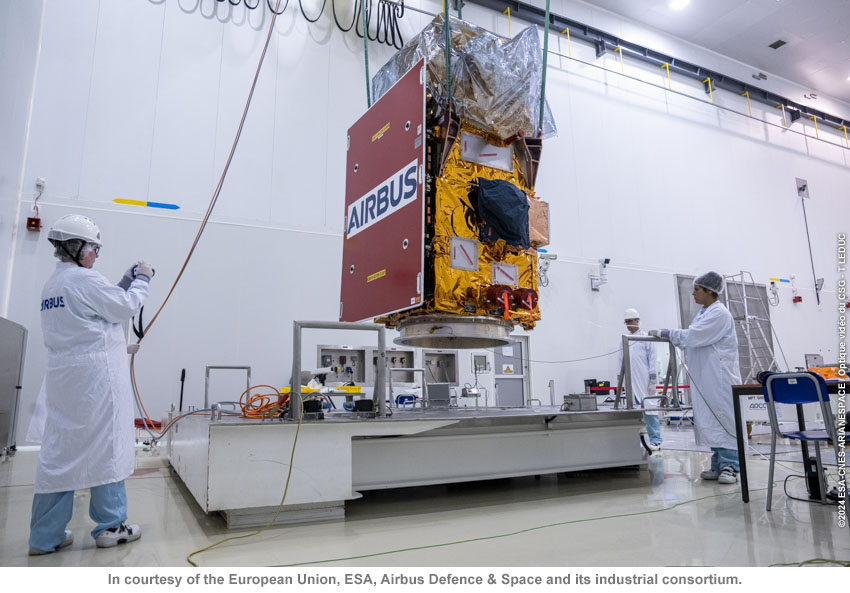
Once the satellite was mated on the CCU3 pallet, it could slide back into the airlock to re-integrate it housing.
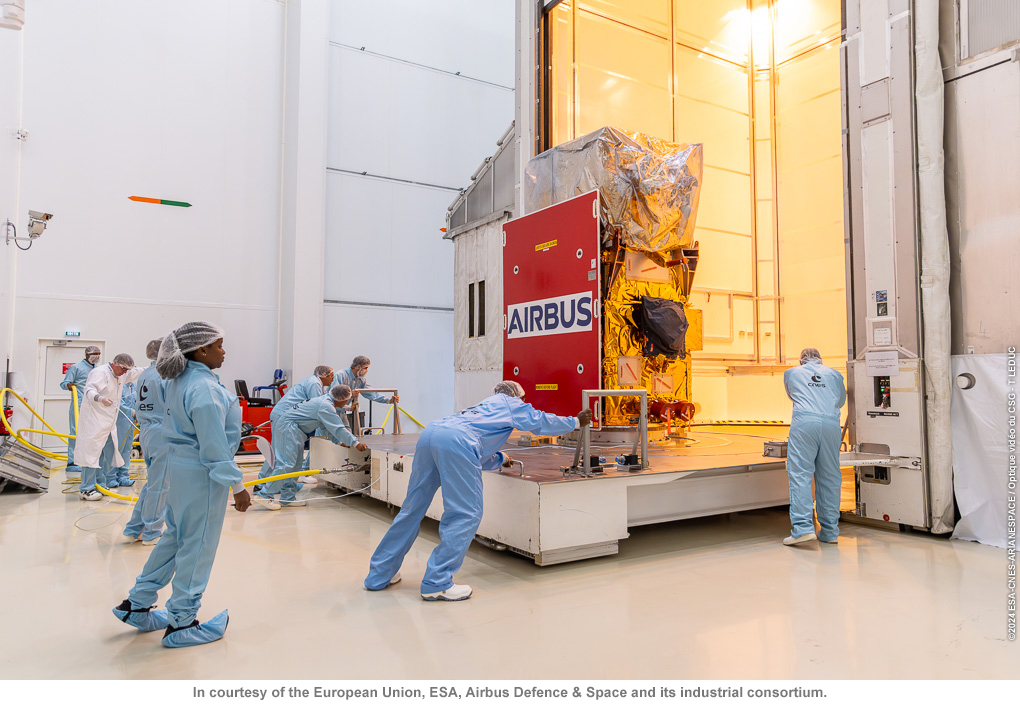
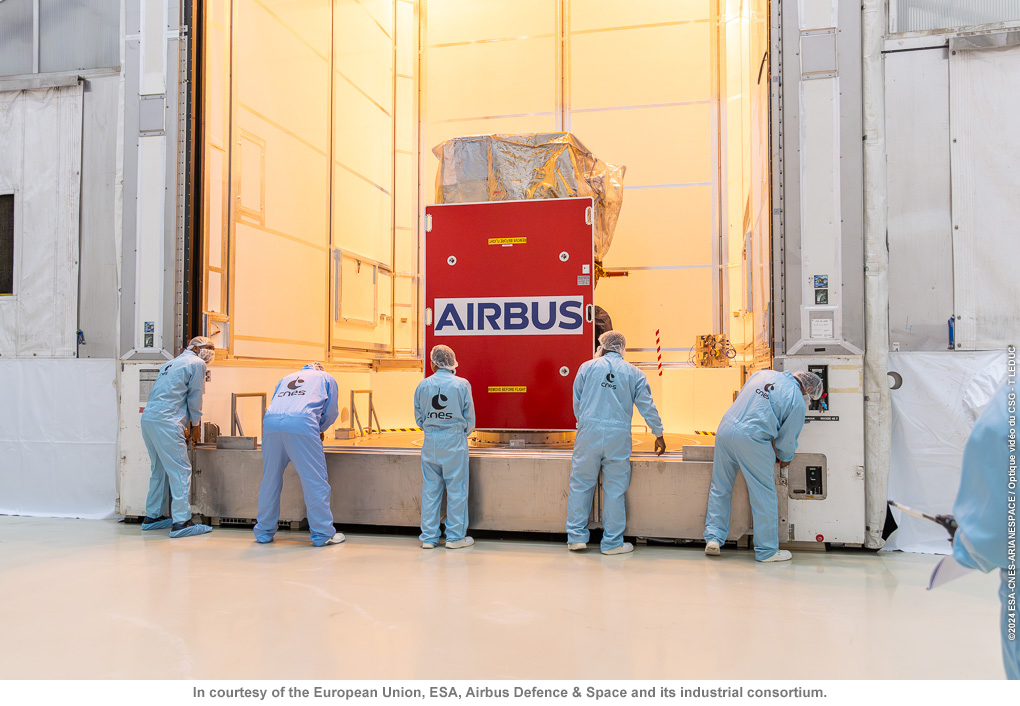
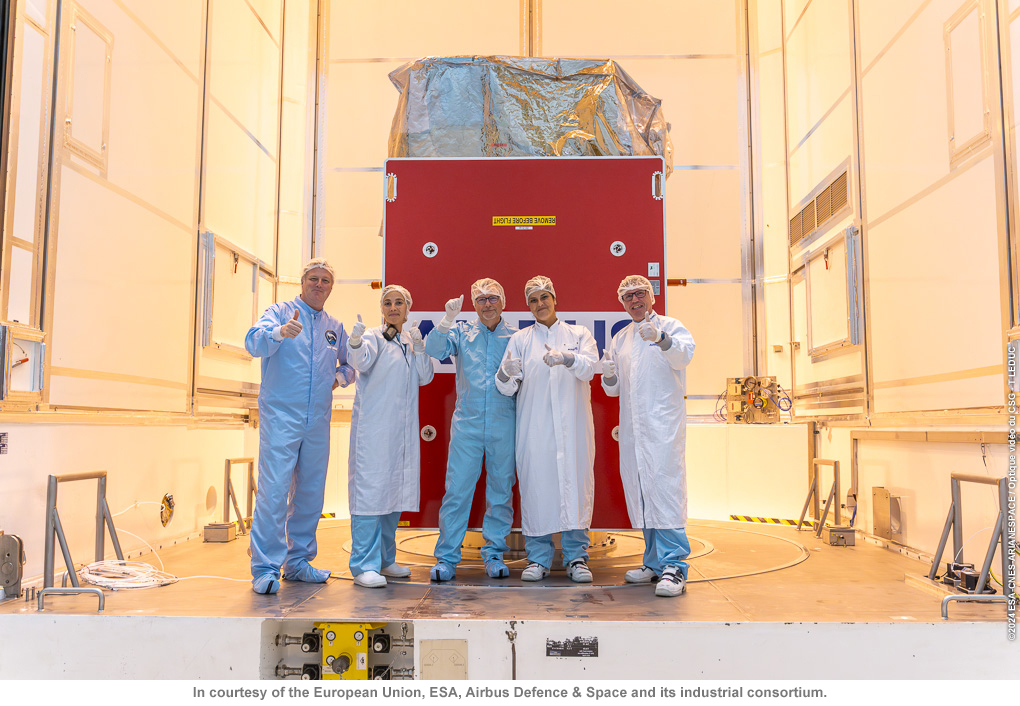
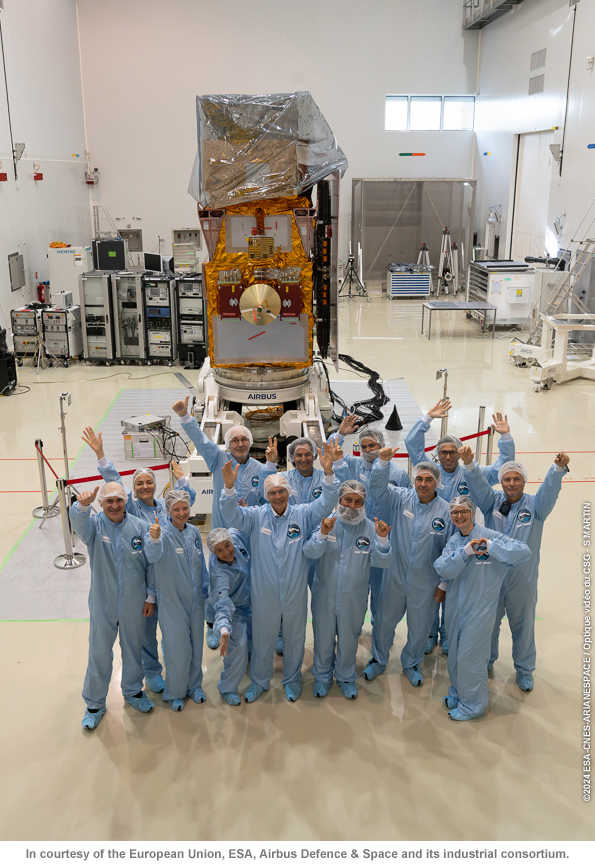
As you can measure, the CCU3 is slightly oversized for Sentinel-2C and could have also transferred the whole team!

After all cleanliness, environment and purge set-up checks were successfully performed, the door of the CCU3 was closed until departure to S3B. This trip started at night around 19:00, to avoid the hottest part of the day.
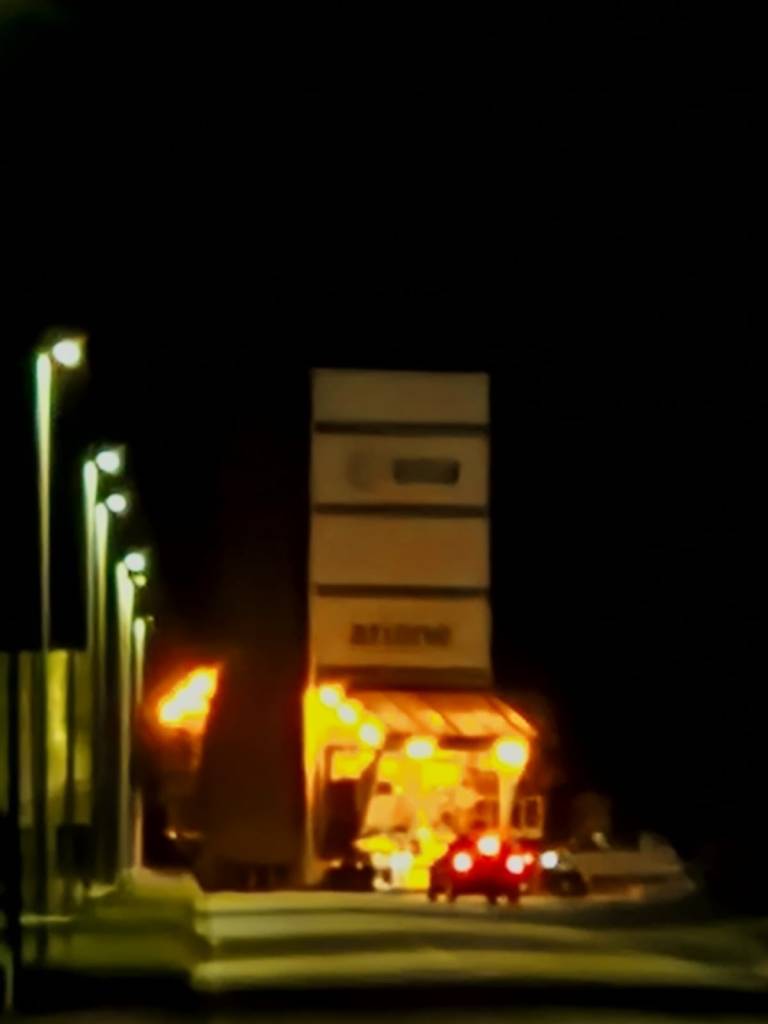
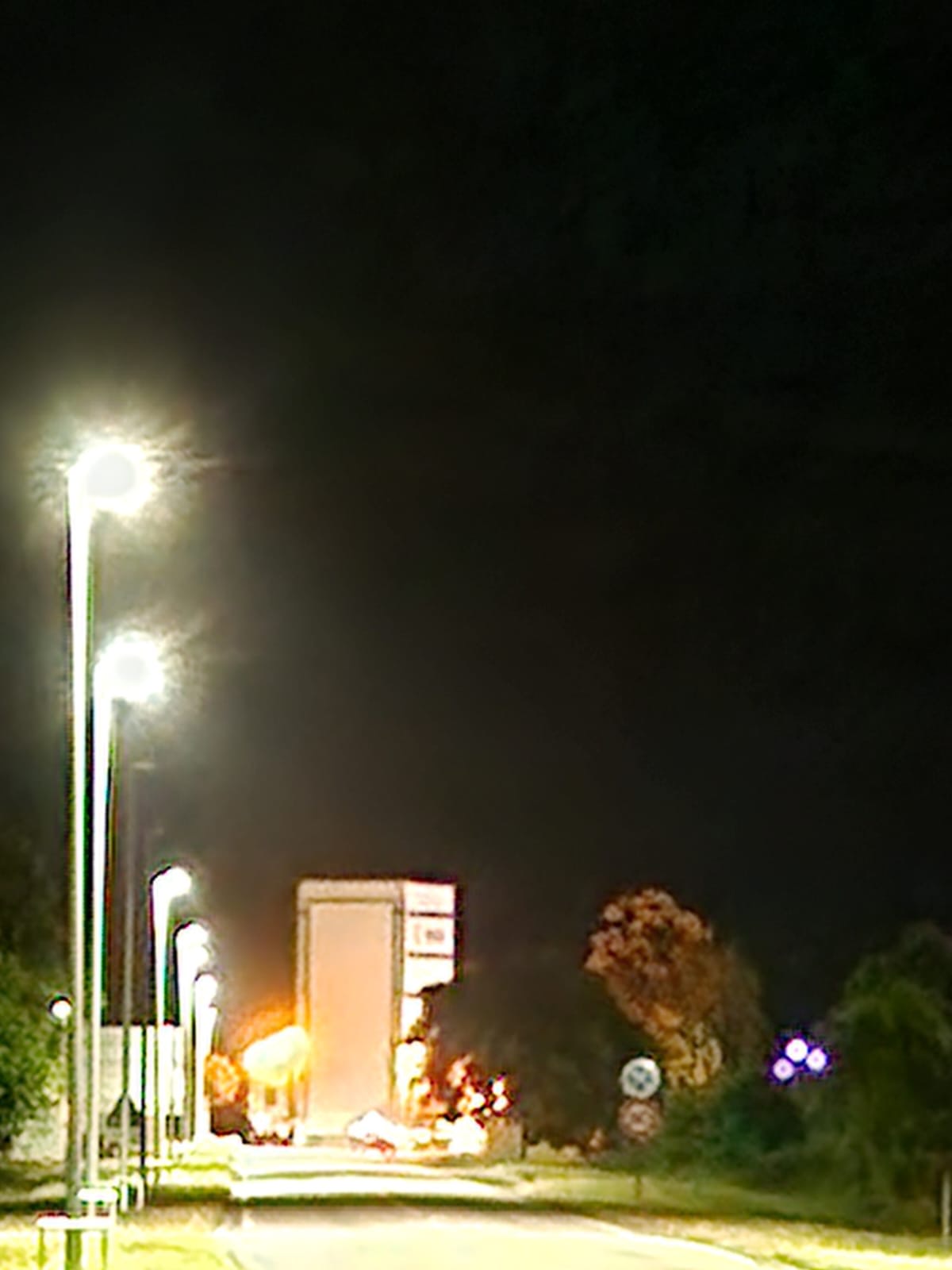
CCU3 getting out of the S1A airlock

The CCU3 was docked to the S3B airlock around 21:30. The preparation activities before the opening took up to midnight, after what the CCU3 door could be slowly opened and the pallet carrying the satellite moved to the HR (fueling hall) cleanroom. There, the purge set-up could be re-established before declaring the end of the activities around 4:00 AM.

A very long day for all the teams involved!

On Tuesday, the satellite was transferred to its vertical stand and the CCU3 pallet could move out of the cleanroom. After connection to the COTE2, the satellite was successfully switched ON and its status checked ready for fueling.

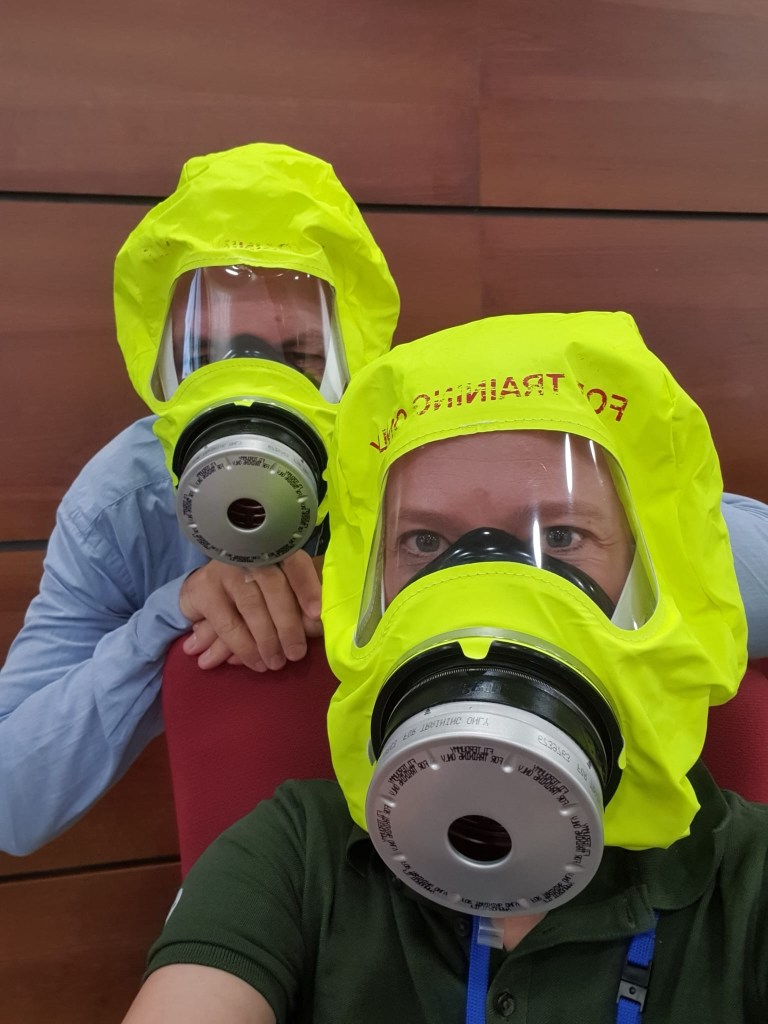
Over the last 3 days, the set-up and validation of the Fueling Ground Support Equipment was completed. The fueling team got trained to the SCAPE suits (Self Contained Atmospheric Protective Ensemble) that will be their safety outfits during the hazardous activities and look like this…
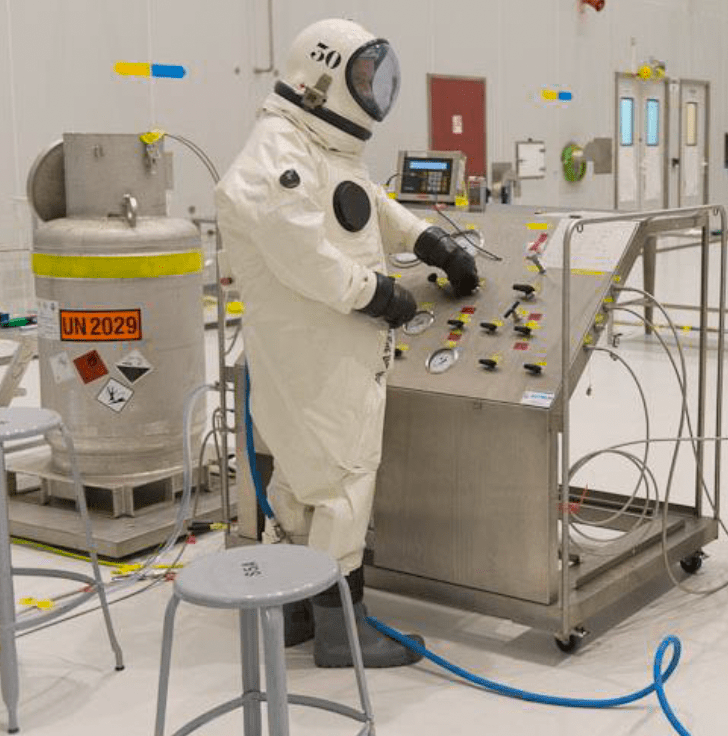
On Wednesday evening, the last actions were closed and authorization to start fueling was given. Since 15 August is bank holiday in France and French Guiana, the fueling will start on Friday 16 August.

In the meantime, the launcher preparation has also progressed according to schedule with the fueling of the 4th stage that started today.

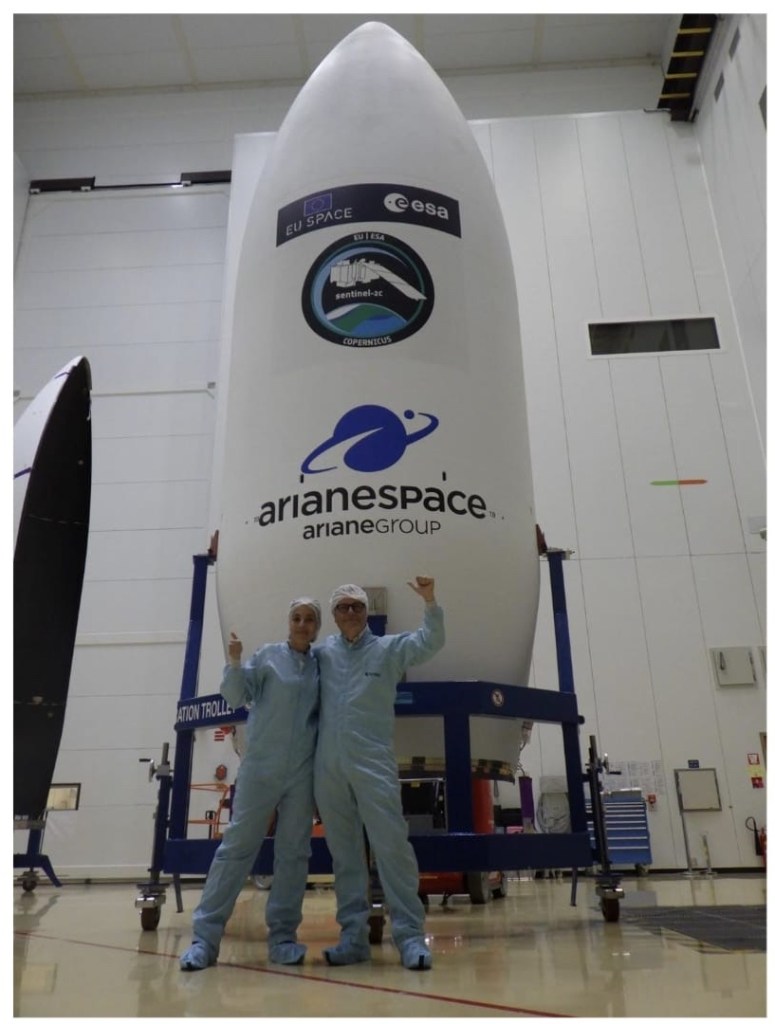
As we are getting closer, the launch of Sentinel-2C has been officially announced by Arianespace (follow the link “S2C launch announced”).
9 August – Good News

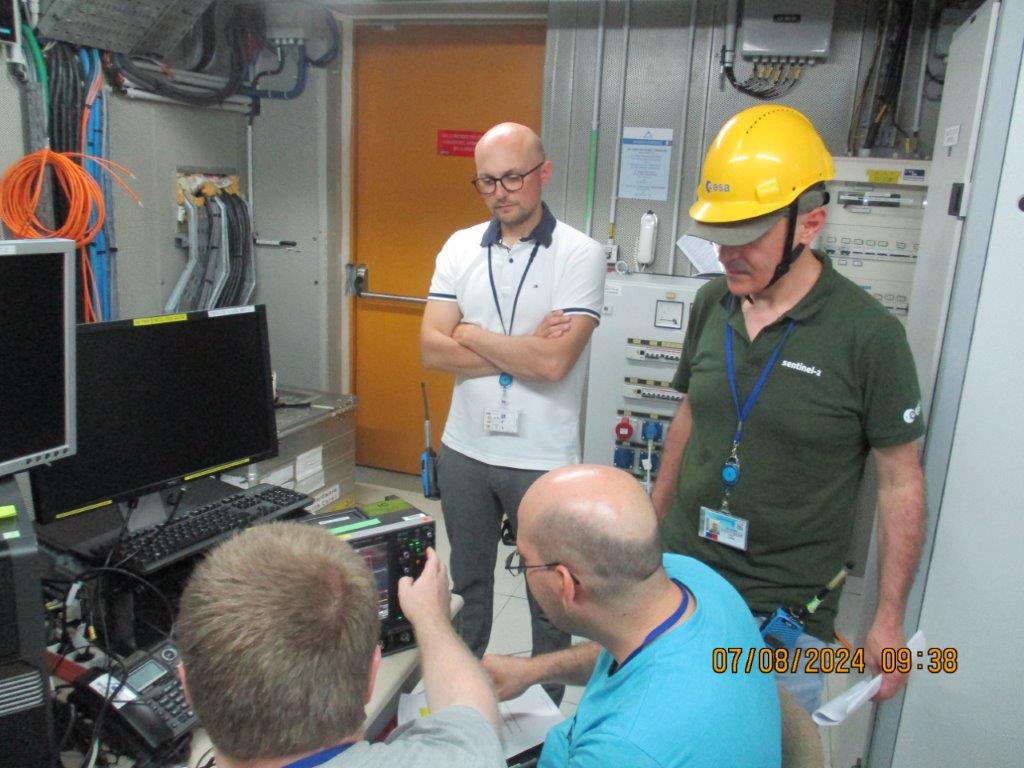
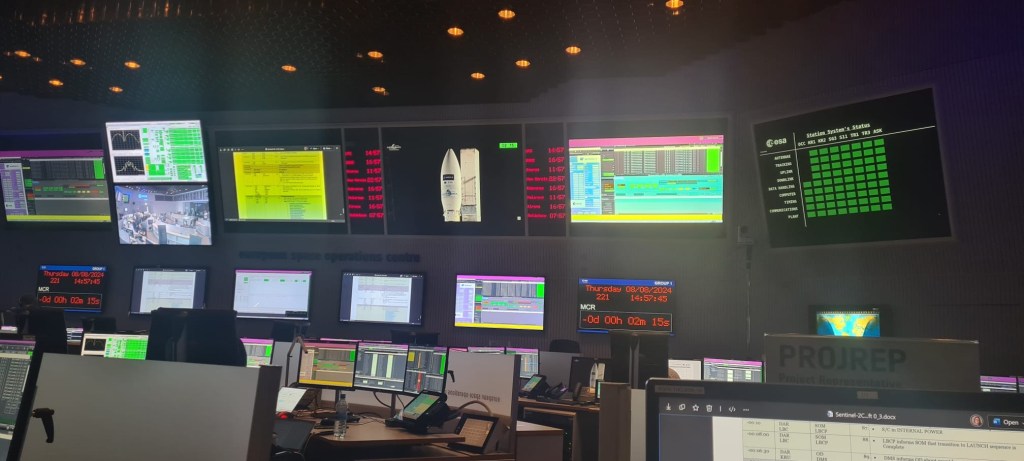
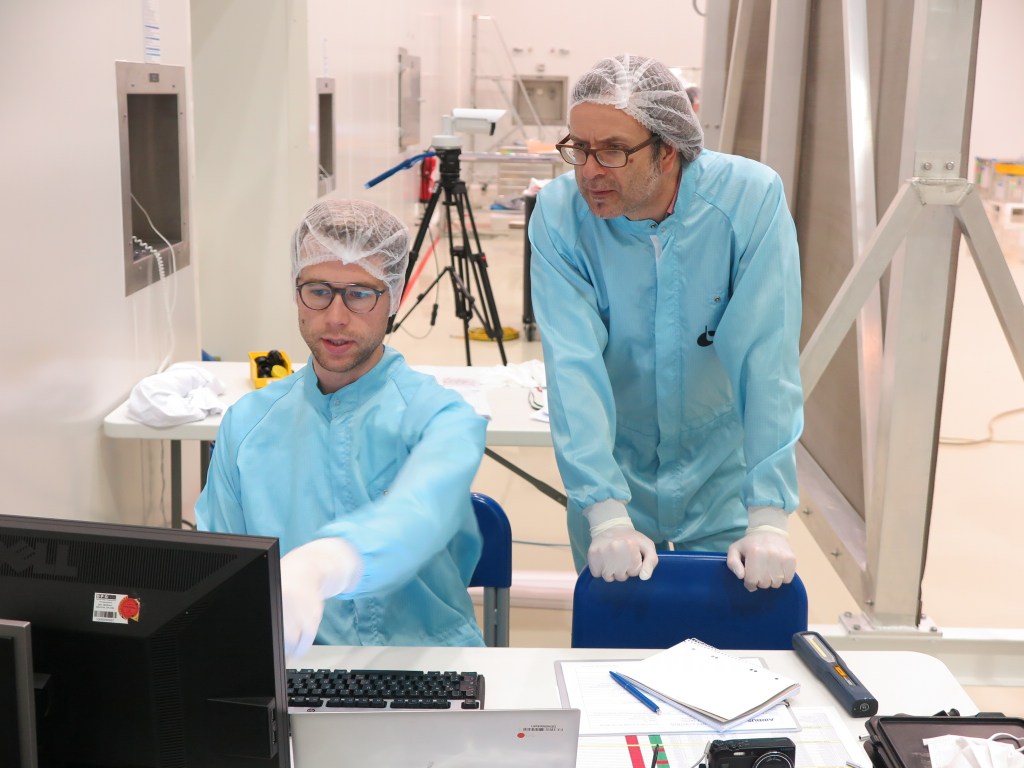
On Friday morning, the Operations Readiness Meeting was held in ESOC. All the contributors on the “Ground Segment” side presented their preparation status for the launch of Sentinel-2C: all the lights are green!

A bit later in the day, on CSG side, the propulsion leak tests were completed in S1A and the results assessed right away with our experts: all were very good. Green light for fueling! We will transfer the satellite to the S3B building on Monday.

In S3B, the fueling equipment has been set-up as well as the COTE2 (our back-up power and data link equipment for the launch). COTE2 is also temporary installed in S3B to support the fueling activities next week, then it will move back to the launch pad to ensure redundancy.
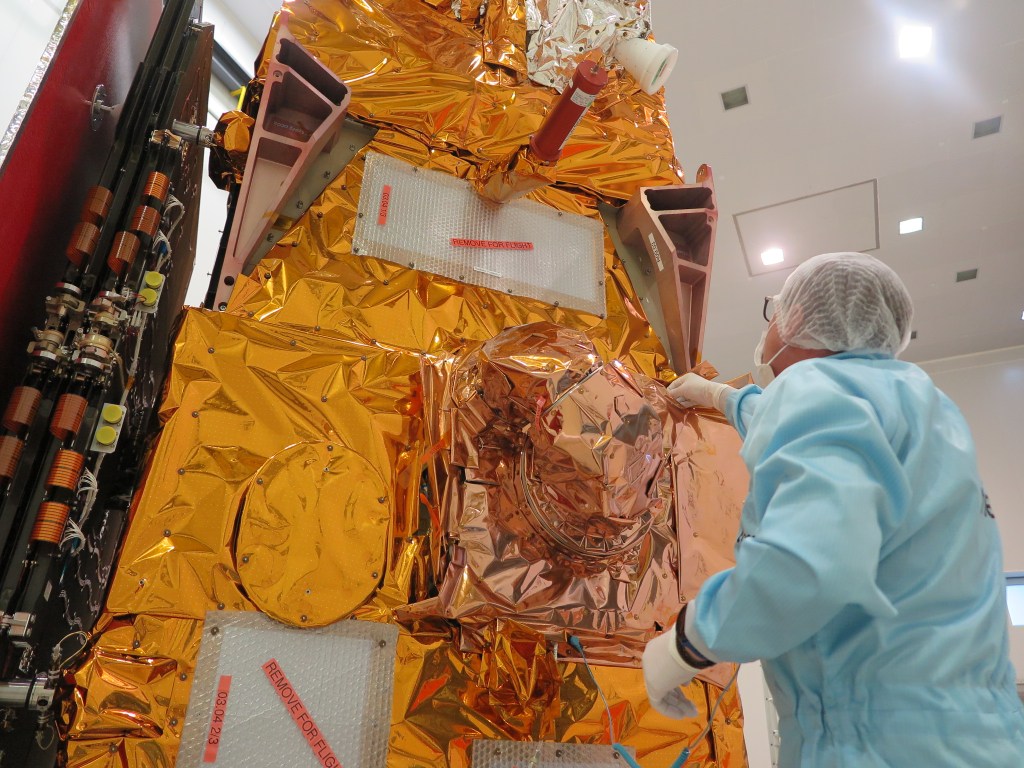
In S3B again, a first fairing inspection took place at the end of the day. All the launcher elements are now available and being prepared for the combined operations.

At the launch pad, the COTE1 (our nominal power and data link equipment for the launch) has been set-up. The umbilical lines verification up to the top of the launcher is being re-performed, to validate end-to-end the launch set-up. This activity will be completed on Monday.

In the evening, we got confirmation from Arianespace that the Test Review Board after Launcher synthesis control test was conclusive. Their next step is to give the go ahead for fueling of the launcher 4th stage, and that is expected on Monday.

Yes, all will continue on Monday!! It means that the team can now enjoy their first 2-day weekend of the launch campaign. Really well deserved, and that was the ultimate good news of this Friday, among all the others.

6-7-8 August in CSG

We are now occupying all the facilities allocated to Sentinel-2C satellite preparation in the launch base.

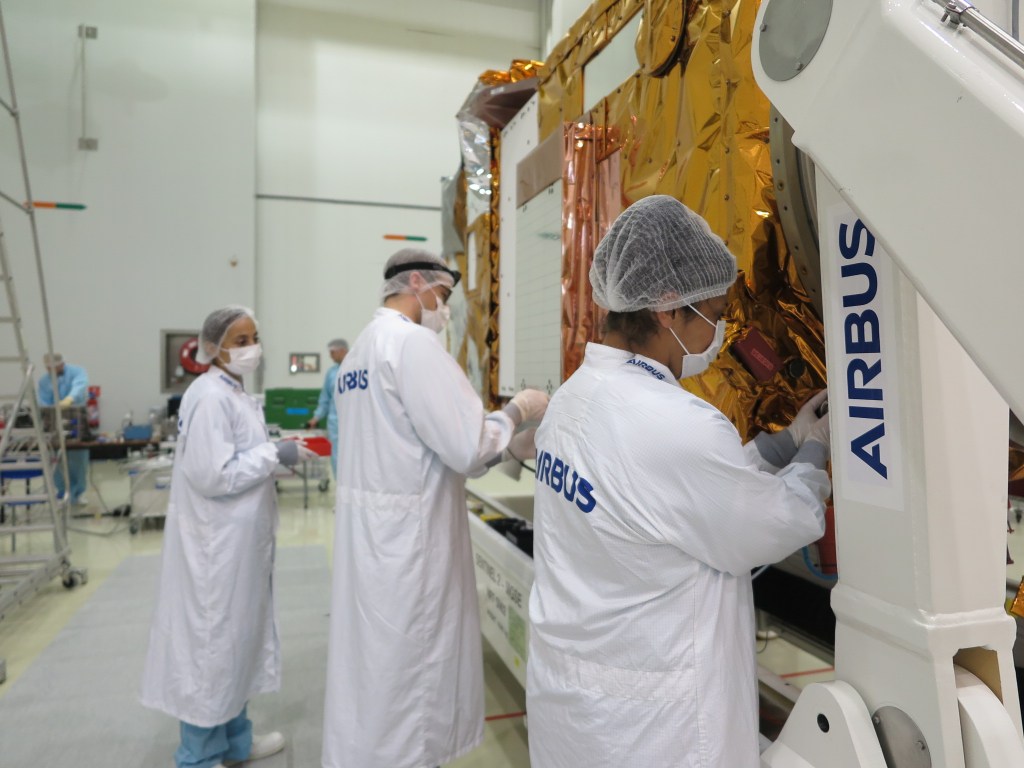
The PPF (Payload Preparation Facility) is the S1A building. This is where we have our offices, the LBC (check-out equipment room) from where we command/control the satellite and the clean room where the satellite autonomous activities are carried out since the start of the launch campaign. The main focus on Tuesday has been the final mechanical and thermal preparation of the satellite, the management of Red and Green tagged items (Red to remove before flight, Green to install before flight), the final inspection and cleaning to get as close as possible to the flight configuration before the fueling.

On Wednesday, only 2 days after their arrival, the team from Arianegroup Lampoldshausen started the propulsion subsystem tests under 24,6 bars (MEOP – Maximum Expected Operational Pressure) to verify the absence of leakage, as prerequisite to the fueling. These tests will last 3 days.

During that time, the other part of LAM team was in HPF (Hazardous Preparation Facility), in S3B building, 13 km away from the S1A, setting up their ground support equipment for the fueling.

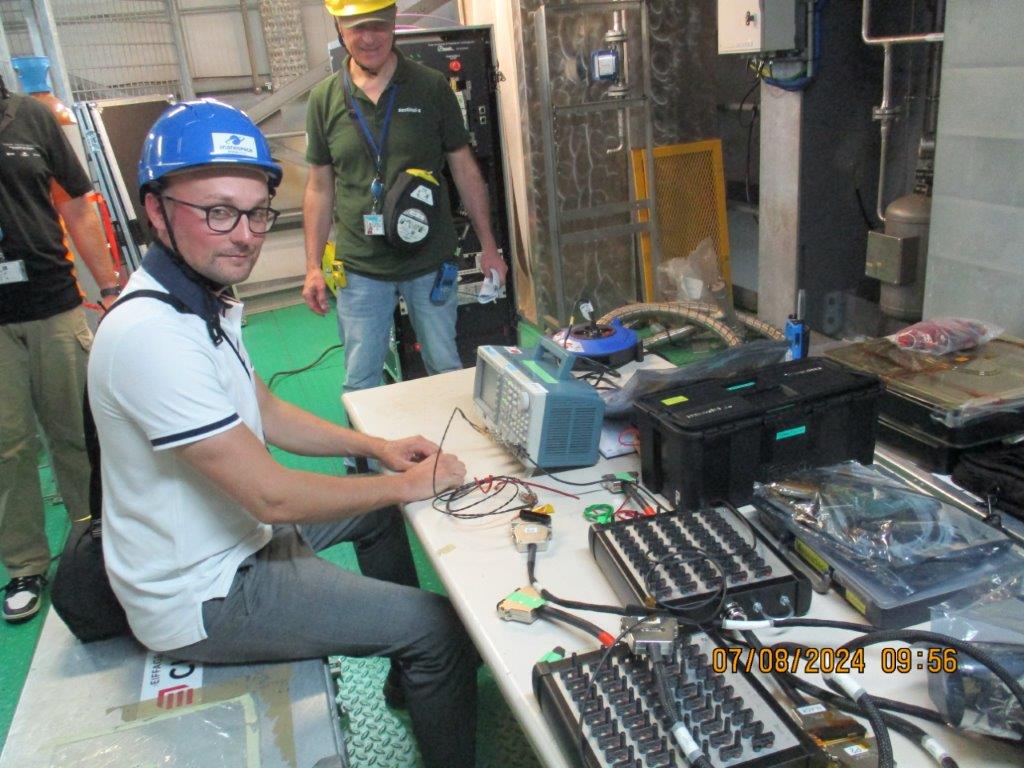
In parallel, over Tuesday and Wednesday, ADS functional team was at the Vega launch pad, 15 km away from the S1A, split between the COTE room – in the basement – and platform level 9 of the mobile gantry – some 40 meters higher- to validate end-to-end the umbilical links.

All was found as expected!

Even Jupiter2, the CSG launch control center where the final chronology will be executed, has started its configuration for Sentinel-2C launch.

6-7-8 August in ESOC

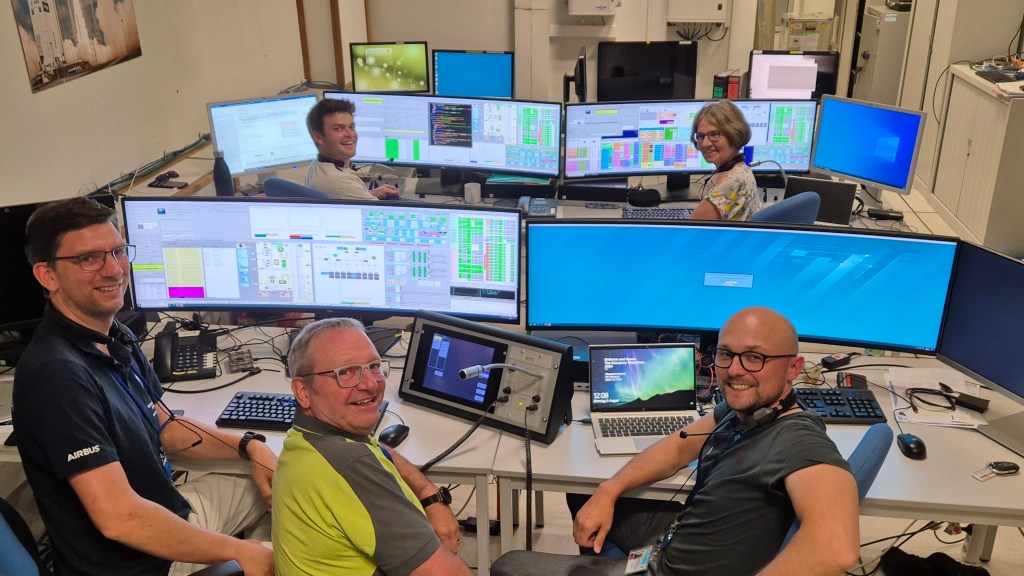
The LEOP teams A and B continued their training on simulations this week, coordinated between the Mission Control Room and the Project Support Room.

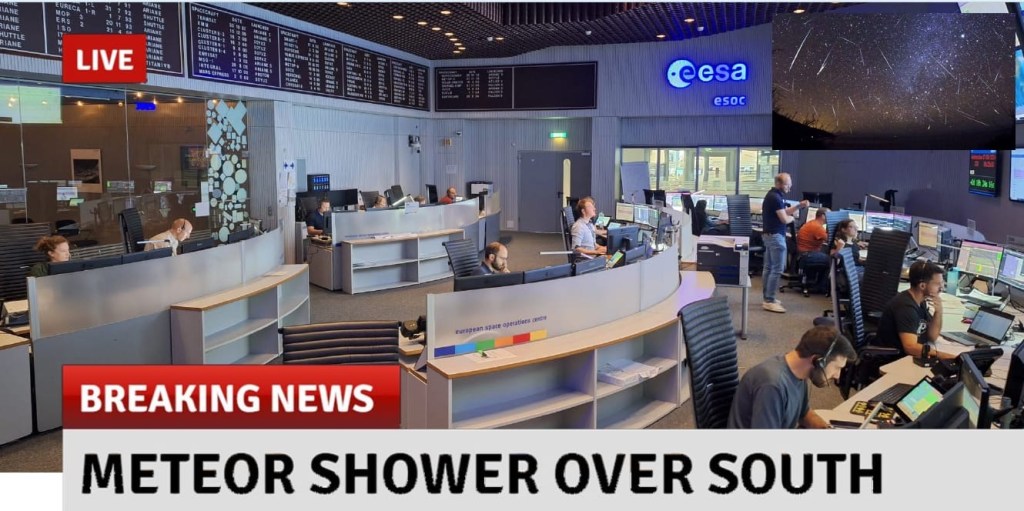
Focus and team spirit are necessary to face any situation. This week, the SIM officer treated them with a simulated launch and a meteor shower.

with a very realistic lift-off!

There were, of course, some team building exercises and a special celebration…

Happy birthday Andrea!

5 August – Last functional check

Everybody was back to work on Monday early morning, each one at their own pace.

The day was dedicated to the last functional checks on the satellite: the dry-run of the launch countdown procedure. All the automated scripts that will be executed to configure the satellite on the launch pad during the final chronology have been executed. The launch abort and the battery charge procedures were also verified. Each step was run, optimized when possible and verified again.

During all day, the satellite real time telemetry was transmitted to Esoc to support the formal Listen-In Test, also in preparation of what will happen on the launch day.

Another successful day, well done everyone!

4 August – Day OFF

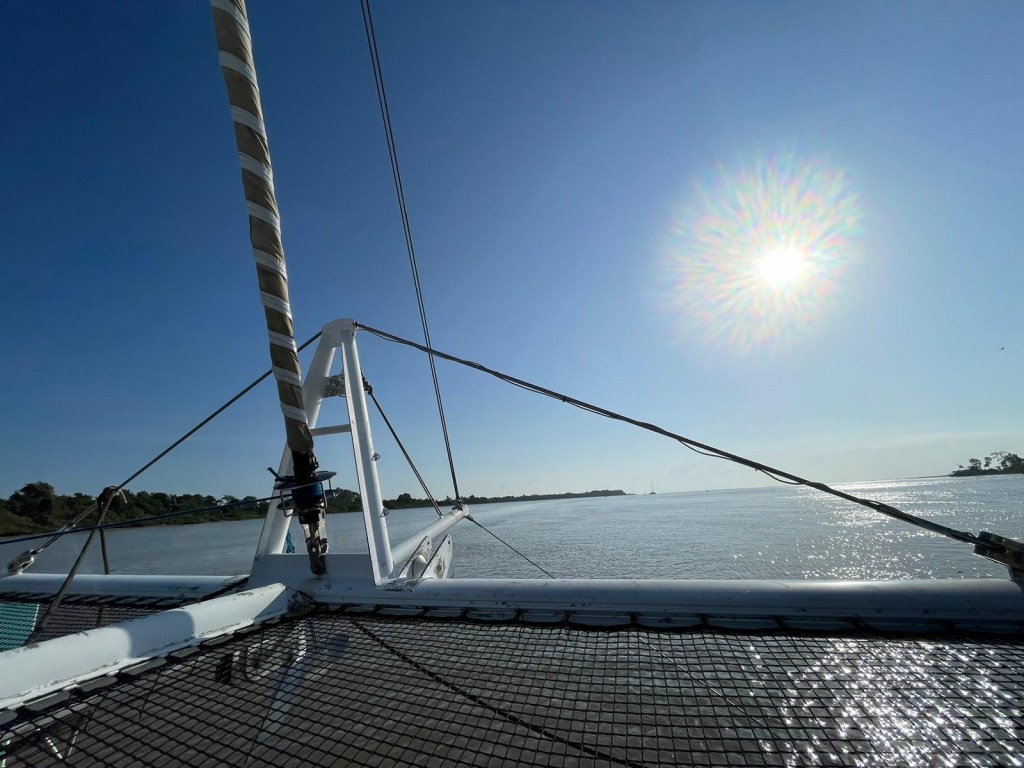
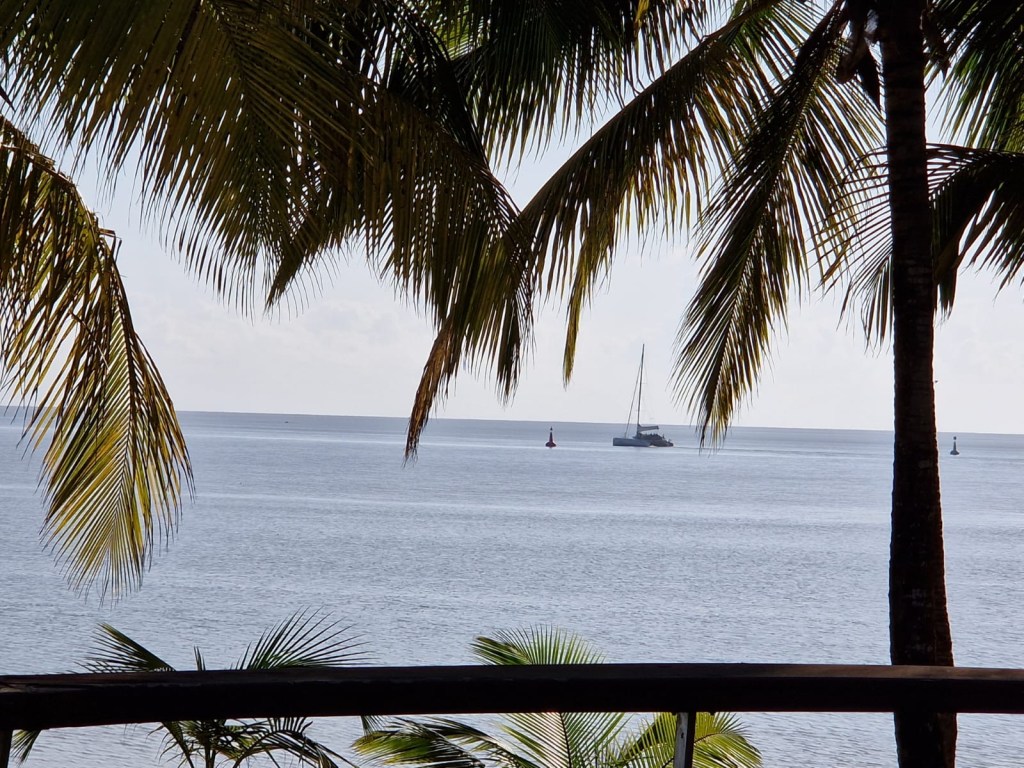
How to make the most of this one day off? For some, it was a trip to the islands on board a catamaran…

For others, on board a motorboat…

Others went fishing…

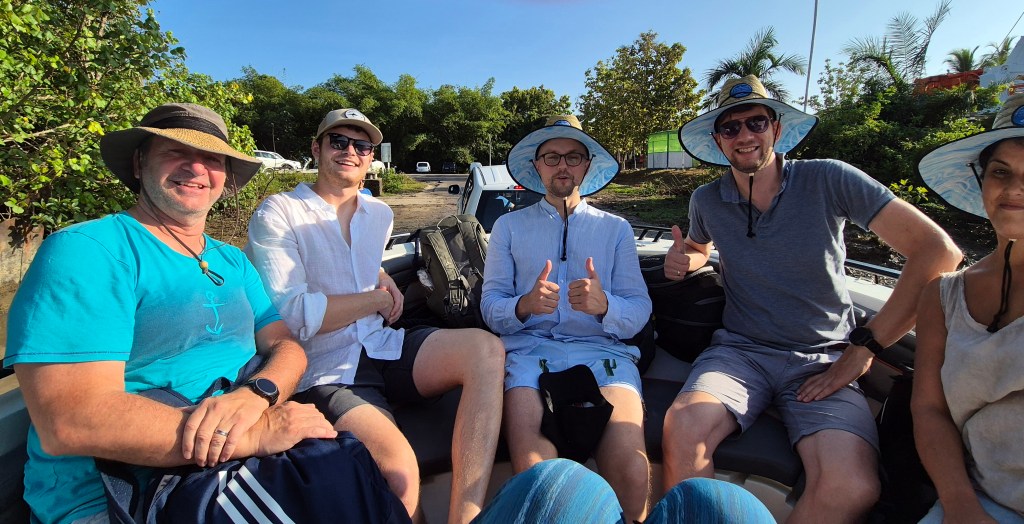
Some took a road trip to Cacao, the Hmong village, to discover its market and enjoy a traditional Pho soup, or fresh coconut milk…

While some others simply spent a quiet day in Kourou, took a long walk on the beach, or stayed close to the swimming pool and to their pager.

A short but appreciated break!

3 August – End of alignments and MSI light tightness test

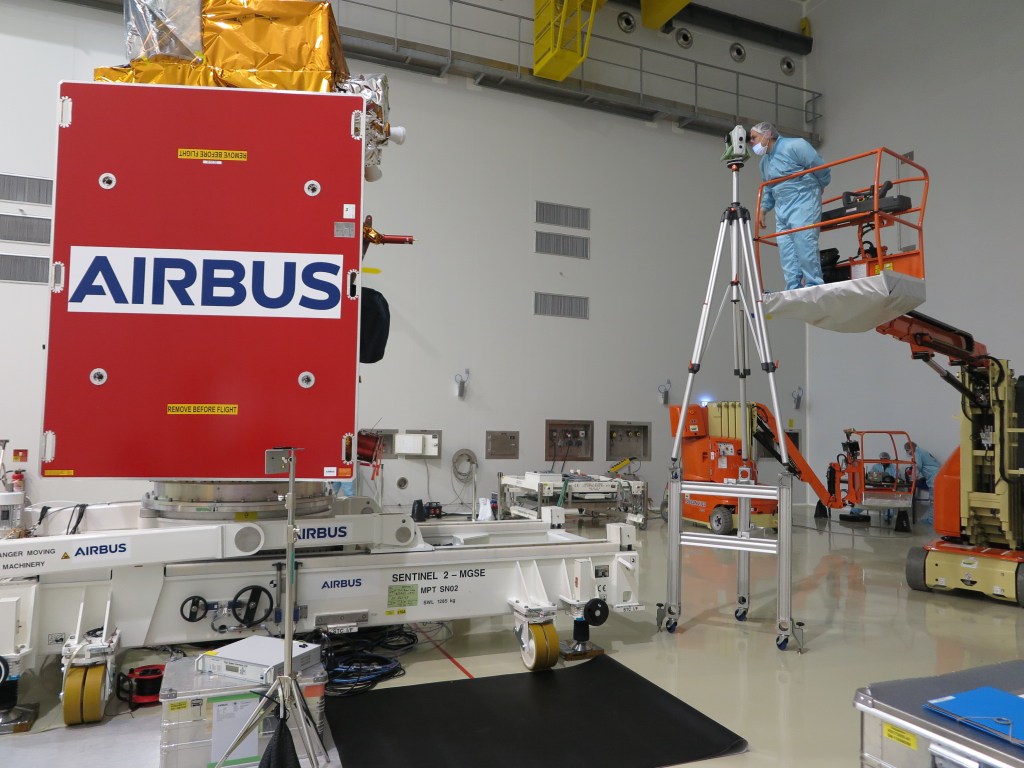
Just after the family pictures last Wednesday, the clean room was evacuated for Airbus team to start the alignment measurements. Some mirror cubes are located as reference points on different locations of the satellite to characterize the relative orientation of mission critical elements like the instrument, the laser terminal and the attitude control sensors.

Protections were removed to visually access all the mirror cubes.

Then the measurements started, relying on a very aerial and precise set-up of the theodolites. Two days were necessary to complete the verification. The fine post processing is still on-going but the first evaluation confirms that the results are comparable to the last set of measurements performed during the acceptance campaign. We are now sure that the transport of the satellite to the launch site did not alter its geometrical integrity.

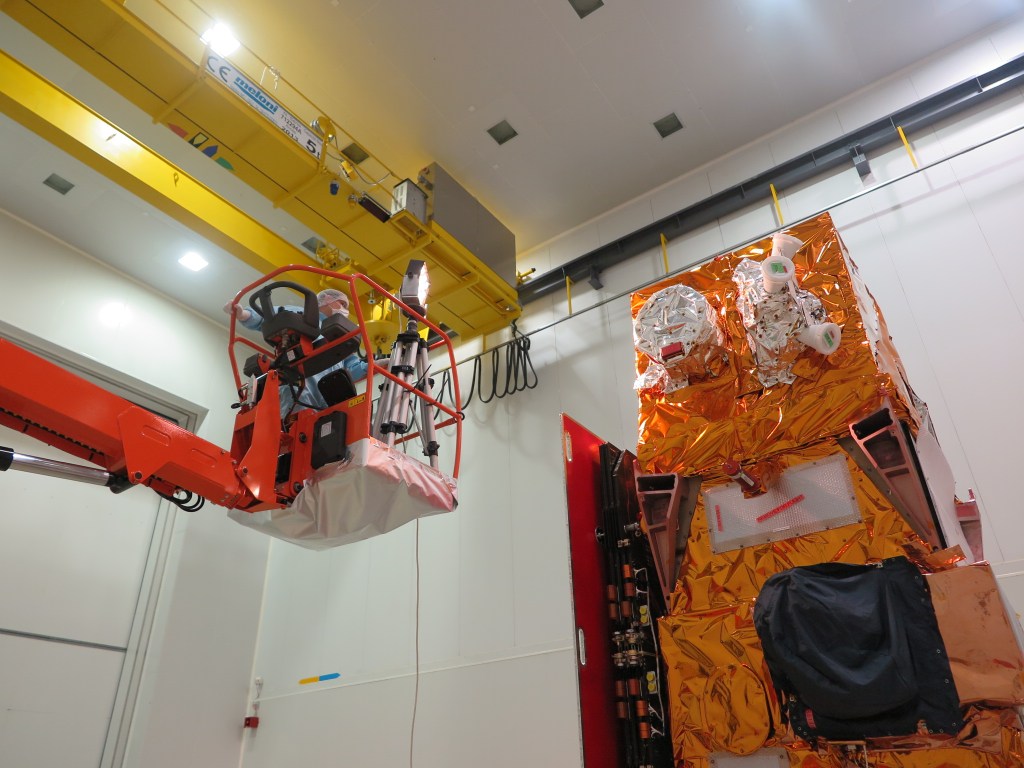
Friday and Saturday were dedicated to the the Multi-Spectral Instrument light tightness test which purpose is to verify that the optical cavity is not affected by any parasitic light that would degrade the quality of the pictures. For this test, the clean room lights are switched off. A powerful halogen lamp is placed in a predefined sequence of positions all around the instrument, and for each position an image is taken to quantify the noise acquired by the detectors.

The image data processing has been completed today and confirmed the absence of stray light.

In parallel of these two major and successful verification steps, other activities took place in preparation of the launch.

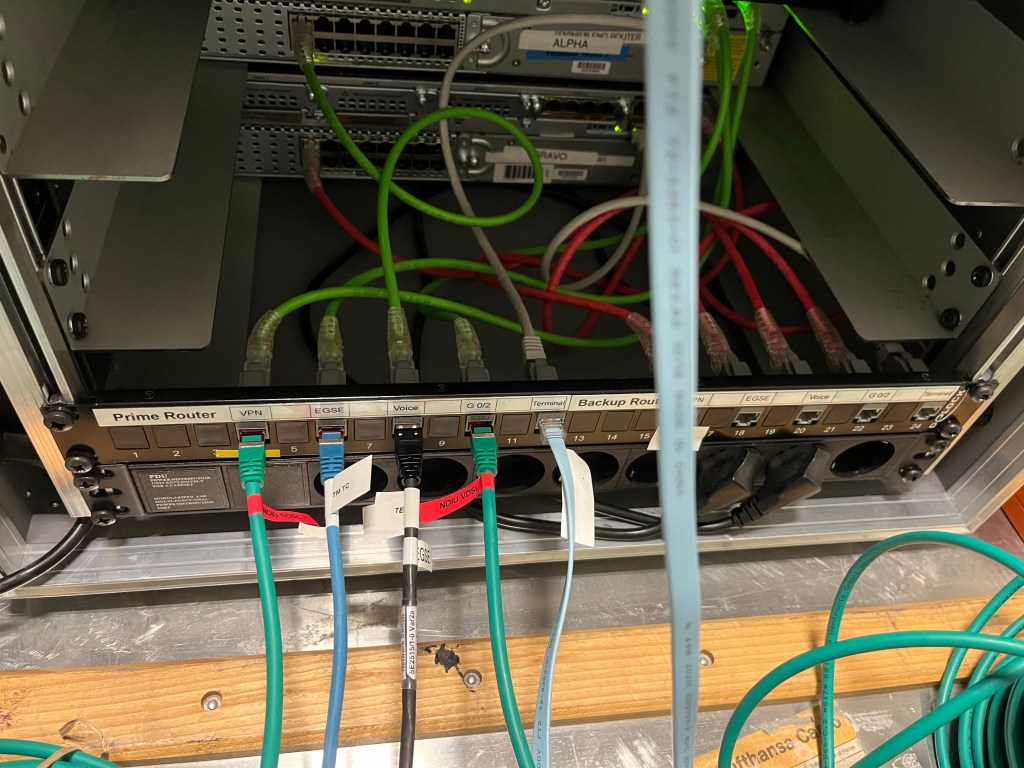
It could have gone almost unnoticed, like Stefano in his CSG camouflage outfit, but it required some iterations between Kourou and Darmstadt and long hours of work to get the NDIU fully operational. This equipment is a router that allows us to send the satellite telemetry to Esoc during the launch count-down. Once fully configured, it was thoroughly and successfully tested on a first flow of live data from the satellite on Friday.

One of the two COTE (Check Out Terminal Equipment), that is our interface with the satellite power and data links for the launch, has already been transferred to the launch pad and validated.

Step by step, we are getting closer.

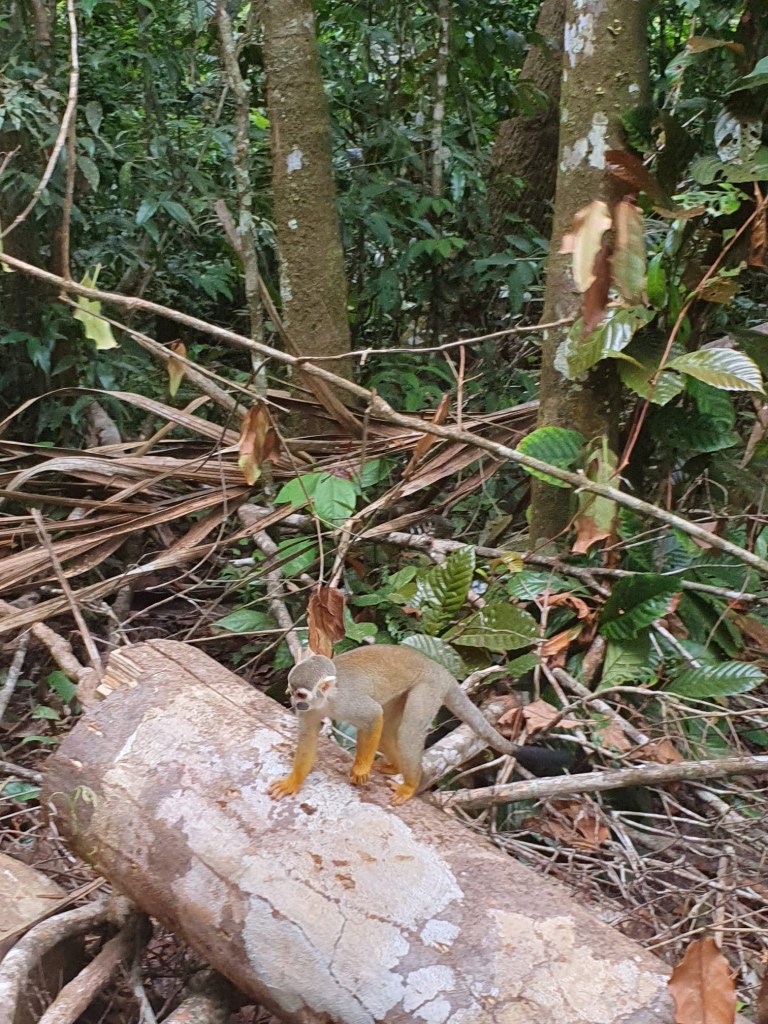
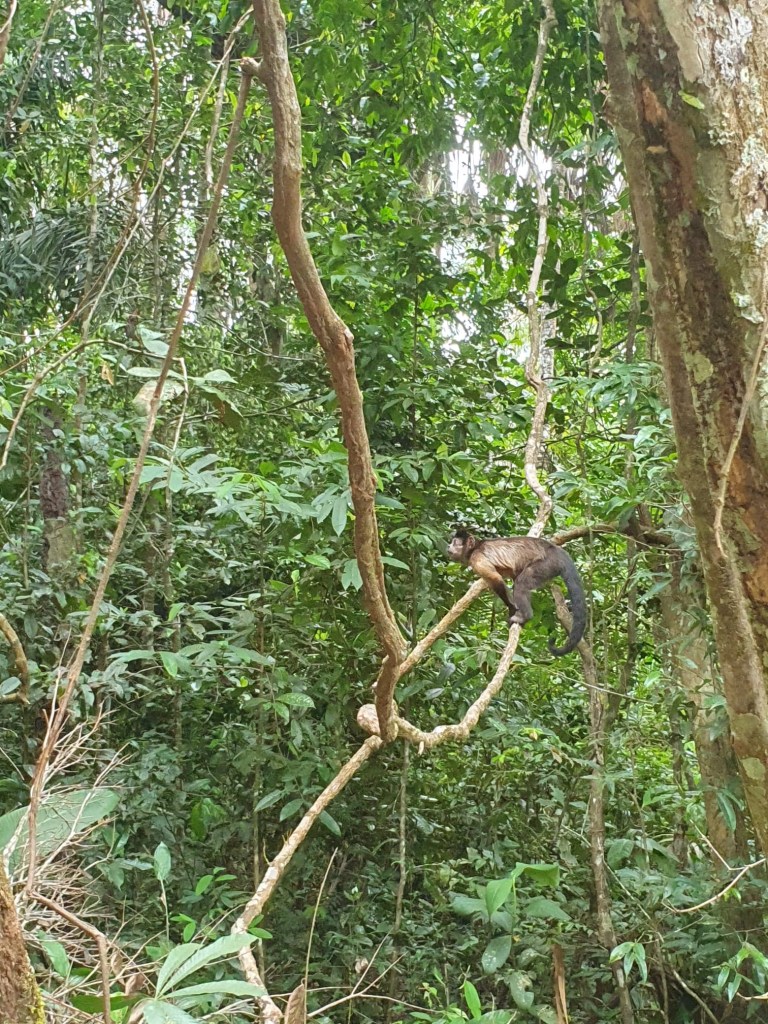
Some of our colleagues who came to support the early campaign phase have already returned, richer from this experience, and with very nice images like these in their memories…

We will miss you.

31 July – Fun family pictures

Before the satellite alignment activities started this morning, we had an official photo session… we picked the best ones for the blog!

A white team (Airbus)
A blue team (ESA)
A white and blue team (Airbus + ESA)
Another white and blue team (Arianespace and CNES, find the ESA and Airbus intruders…)

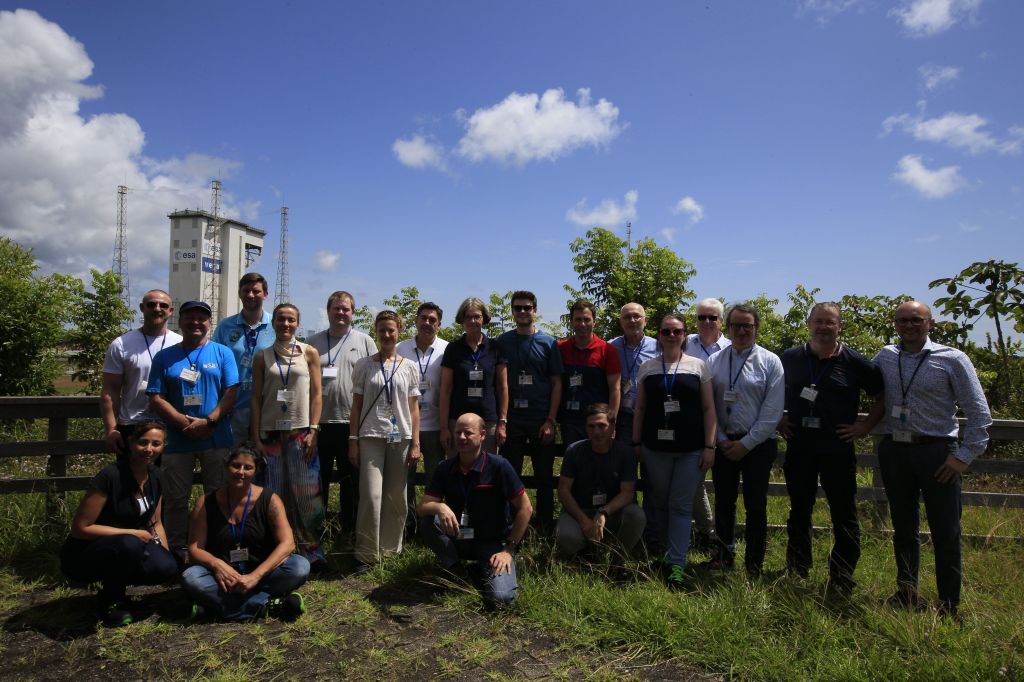
Finally, all part of the one Sentinel-2C launch campaign team!

30 July – Fit-check

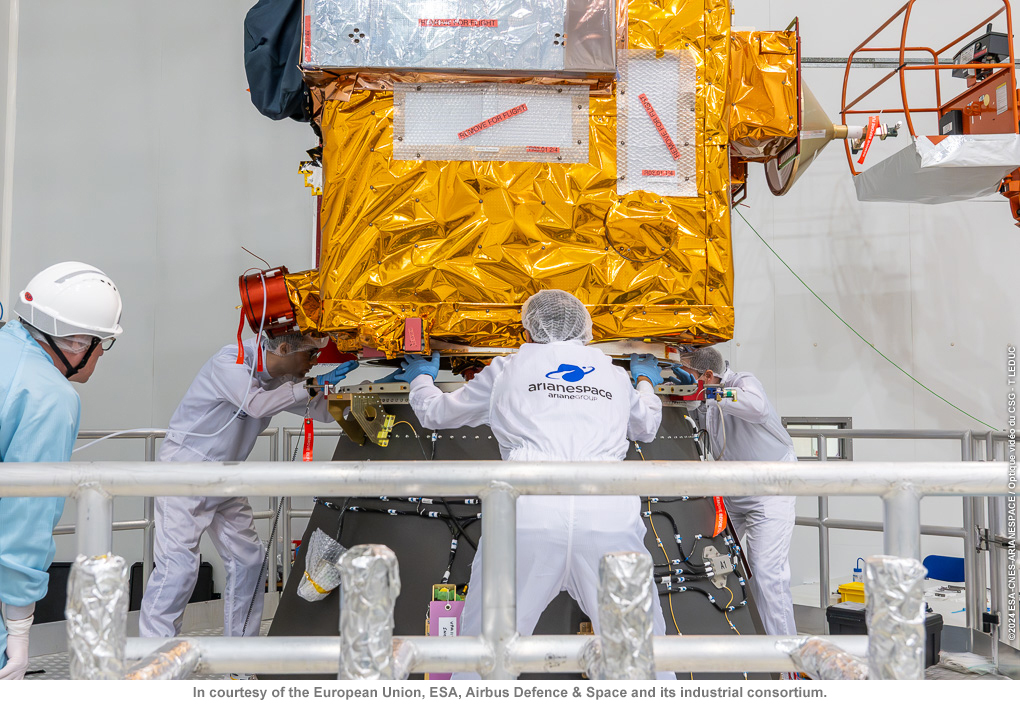
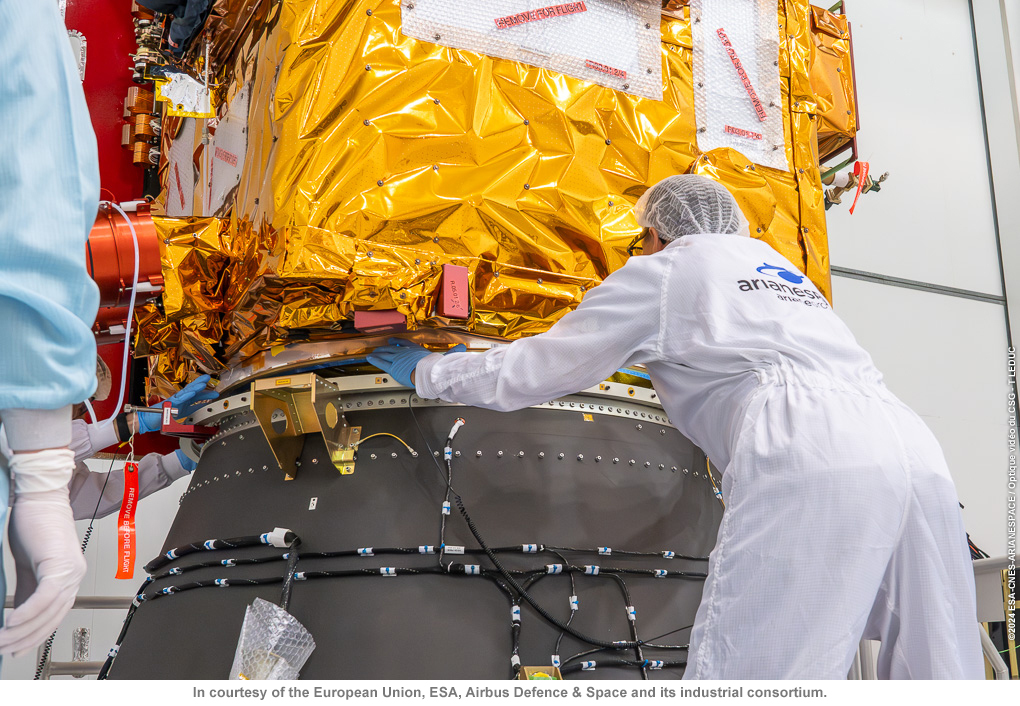
On Tuesday, the activities started very early in the morning for both Airbus and Arianespace teams in order to perform the first combined operations of the campaign: the satellite fit-check on the PLA.

This is a rehearsal of the mating procedure that will occur at D-8 (8 days before the launch) when the satellite, after fueling, is integrated on the launcher adapter. It allows to verify the compatibility of mechanical and electrical interfaces in advance, not to experience any technical issue or delay on the day of the final mating.

Once both sides were ready, the team briefing took place to coordinate the sequence of events and responsibilities for the different phases of handling, coupling, test and de-mating.

Once the mechanical coupling was achieved, the clamp-band was installed, flight tension applied, spring pushers armed. The umbilical links were connected and the satellite could be switched on by the Electrical Ground Support Equipment via a set of cables simulating the launch pad configuration.

The two highlights of this long day :

the excellent collaboration of Airbus and Arianespace teams,

and the perfect fit between satellite and launcher adapter!

The only shadow was a series of power outages that literally cast the clean room in the dark for several short periods, due to a failure of the CAT2 power supply. Fortunately we suffered no other consequence than a couple of hours delay. The CAT2 power recovery issue was solved by the end of the day.

28 July – Between A side and B side

Following the first switch ON, the integrity of the satellite after transport is checked through functional tests, involving all equipment on board. To insure redundancy, all units are duplicated. The nominal is called A and the redundant B. The tests are split in 2 parts by functional chain: A side on the first day – that was on Saturday 27 July and successful – B side on the second day – that was on Monday 29 July with the same outcome – and in between A and B sides there was…

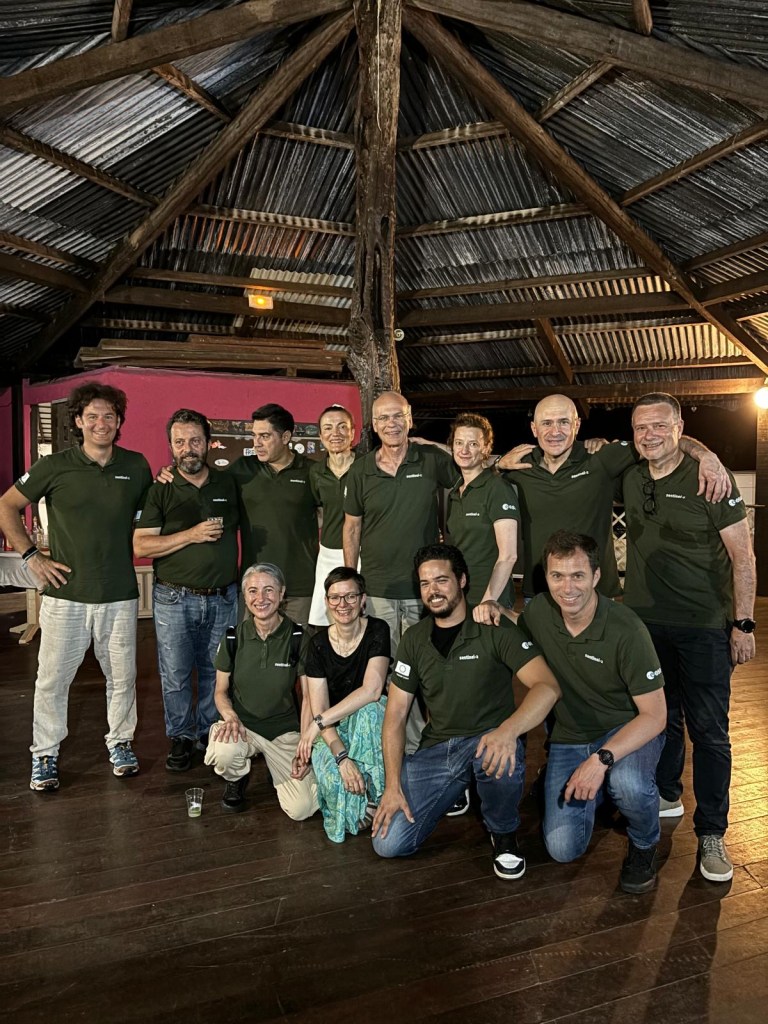
The Airbus team
the ESA team
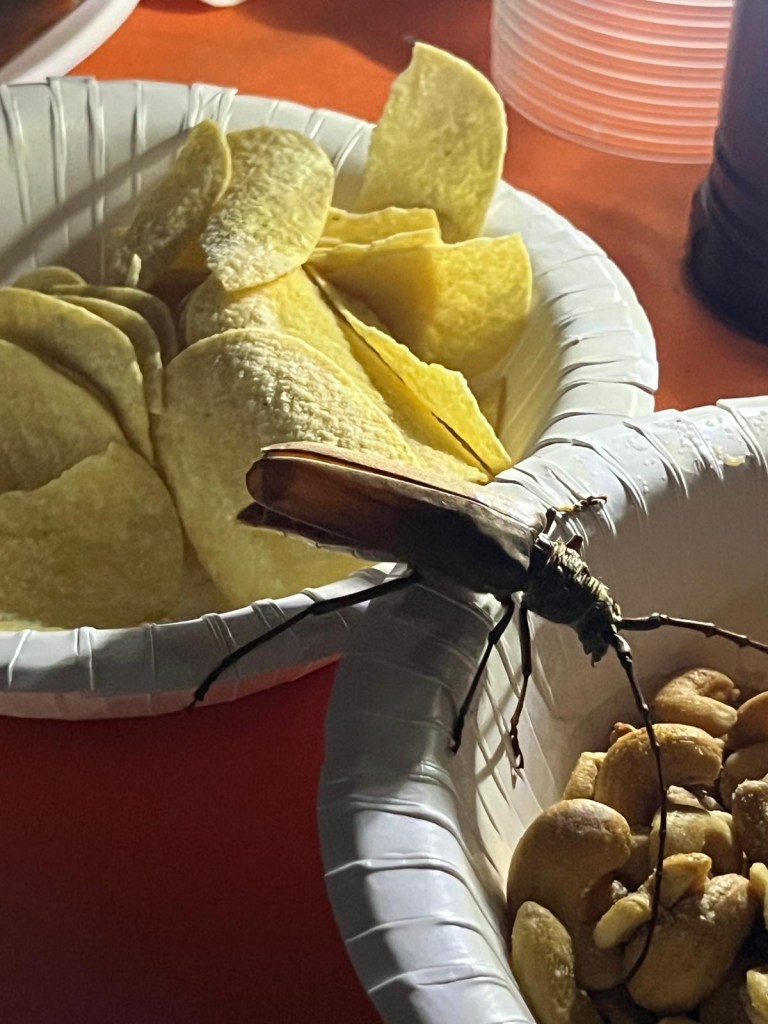
and some self-invited local guest…
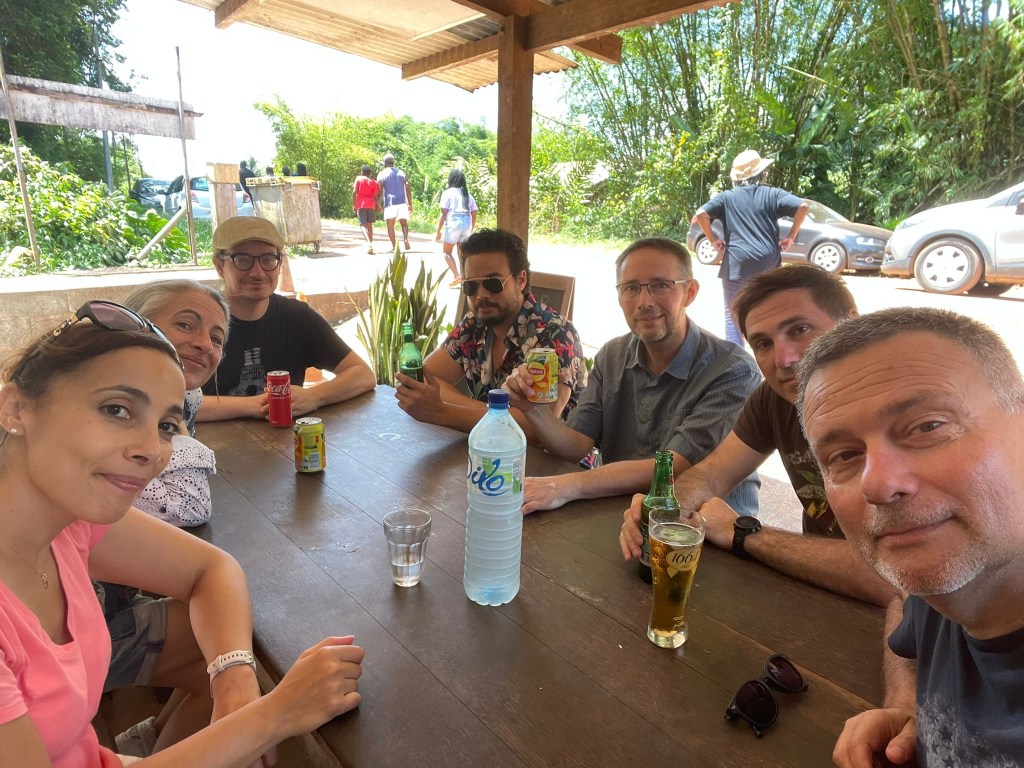
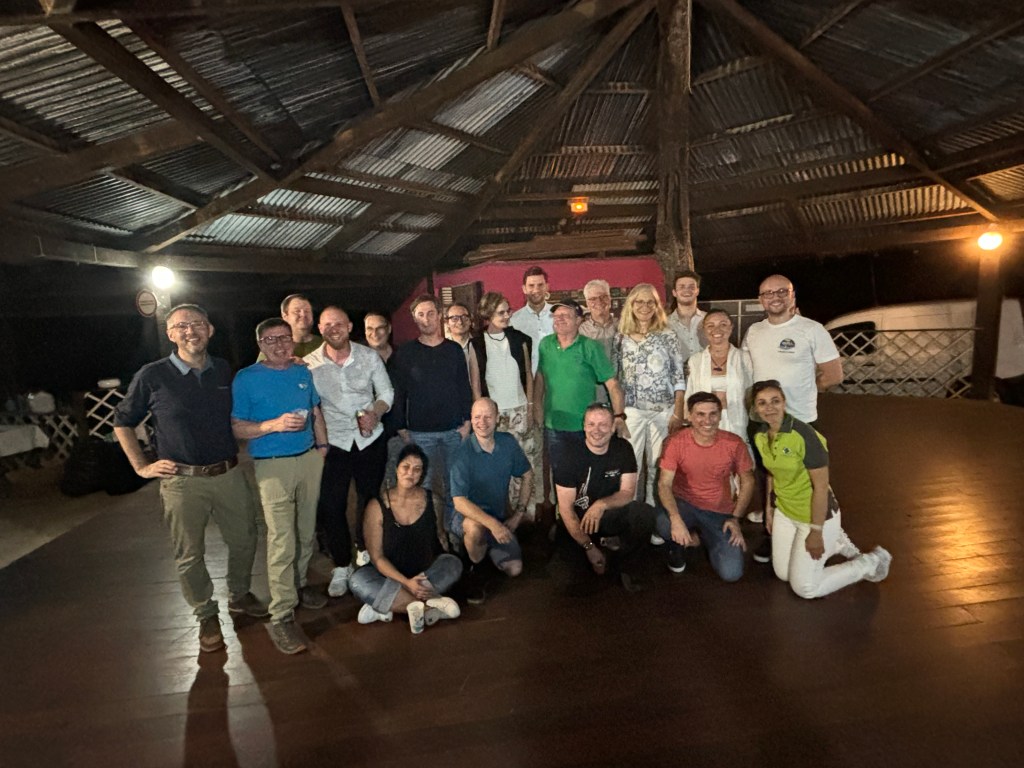
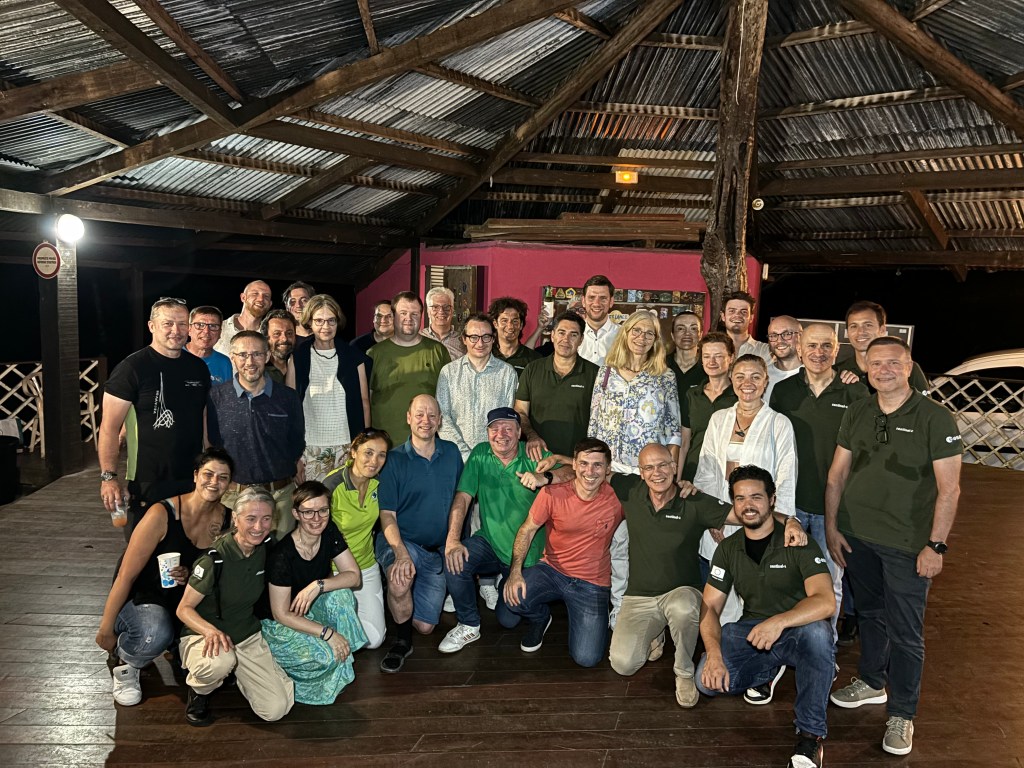
gathering for the first launch campaign party at the “carbet” Freelance on Saturday evening.

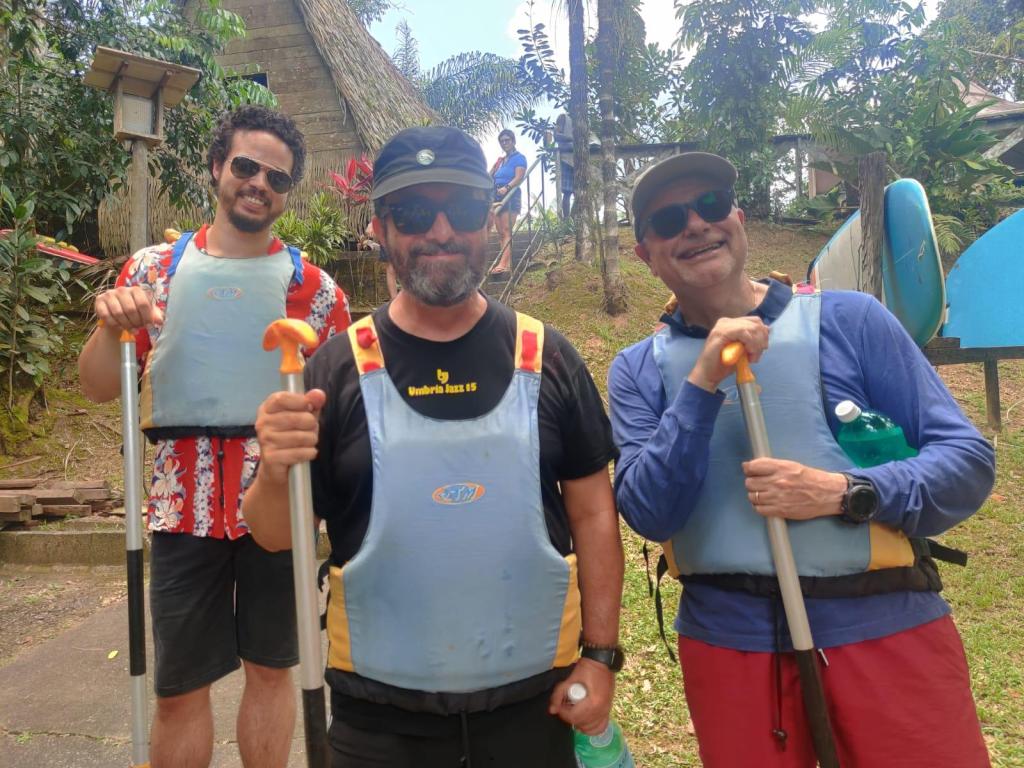
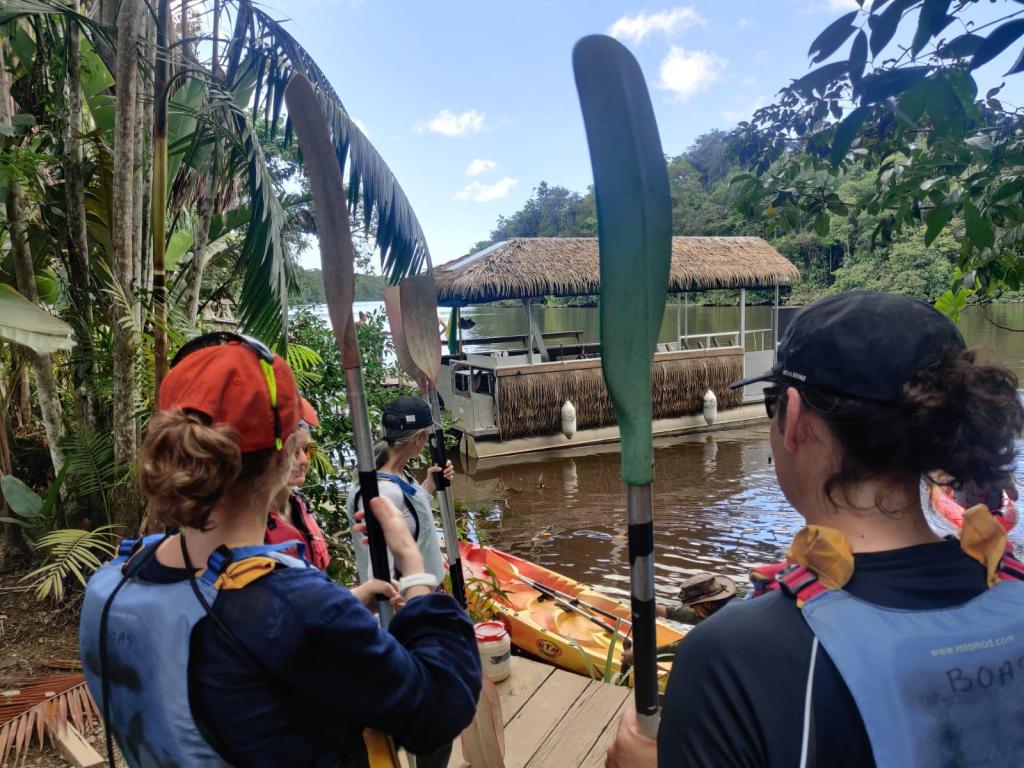
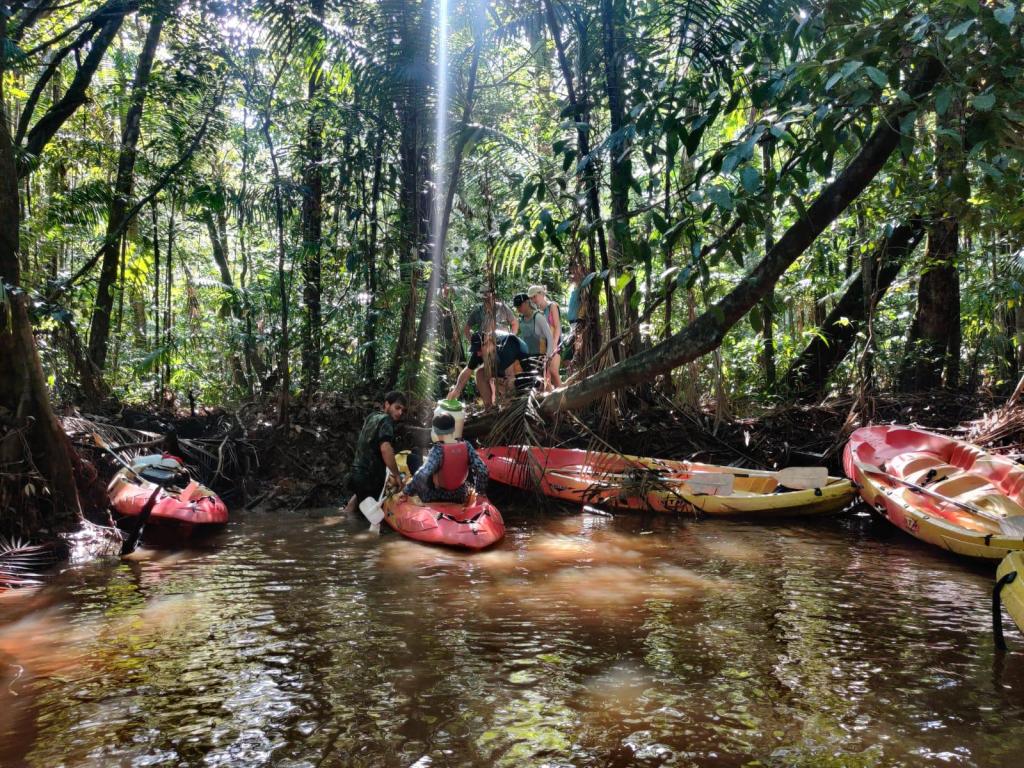
On Sunday, everyone made the most of THE rest day of the week. Beach, swimming pool, Monkey mountain hiking, canoeing on the Kourou river, all of it for the most courageous, or simply a relaxing day for others, in any case the break was very much appreciated by all!

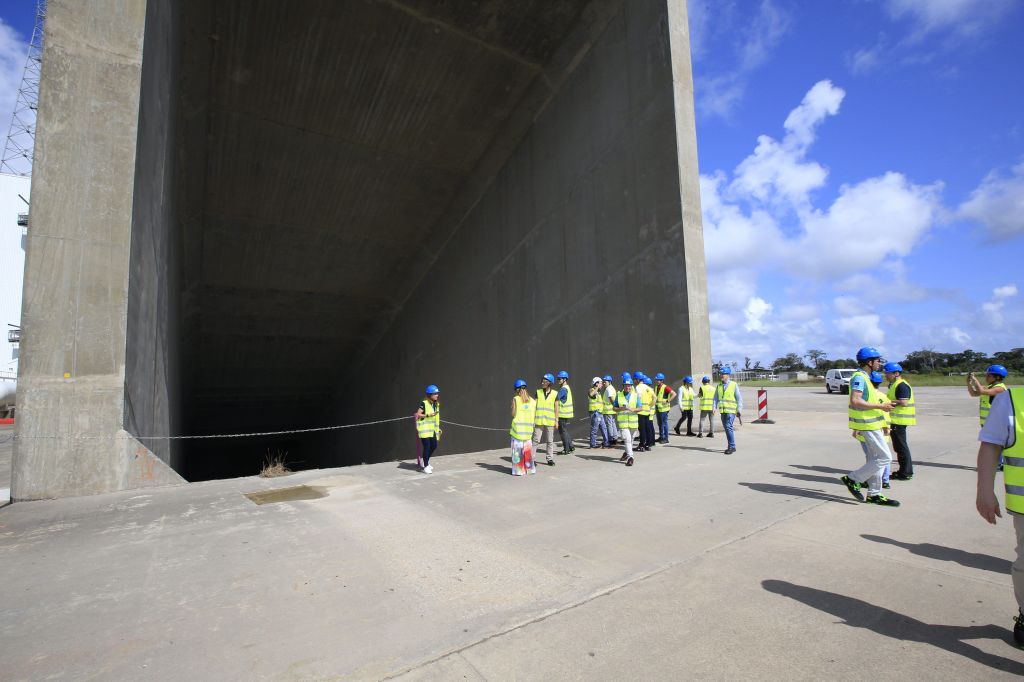
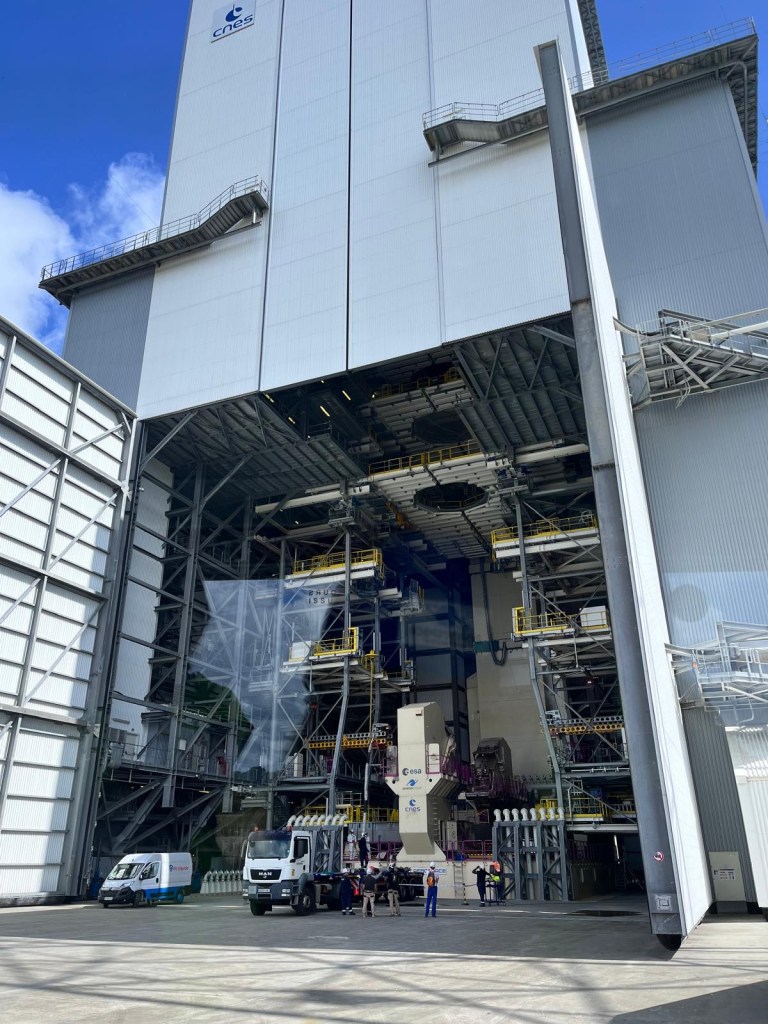
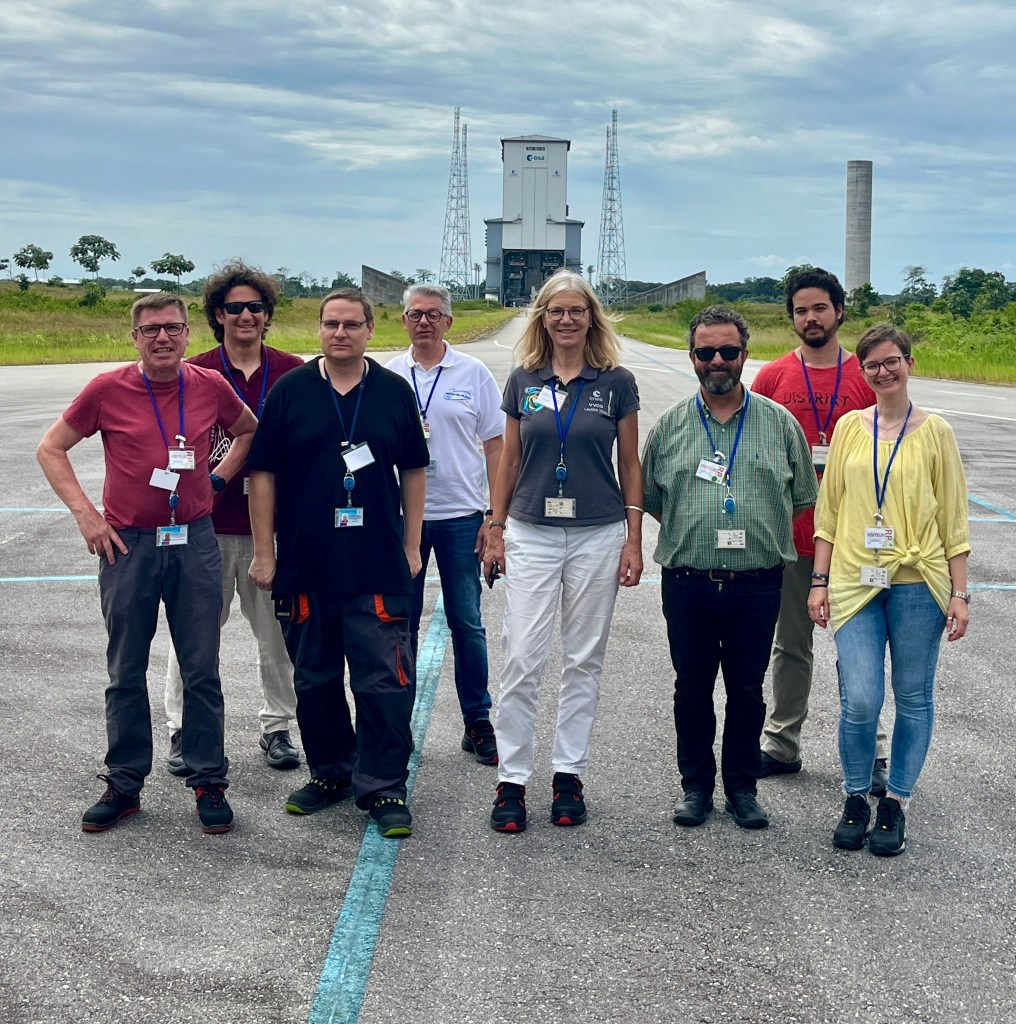
On Monday, next to the satellite B side functional tests, the launch vehicle adapter (interface between the satellite and the rocket) was set-up in the clean room for electrical verification before the fit-check foreseen on Tuesday. More safety trainings took place, the opportunity was given to ESA team to visit the satellite in the clean room and a first group could attend a visit of the launch base that took them through the Vega and the very impressive Ariane6 facilities.