
Just after the family pictures last Wednesday, the clean room was evacuated for Airbus team to start the alignment measurements. Some mirror cubes are located as reference points on different locations of the satellite to characterize the relative orientation of mission critical elements like the instrument, the laser terminal and the attitude control sensors.
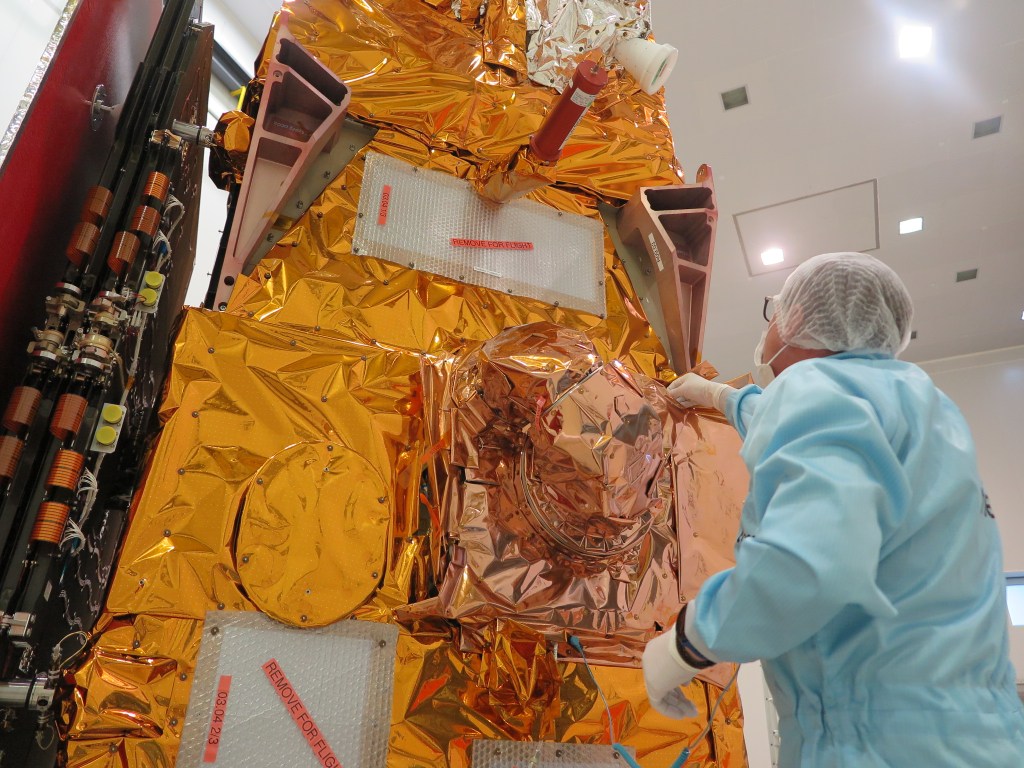
Protections were removed to visually access all the mirror cubes.
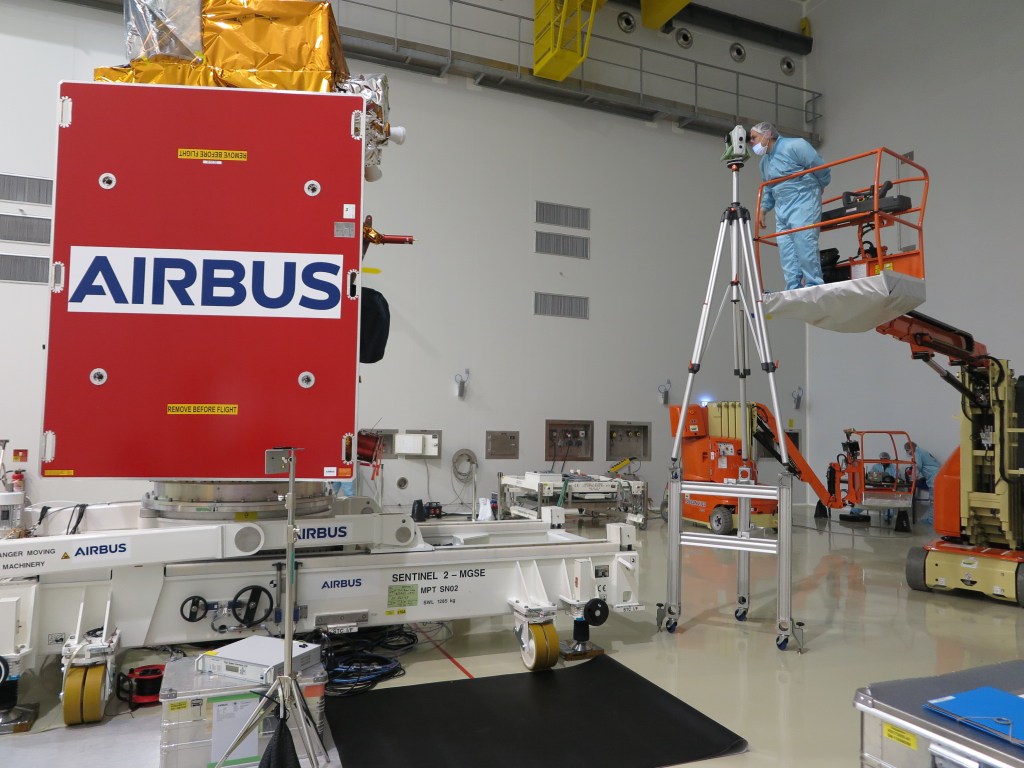
Then the measurements started, relying on a very aerial and precise set-up of the theodolites. Two days were necessary to complete the verification. The fine post processing is still on-going but the first evaluation confirms that the results are comparable to the last set of measurements performed during the acceptance campaign. We are now sure that the transport of the satellite to the launch site did not alter its geometrical integrity.
Friday and Saturday were dedicated to the the Multi-Spectral Instrument light tightness test which purpose is to verify that the optical cavity is not affected by any parasitic light that would degrade the quality of the pictures. For this test, the clean room lights are switched off. A powerful halogen lamp is placed in a predefined sequence of positions all around the instrument, and for each position an image is taken to quantify the noise acquired by the detectors.
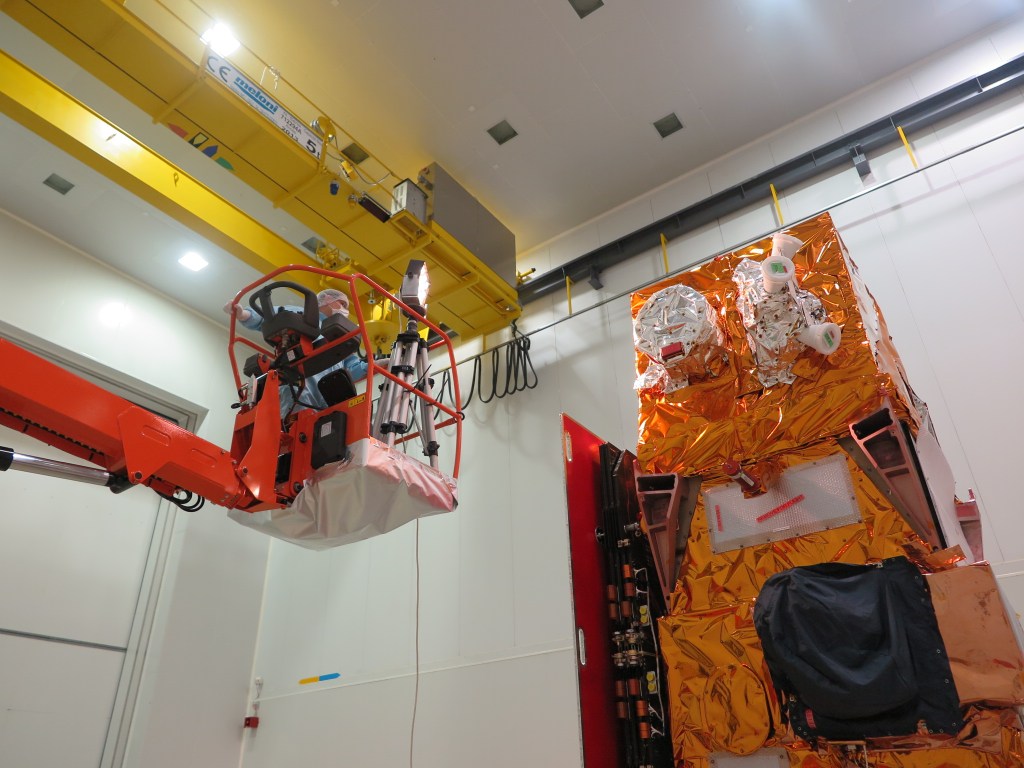
The image data processing has been completed today and confirmed the absence of stray light.
In parallel of these two major and successful verification steps, other activities took place in preparation of the launch.
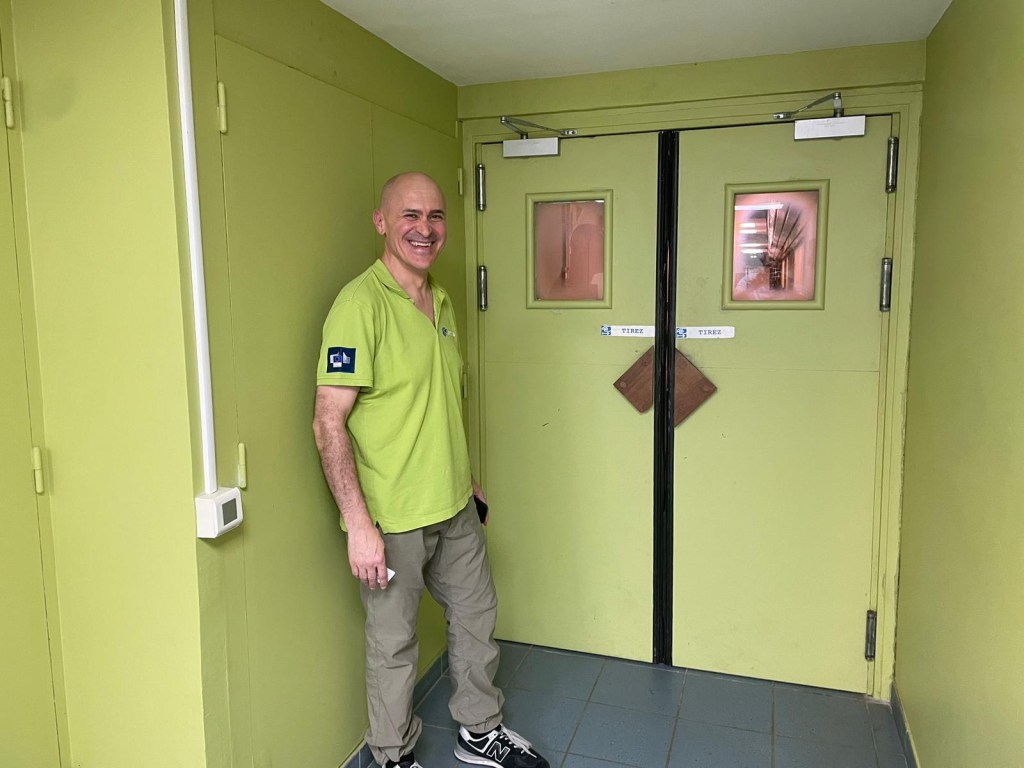
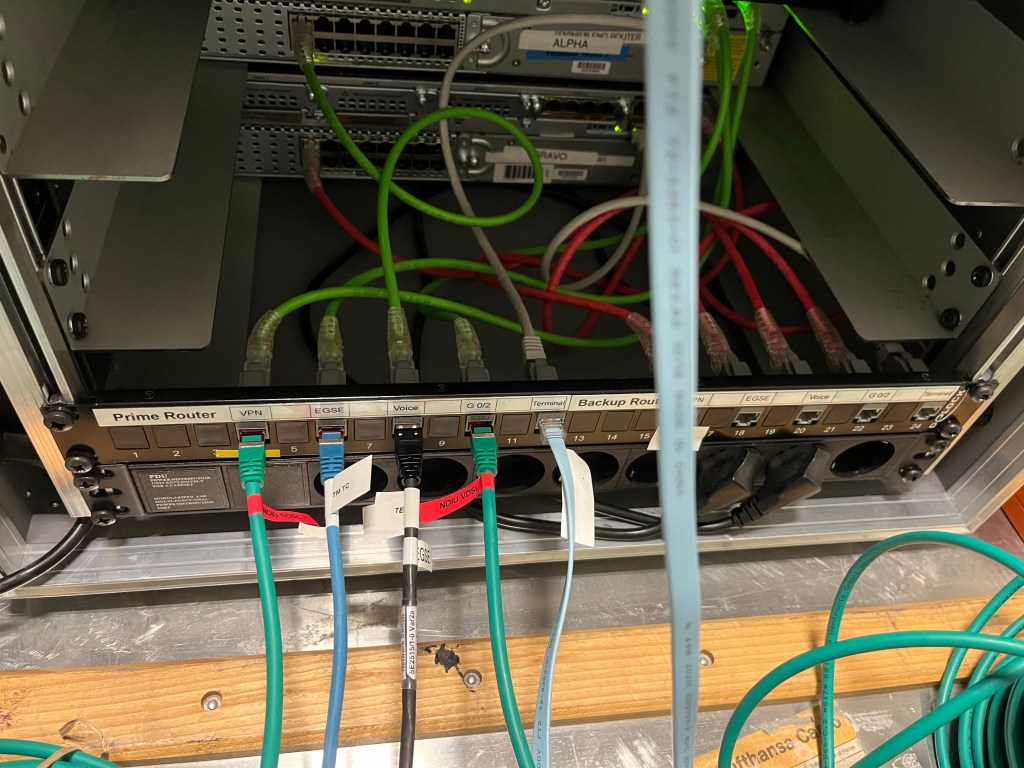
It could have gone almost unnoticed, like Stefano in his CSG camouflage outfit, but it required some iterations between Kourou and Darmstadt and long hours of work to get the NDIU fully operational. This equipment is a router that allows us to send the satellite telemetry to Esoc during the launch count-down. Once fully configured, it was thoroughly and successfully tested on a first flow of live data from the satellite on Friday.
One of the two COTE (Check Out Terminal Equipment), that is our interface with the satellite power and data links for the launch, has already been transferred to the launch pad and validated.
Step by step, we are getting closer.
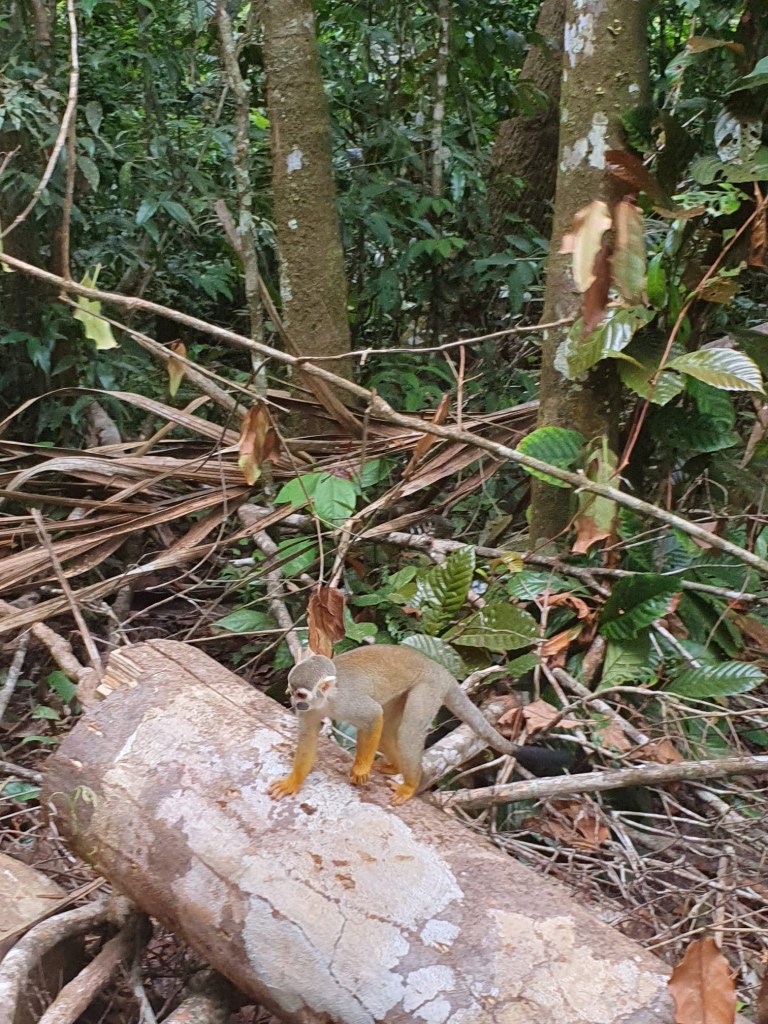
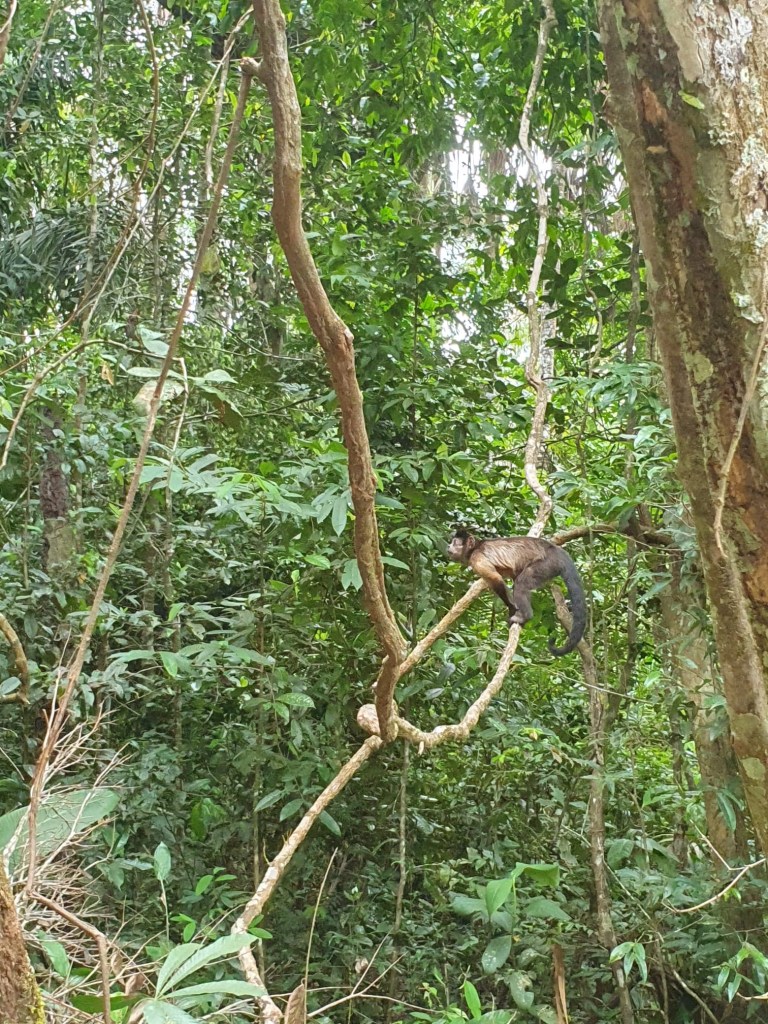
Some of our colleagues who came to support the early campaign phase have already returned, richer from this experience, and with very nice images like these in their memories…
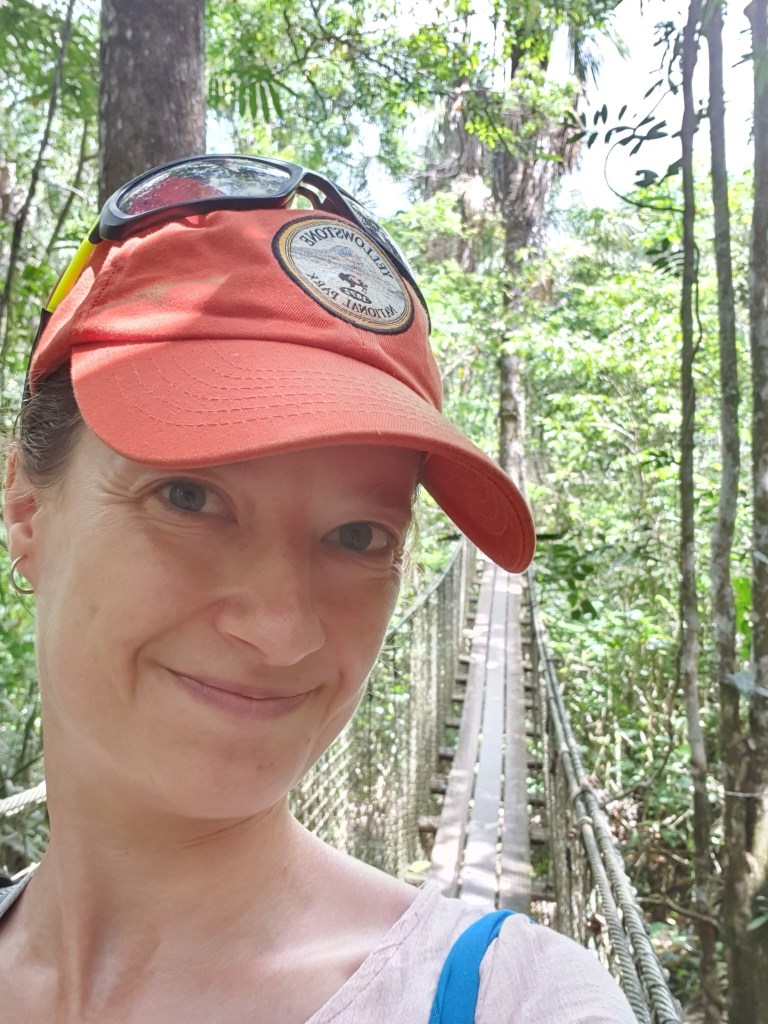
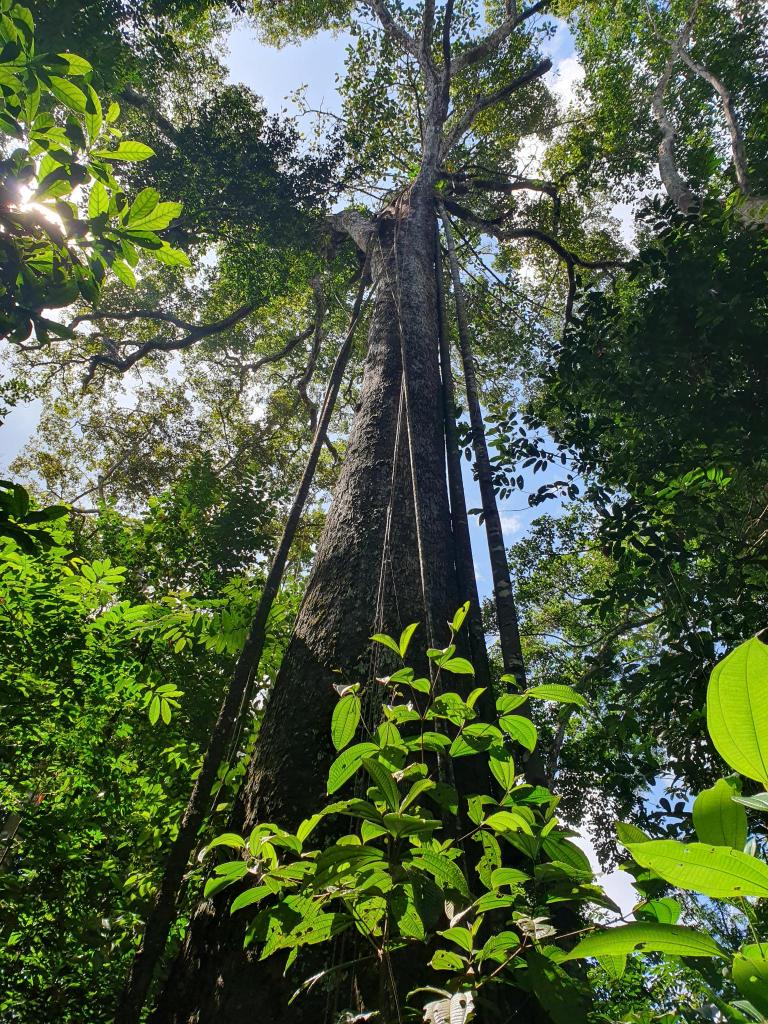




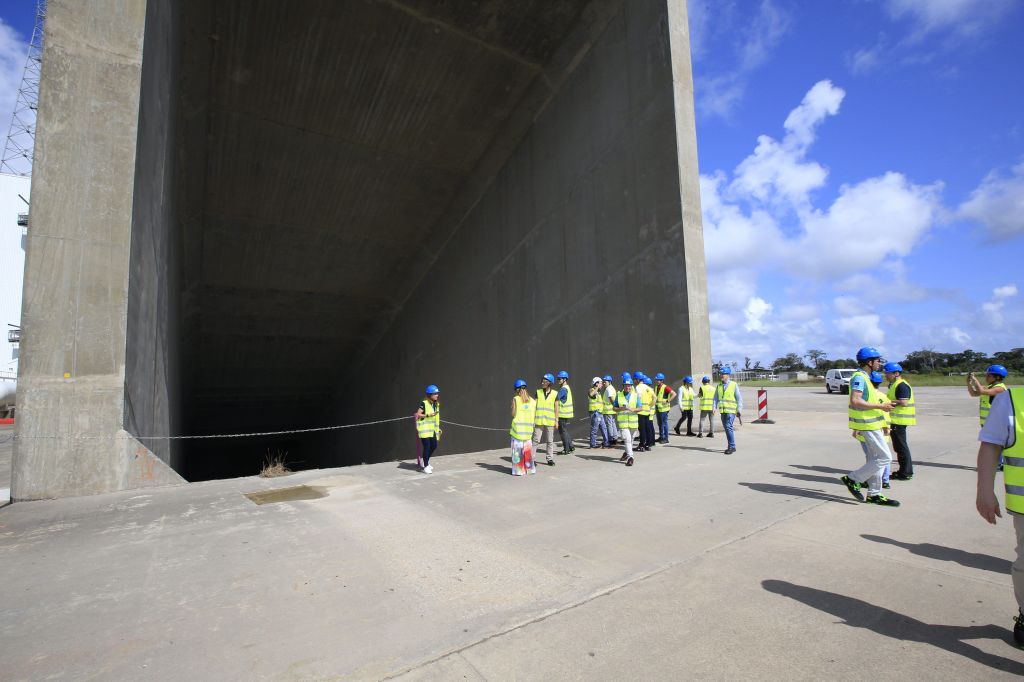
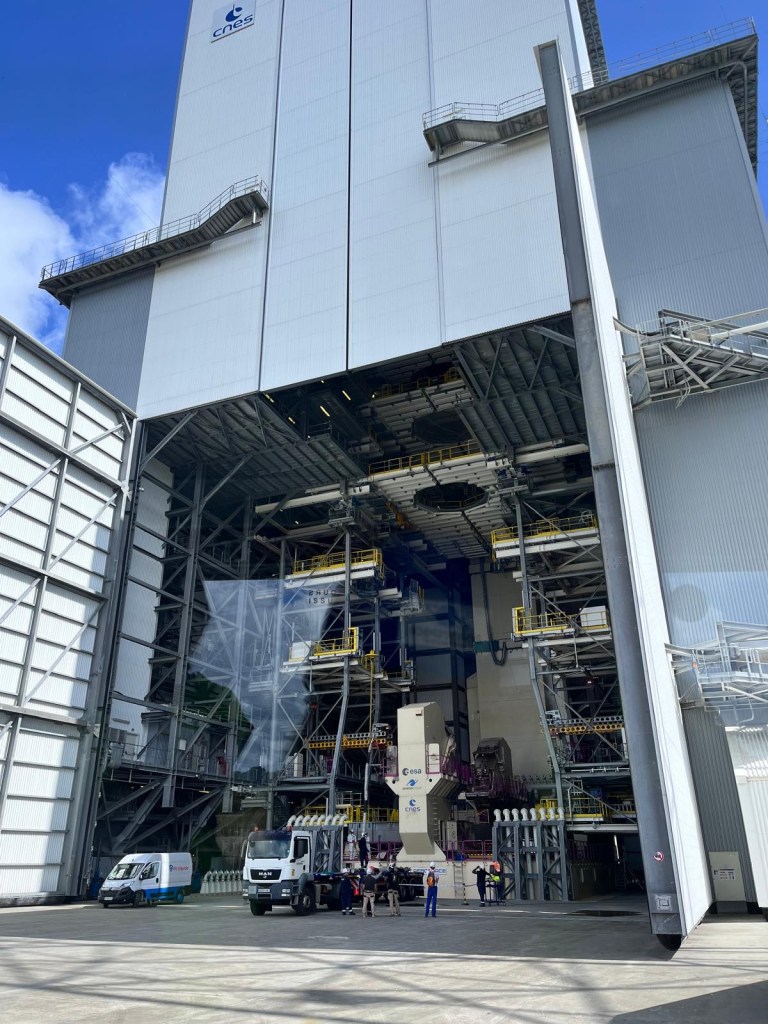
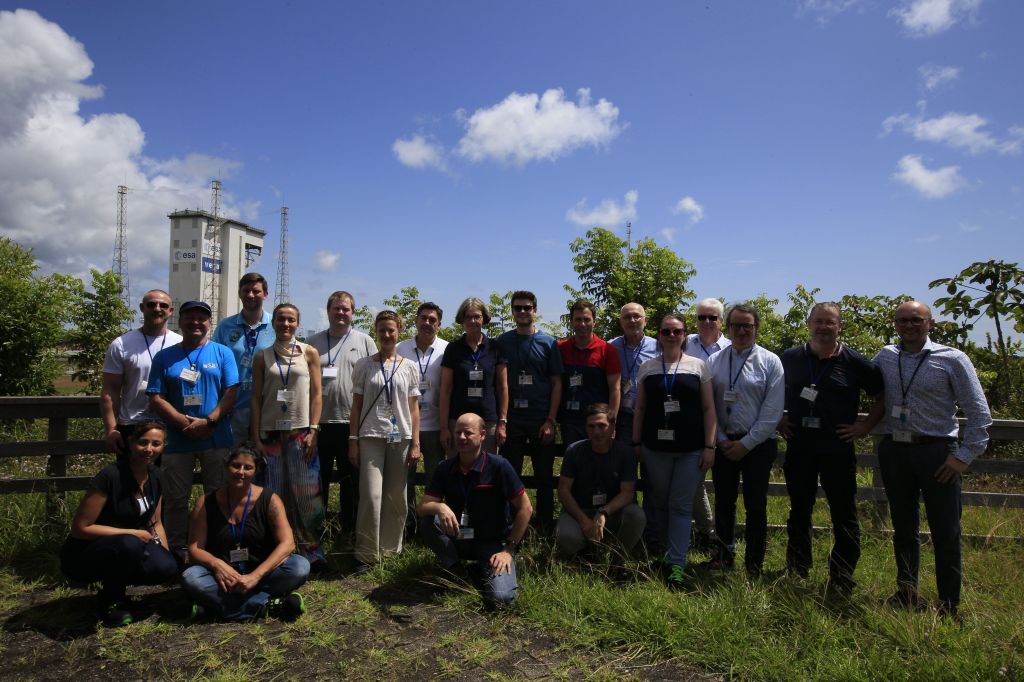
We will miss you.
 Sentinel-2C Launch Team Blog