
While Sentinel-2C is on its way to Kourou, this week the engineering teams from ESA and Airbus also started their trips…

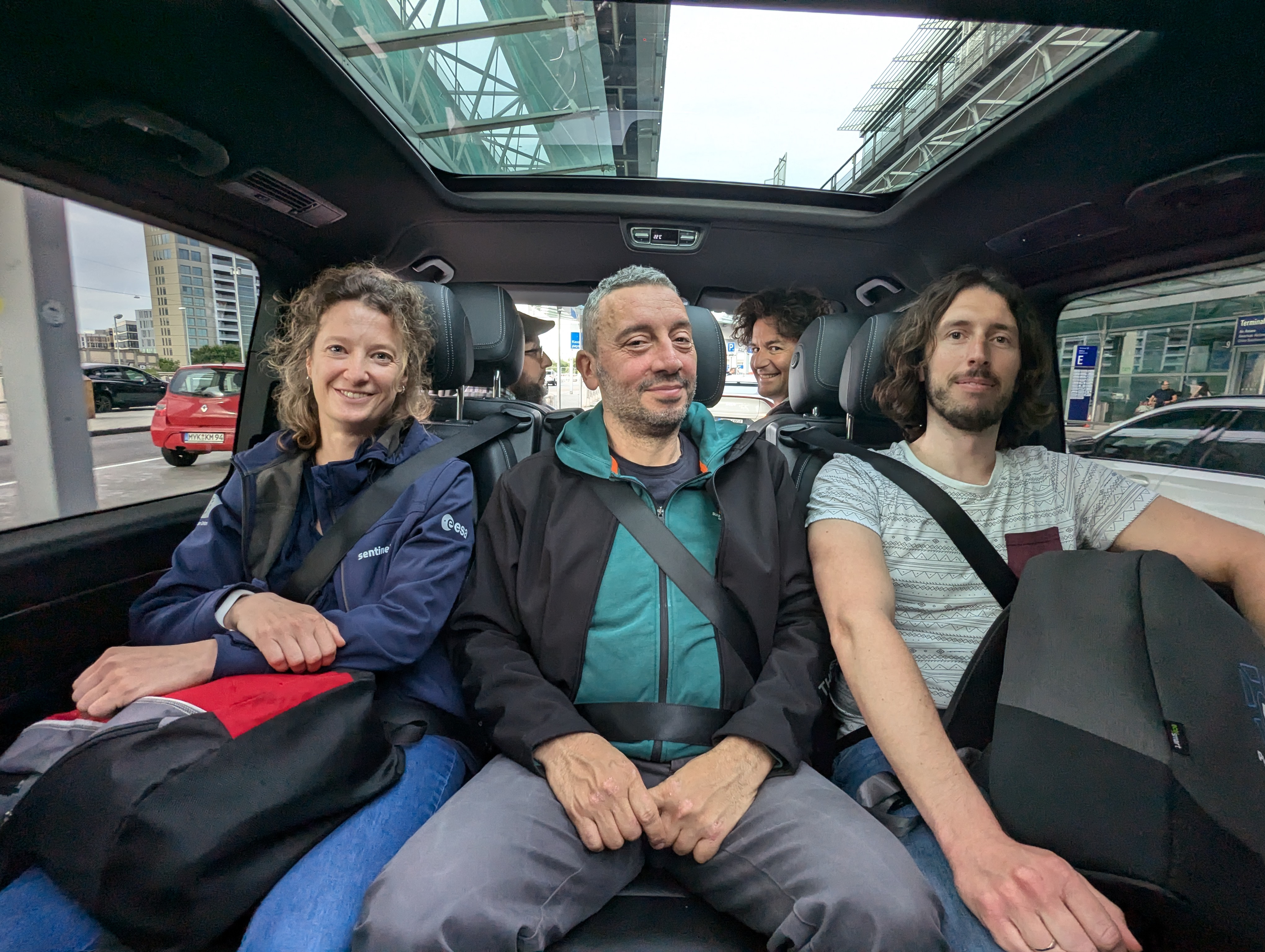
… to ESOC, our satellite control centre in Darmstadt.

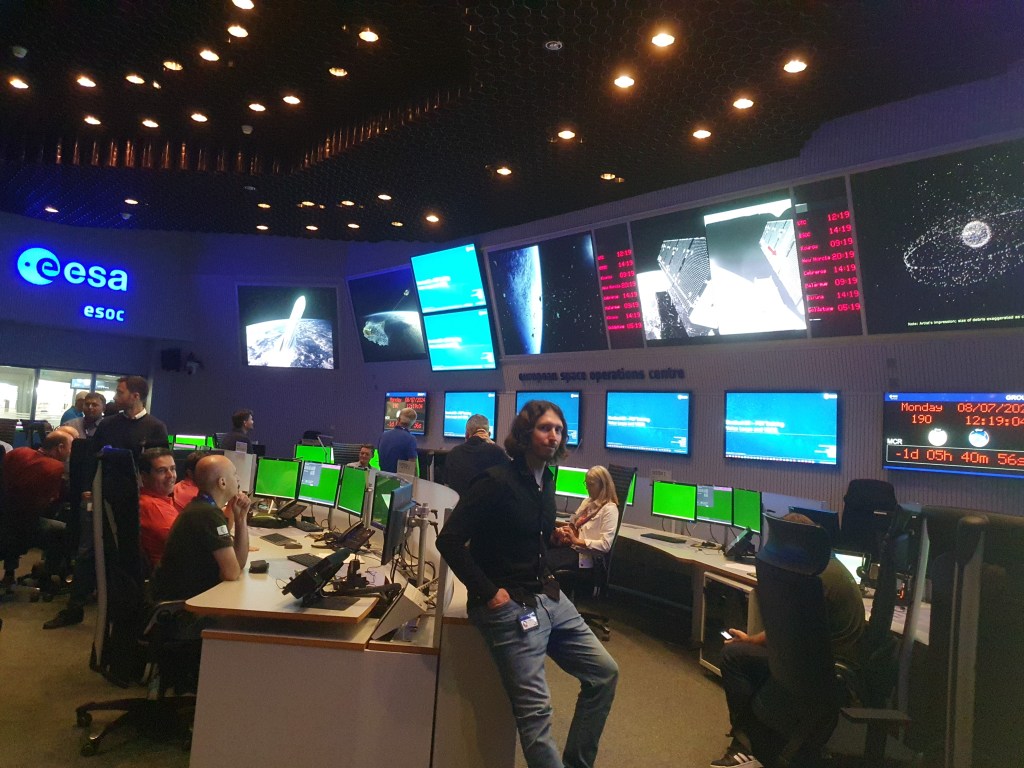
On 8th July, the Operations Validation Campaign has started. The first day was dedicated to the project support team training, to bring our engineers up to speed on the Launch and Early Orbit Phase (LEOP) activities that they will be supporting on site. Among the topics addressed : the LEOP objectives and timeline, the procedures, the roles and responsibilities of the different team members, their locations, the control system and tools available to visualize and process satellite data, and the famous communication protocol via the voice loops. Everybody is now familiar with the NATO phonetic alphabet (to learn by heart!!) and will call our satellite Sentinel-2 Charlie 🤓.

After the training, the teams were exposed to their first real life simulation in the 2 days that followed.
The start of the satellite life is critical. Acquiring the satellite telemetry and taking control as soon as possible after its release in orbit is essential. For that reason a 24/7 organization is put in place for the early operations, based on the rotation of 2 teams A&B in 12-hour shifts. The satellite is not continuously reachable, only when it gets in visibility of our ground stations. As a result, the team has roughly 10 minutes communication slot that alternate with 90 minutes blackout – which requires rigorous preparation and coordination. While most mode transitions are autonomously managed on board, some key steps require ground verification and commanding to bring the satellite to a stable nominal mode, and get it ready to perform collision avoidance maneuvers if necessary. This should be achieved at the end of LEOP within 3 days after launch.
The simulation campaign will continue from now until a few days before launch. 16 cases will be run, representative of real LEOP shifts. A and B teams will get many opportunities to train on nominal and contingency scenarios, and practice their shift handovers. The simulation officers are usually very creative with the injection of failures, which promises some head scratching to our engineers, certainly some fun, and will for sure get our teams ready to face anything by the time of the launch!

 Sentinel-2C Launch Team Blog